Scientists at the Oak Ridge National Laboratory are developing AI-powered autonomous research systems that can make decisions during experiments without waiting for human input.
These advanced workflows are helping researchers discover and test new materials for future microelectronics more quickly and efficiently.
The effort aims to support next-generation chips, improve energy efficiency, and strengthen domestic technology development in the US.
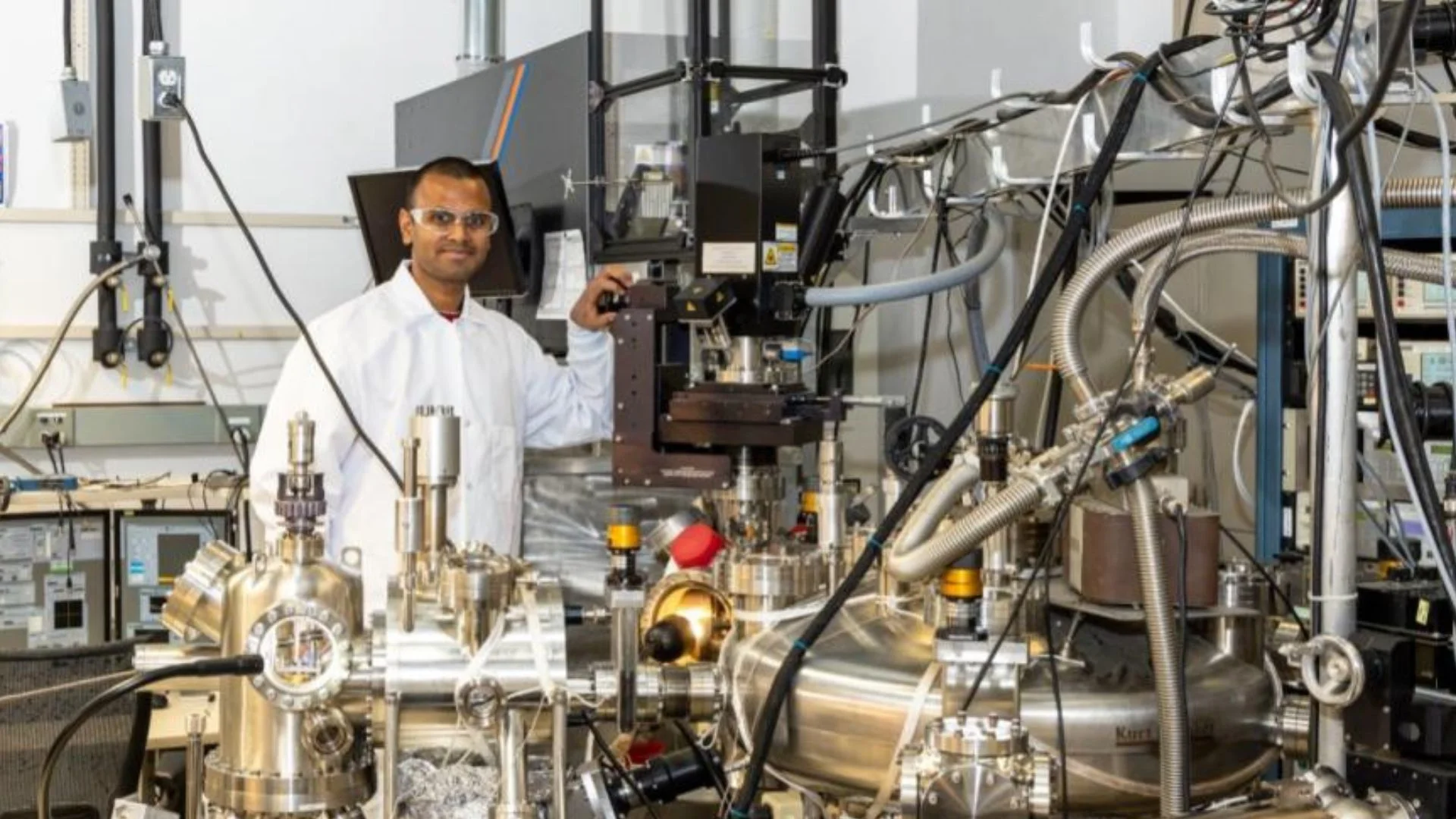
Researchers working at the Center for Nanophase Materials Sciences (CNMS) are combining artificial intelligence, advanced scientific instruments, and high-performance computing into a connected research system.
The goal is to reduce the time needed to develop materials for future electronics while improving the quality of scientific discoveries. Scientists say traditional methods are becoming too slow to keep pace with the growing complexity of modern microelectronics research.
READ ALSO: China’s Tansuo-1 Returns After 156-Day Mission With Deep-Sea Life Finds in Pacific Trenches
Microelectronics power almost every modern technology, including smartphones, data centers, electric vehicles, satellites, and military systems. As chipmakers push beyond the limits of current silicon-based designs, scientists are searching for entirely new materials and structures. That process typically involves thousands of experiments and large amounts of data, which can take years to analyze.
Researchers at CNMS are teaching laboratory systems to perform experiments, analyze incoming results, and automatically decide the next steps. Instead of following a fixed sequence, the systems can adapt in real time based on what they observe during testing. Scientists describe this approach as autonomous science rather than simple automation.
Traditional automation follows pre-programmed instructions without changing course during an experiment. Autonomous systems use AI models trained on earlier experiments, published research, and simulations to make decisions while work is still underway. This allows scientists to explore many more possibilities than a human team could handle manually.
According to Rama Vasudevan, who leads data analytics work for autonomous science at CNMS, the technology changes more than speed alone.
He explained that these systems create an entirely new level of scientific capability. Researchers can now tackle highly complex problems that would otherwise remain too difficult or time-consuming.
One major focus area is the development of delicate materials for future microelectronics devices. These materials often require extremely precise combinations of temperature, pressure, oxygen levels, and surface conditions during manufacturing. Even small changes in one setting can affect every other part of the process.
CNMS researchers are currently studying oxide membranes that can be detached from one surface and placed onto another material layer. This process allows scientists to stack materials in new ways to improve the performance of memory chips and transistors. Better memory and faster transistors are essential for artificial intelligence systems, advanced computing, and energy-efficient electronics.
WATCH ALSO: World’s first motorbike backflip between two moving trucks successfully completed
The project is led by CNMS staff scientist Sumner Harris. Researchers are trying to grow oxide materials on graphene surfaces because graphene allows the layers to separate cleanly later. However, the challenge is that oxide growth requires oxygen, while excess oxygen damages graphene and disrupts the transfer process.
AI-powered workflows help researchers better balance these competing conditions. The system analyzes huge amounts of earlier research and compares it with live experimental data during synthesis. Scientists say this combination of machine learning and human expertise improves decision-making during highly sensitive experiments.
Vasudevan described the process as a partnership between humans and AI systems. Researchers still provide scientific understanding and guide the overall goals of experiments. Meanwhile, AI handles the massive amount of data and detects patterns that humans may miss.
The work at CNMS extends beyond material growth alone. Scientists are also building systems that connect experiments, simulations, and theoretical models into one integrated research process. This allows researchers to understand not only how materials behave, but also why they succeed or fail.
Modern microelectronics research often relies on data collected from multiple tools and laboratories.
Scientists may combine microscope imaging, electrical testing, computer simulations, and spectroscopy results into a single study. Managing and interpreting all those datasets simultaneously has become one of the biggest challenges in materials science.
WATCH ALSO: Apple launches iPhone 17 lineup with contoured edges, and thinner borders
At CNMS, autonomous workflows help combine those separate streams of information through a process called multimodal fusion. In simple terms, AI models compare different types of scientific data together to uncover hidden relationships. Researchers say this approach helps identify patterns that are difficult for humans to detect manually.
One important project linked to this effort is called Alphafold for Microelectronics, led by researchers at Argonne National Laboratory. The project focuses on understanding materials used in memory devices and transistors. Scientists are particularly investigating why some advanced memory materials lose performance after repeated use.
This issue is known as memory fatigue or memory degradation. It occurs when materials slowly stop holding electrical states properly after many operating cycles. The problem limits the long-term reliability of next-generation memory technologies.
Researchers say no single experiment can fully explain why degradation happens. Instead, scientists must combine information from many measurements and simulations to build a complete picture. Autonomous AI systems help organize and analyze these complex datasets much faster than traditional methods.
Panchapakesan Ganesh, who leads the Theory and Computation section at CNMS, said these workflows integrate scientific literature, experiments, and simulations into one learning system.
According to him, the approach helps accelerate materials discovery while building deeper scientific understanding. The system continuously updates itself as new information becomes available.
The development of autonomous laboratories comes at an important time for the global semiconductor industry. Governments and technology companies are investing heavily in domestic chip manufacturing and advanced computing technologies. Faster materials discovery has become increasingly important as global competition intensifies.
READ ALSO: AeroKoi Used a 3D Printer to Recreate Classic Steam Locomotive Whistle Sounds
Microelectronics research is also becoming more expensive and data-intensive every year. Scientists must now work with atomic-scale materials, highly specialized equipment, and massive computational models. Autonomous systems help reduce wasted experiments and improve efficiency across laboratories.
CNMS operates as one of the five Nanoscale Science Research Centers funded by the US Department of Energy Office of Science. The facility supports visiting researchers from universities, national laboratories, and private companies worldwide. This constant flow of scientific projects has pushed CNMS to develop more flexible and intelligent research systems.
Researchers say the future of science will rely heavily on laboratories that can learn while experiments are happening. Instead of waiting weeks or months to review data, autonomous systems can adjust experiments immediately and search for better solutions. This approach may significantly shorten the timeline for developing future computing technologies.
The implications extend beyond consumer electronics alone. Advanced microelectronics are essential to national security systems, clean energy technologies, telecommunications, artificial intelligence, and the aerospace industry. Faster development of high-performance materials may help countries maintain technological leadership in these strategic sectors.
Scientists at CNMS believe autonomous workflows will continue to evolve into more capable research partners rather than mere laboratory tools. By combining AI, simulations, and advanced instruments, these systems are helping scientists navigate scientific problems that are too large for conventional methods.
As microelectronics become more complex, autonomous science may become one of the most important tools driving the next era of technological innovation.