The US Air Force(USAF) is carrying out what officials describe as defensive overwatch missions above the Strait of Hormuz as tensions with Iran continue to affect global shipping and oil markets.
The operation includes fighter jets, surveillance aircraft, drones, and aerial refueling tankers working alongside US Navy destroyers in the region.
Senior US military leaders said the goal is to keep commercial ships moving safely through the narrow waterway.
Defense Secretary Pete Hegseth said more than 100 US aircraft are involved in President Donald Trump’s Project Freedom.
The deployment is roughly equal in size to the air assets supporting the ongoing US naval blockade of Iran. Military officials said the operation combines air, sea, and space-based systems to monitor and respond to threats in real time.
READ ALSO: US Strikes Iran Near Hormuz After Navy Attack on Warships Despite Active Ceasefire
USAF Expands Strait of Hormuz Security Mission
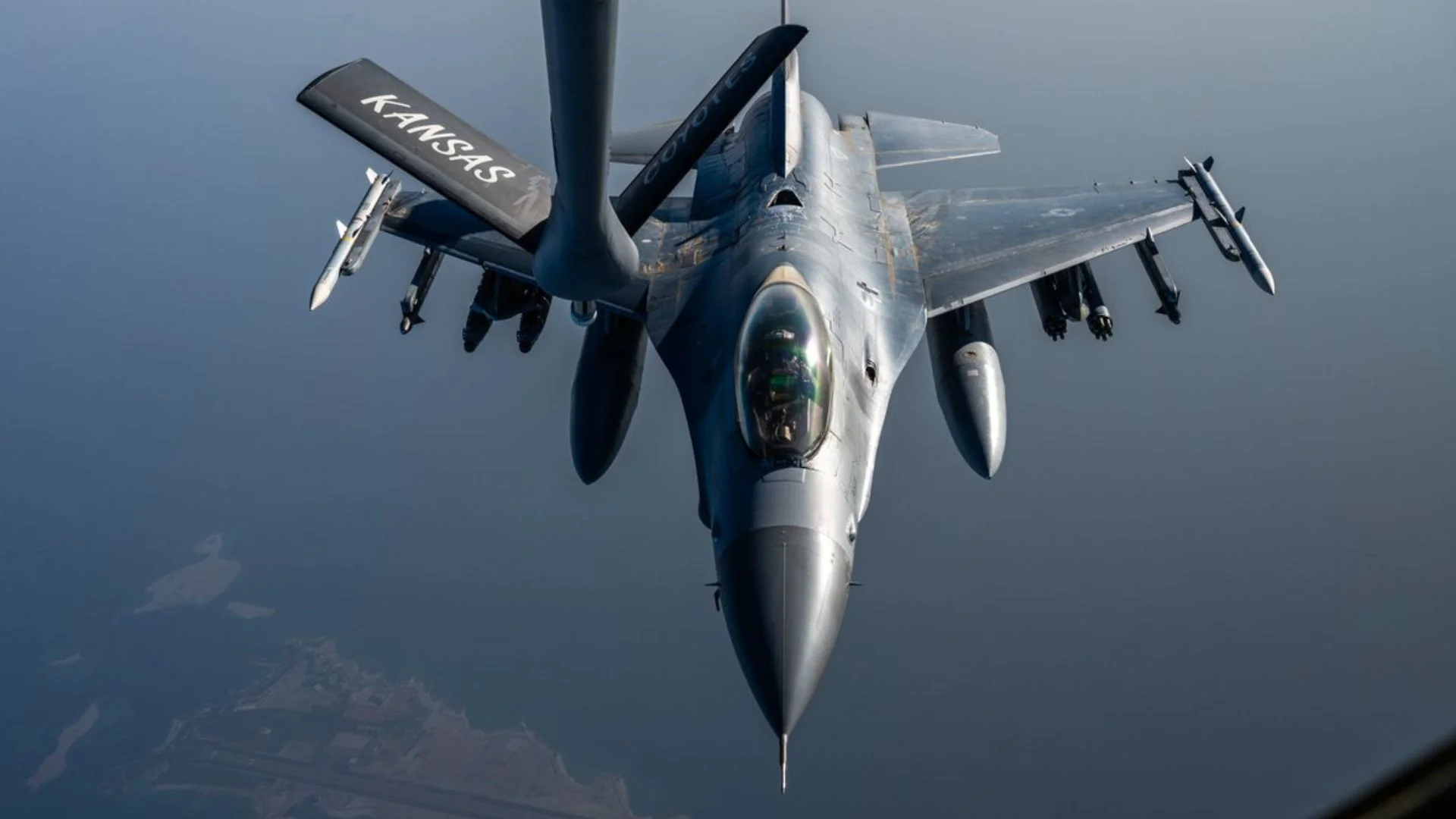
US Central Command chief Adm. Brad Cooper said A-10 attack aircraft, F-15s, F-16s, and F-35 stealth fighters are participating in the mission. RC-135 intelligence aircraft and unmanned drones are also collecting surveillance data over the region. KC-135 and KC-46 refueling tankers are supporting long-duration patrols by keeping aircraft in the air for extended periods.
Officials also confirmed that military space operators are assisting the operation. Chairman of the Joint Chiefs of Staff Gen. Dan Caine declined to identify the specific systems being used. However, he said space-based support plays an important role in tracking threats and coordinating military activity across the region.
The security mission follows months of disruption caused by Operation Epic Fury, the ongoing conflict between the US and Iran that began in late February.
Iran has reportedly used anti-ship mines, missiles, drones, and armed speedboats to threaten commercial vessels passing through the strait. Several ships were damaged, while many others avoided the route entirely due to safety concerns.
According to US officials, nearly 1,550 ships are currently delayed inside the Persian Gulf. More than 22,500 mariners from around 80 countries are also stranded as shipping traffic remains heavily restricted. The disruption has increased pressure on global trade and pushed oil prices to their highest levels in years.
Iran Threats Push Oil Prices Higher
The Strait of Hormuz is one of the world’s most crucial energy corridors. Around 20 percent of the global oil supply passes through the narrow passage between Iran and the Arabian Peninsula. Any disruption in the area can quickly affect fuel prices, shipping costs, and international supply chains.
Since the ceasefire began, Iran has continued efforts to control access through the strait as leverage against the US. In response, the US military created what officials call an enhanced security area on the southern side of the waterway. Two US Navy destroyers are now operating continuously in the area with support from aircraft and land-based forces.
Hegseth said the destroyers are providing around-the-clock protection against Iranian attacks. Cooper added that the warships recently sailed through the strait to demonstrate that a safe route had been cleared for commercial traffic. He said the US military now uses a layered defense system instead of direct ship escorts.
That defense network includes fighter aircraft, helicopters, airborne warning systems, electronic warfare support, and naval forces working together.
Cooper said the approach offers broader protection than the escort operations used during the 1980s ‘Tanker War’ between Iran and Iraq. During that earlier conflict, the US Navy escorted Kuwaiti oil tankers after reflagging them as American vessels.
WATCH ALSO: Poland and Portugal Gain New Space Capabilities After ICEYE Launch
Military officials said Iranian forces launched cruise missiles, drones, and small attack boats against US forces protecting shipping routes on May 4.
Gen. Caine said US Navy MH-60 helicopters and Army AH-64 Apache helicopters intercepted and destroyed the threats before they reached commercial vessels. Cooper later confirmed that six Iranian small boats were destroyed during the engagement.
The Air Force aircraft assigned to the mission each serves a different purpose in the operation. A-10 attack jets are designed for close-range strikes against small, fast-moving boats often used by Iran’s Revolutionary Guard Corps.
F-15 and F-16 fighters can intercept drones and incoming aerial threats, while F-35 stealth fighters provide advanced radar sensing and electronic warfare capabilities.
Cooper also confirmed that two US-flagged commercial ships successfully passed through the Strait of Hormuz under the new security arrangement.
US officials hope the operation will gradually restore confidence among international shipping companies. The success of Project Freedom may shape future military and trade strategies in one of the world’s most strategically important waterways.