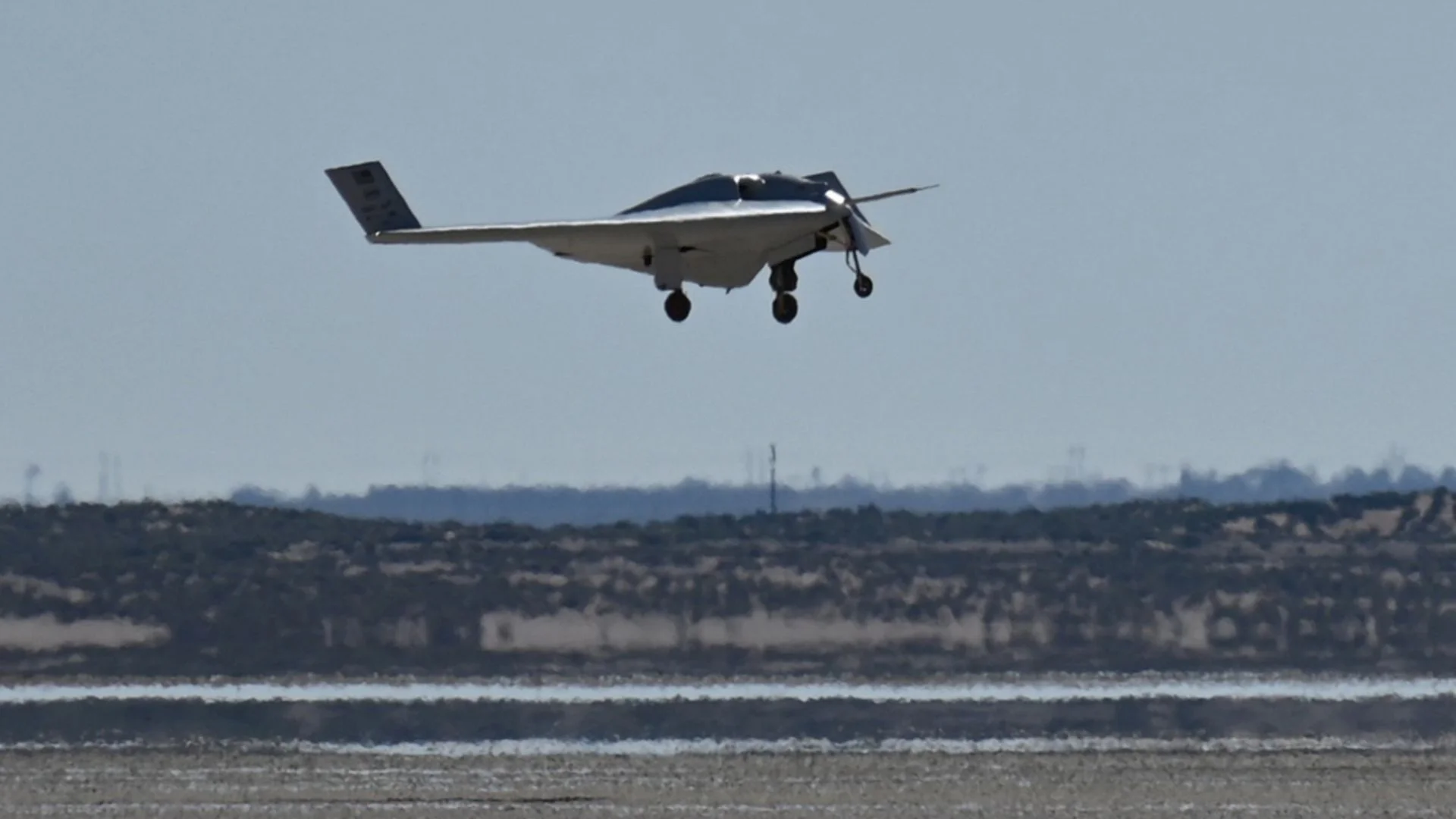
DARPA has successfully completed the first flight of the XRQ-73, a hybrid-electric unmanned aircraft developed with the Air Force Research Laboratory and Northrop Grumman.
The experimental drone flew at Edwards Air Force Base in California in April 2026 as part of the Series Hybrid Electric Propulsion Aircraft Demonstration (SHEPARD) program.
The test marks an important step in the US military’s effort to develop quieter, fuel-efficient aircraft for future intelligence and surveillance missions.
READ ALSO: China Expands 10,000-Card AI Clusters as Tech Giants Race for Computing Power
DARPA XRQ-73
The XRQ-73 is a tailless flying-wing drone powered by a hybrid-electric propulsion system. The aircraft combines a traditional fuel-powered engine with electric propulsion technology to improve efficiency and reduce operational noise. Officials said the successful flight validated the aircraft’s overall design and propulsion architecture.
DARPA confirmed the program is focused on proving the military value of hybrid-electric aircraft systems. The agency believes such designs can support longer missions while using less fuel than conventional aircraft. Reduced fuel demand can also lower logistical pressure during military operations.
Lt. Col. Clark McGehee, the SHEPARD program manager, said the flight represents more than a single aviation milestone.
He stated that the XRQ-73’s architecture opens the door for new mission systems and operational capabilities. He also noted that the program will continue expanding its aircraft’s flight-testing campaign.
WATCH ALSO: US firm successfully demonstrates ship-based Sea Launcher for autonomous underwater vehicle ops
Northrop Grumman publicly announced the start of flight testing one day after DARPA revealed details of the April flight. The company said the aircraft’s propulsion system improves fuel efficiency while increasing operational flexibility. It also highlighted the aircraft’s ability to support future aircraft concepts and mission profiles.
The aircraft was developed with major support from Scaled Composites, a Northrop Grumman subsidiary known for experimental aerospace projects. The XRQ-73 evolved from the earlier XRQ-72A design that was linked to the Great Horned Owl research effort. DARPA previously stated that the aircraft weighs around 1,250 pounds, placing it below the military’s Group 3 unmanned aircraft category limit.
SHEPARD Program
The SHEPARD program is part of DARPA’s X-Prime development model. This approach aims to rapidly mature emerging technologies into operational systems with lower integration risks. DARPA uses the model to accelerate the transition of experimental concepts into practical military use faster than traditional development programs.
The XRQ-73 builds on technology first explored under the Great Horned Owl contract managed by the Air Force Research Laboratory. The newer aircraft uses a larger platform with operationally realistic fuel capacity and mission systems. At the same time, it remains small enough to fit within Group 3 drone classifications.
One of the main goals of the SHEPARD program is to develop highly efficient, very quiet propulsion systems. Lower engine noise is important because sound can reveal an aircraft’s presence even when radar systems fail to detect it. Quiet aircraft are especially useful for intelligence, surveillance, and reconnaissance missions near contested areas.
READ ALSO: US Navy Tests Montford Point Ship for At-Sea Missile Reloading in Pacific Operations
Images released after the flight also showed noticeable design changes compared with earlier 2024 renderings. The aircraft now includes two vertical stabilizers, which were absent in earlier concept images. These updates suggest engineers refined the aircraft’s aerodynamic stability during development.
The XRQ-73 had originally been expected to fly in 2024. DARPA has not explained why the first flight was moved to 2026. Despite the delay, the successful test indicates the program has now entered a more advanced development phase.
Why Hybrid-electric Military Aircraft Matter
Hybrid-electric propulsion is gaining attention across both civilian and military aviation sectors. In commercial aviation, companies are exploring technologies to reduce emissions and fuel costs. In military aviation, the focus is more heavily centered on range, endurance, and operational flexibility.
Aircraft that consume less fuel can travel farther or remain airborne longer without refueling. Lower fuel demand can also reduce the number of supply missions needed during military campaigns. This becomes especially important in remote or contested regions where fuel delivery is difficult and dangerous.
Hybrid-electric systems also support future autonomous aircraft designs. Electric propulsion can simplify certain mechanical systems while enabling quieter operation. These features are increasingly valuable as militaries invest in stealthier unmanned aircraft for surveillance and precision missions.
WATCH ALSO: Poland and Portugal Gain New Space Capabilities After ICEYE Launch
The successful XRQ-73 flight adds momentum to broader US defense efforts to modernize aircraft propulsion technologies. DARPA and its industry partners are expected to continue testing the drone in the coming months. The results might influence future military drone programs and next-generation aircraft development across the defense sector.