Scientists have long known that sunlight can be used to create clean fuel. But exactly how this transformation happens has remained difficult to observe. Now, researchers at Yale University have found a way to watch the process unfold in real time, at an incredibly tiny scale.
The study, published in the Proceedings of the National Academy of Sciences, introduces a new method to directly observe how sunlight interacts with materials to produce energy. This work focuses on photocatalysis, a process where light activates a material to drive chemical reactions, such as splitting water into hydrogen and oxygen.
Hydrogen is considered a clean fuel of the future. But improving the technology to produce it efficiently has been challenging, mainly because scientists could not clearly see what was happening at the smallest levels during the reaction.
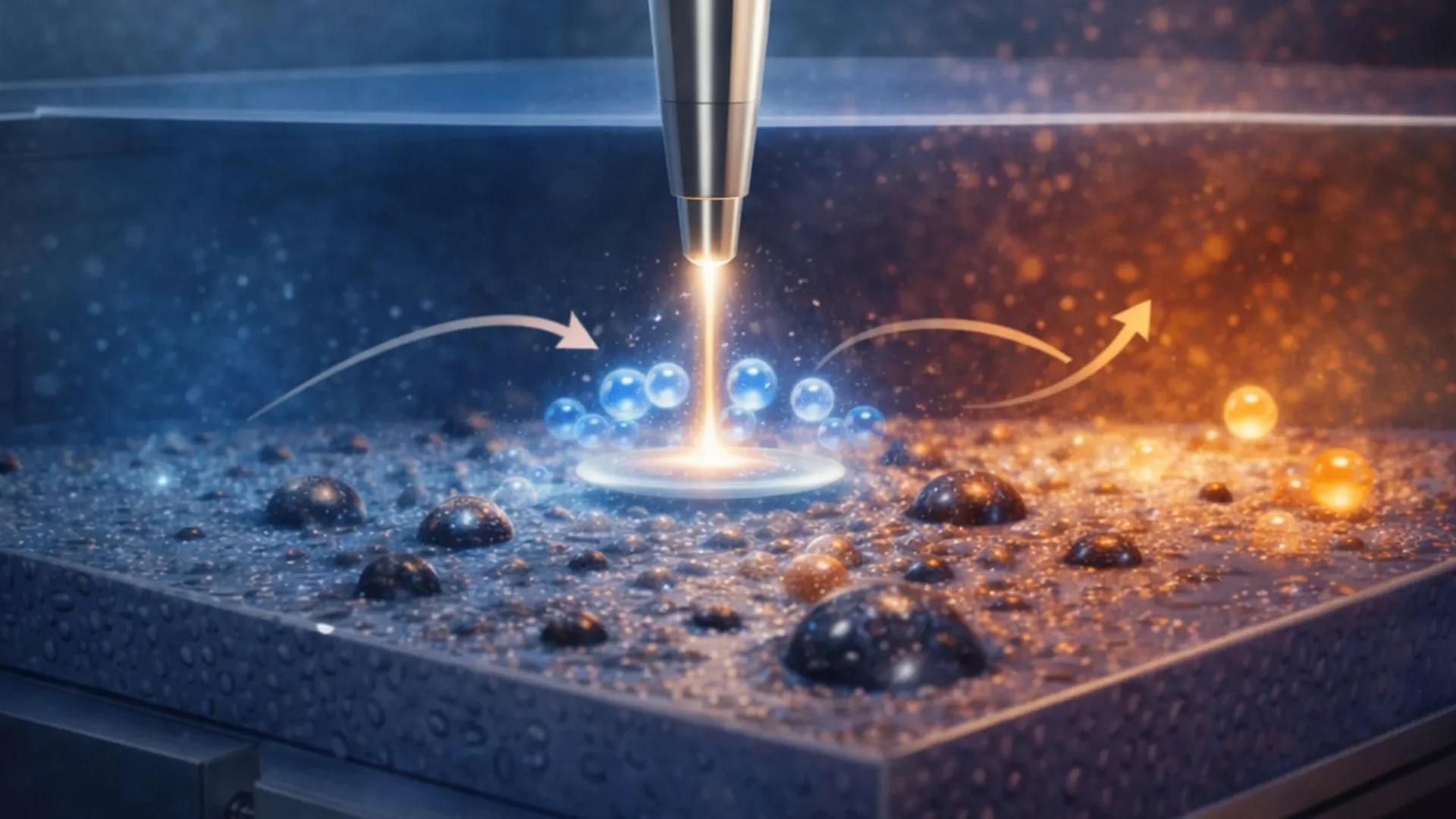
The Yale team developed a technique that allows them to observe these reactions at the nanoscale, about 10 nanometers wide. At this scale, they can track how electrons move and how chemical reactions occur when light interacts with the catalyst.
READ ALSO: China’s Kinetica-2 Matches Falcon 9 Costs: Reusability Set to Slash Prices
“We are excited because this method lets us see a photocatalyst in action with an unusual combination of realism and resolution,” said Shu Hu, who led the study.
This new level of detail helps scientists understand two key processes involved in water splitting: reduction and oxidation. These reactions work together to break water molecules into hydrogen and oxygen. Until now, the boundary between these two processes has been unclear.
By identifying where and how these reactions occur, researchers can design better materials that make solar fuel production more efficient.
To achieve this, the team built a highly sensitive system that simultaneously measures electrical current and voltage. These are known as amperometric and potentiometric measurements. The current shows how many electrons are moving, while the voltage indicates the force driving them.
WATCH ALSO: Chinese humanoid robot learns to stitch detailed embroidery patterns autonomously
At the heart of this system is a tiny tool called a nanotip. It is made from a fragile quartz tip with a platinum wire at its center, only a few nanometers wide. This nanotip is carefully placed in contact with the material being studied.
Handling such a delicate instrument was not easy. The researchers had to ensure precise positioning without damaging either the tip or the surface. Despite these challenges, the system worked successfully.
One surprising finding was that the team could measure both the electrical current of metallic surfaces and the voltage of semiconductor materials under light. This dual measurement provides a more complete picture of how photocatalysts function.
The research was carried out by a team including Tianyu Bo, Haoqing Su, Ziyuan Wang, Je Hyun Bae, Gaukhar Askarova, and Michael V. Mirkin.
READ ALSO: Cyprus Seeks 180 French Armored Vehicles with EU Funding
This new approach opens the door to better understanding and improving solar-powered technologies. By watching the reaction as it happens, scientists can now refine materials that turn sunlight into clean fuel and useful chemicals more efficiently.
In simple terms, this study brings us one step closer to turning sunlight into a reliable energy source by finally letting us see the process in action.