Los Alamos National Laboratory scientists say fiber-optic cables laid on the lunar surface could detect moonquakes. The lightweight approach could replace heavy, expensive seismometers for future Artemis missions.
Researchers at Los Alamos National Laboratory have proposed using fiber-optic cables to monitor seismic activity on the moon. Two recent studies show that cables placed directly on the lunar ground can act as sensitive vibration detectors.
The technique is called distributed acoustic sensing. It uses laser pulses transmitted through optical fibers to detect tiny movements along the entire length of the cable. A single cable can work like thousands of individual sensors.
READ ALSO: AeroVironment Unveils LOCUST X3 Laser System to Fight Drones
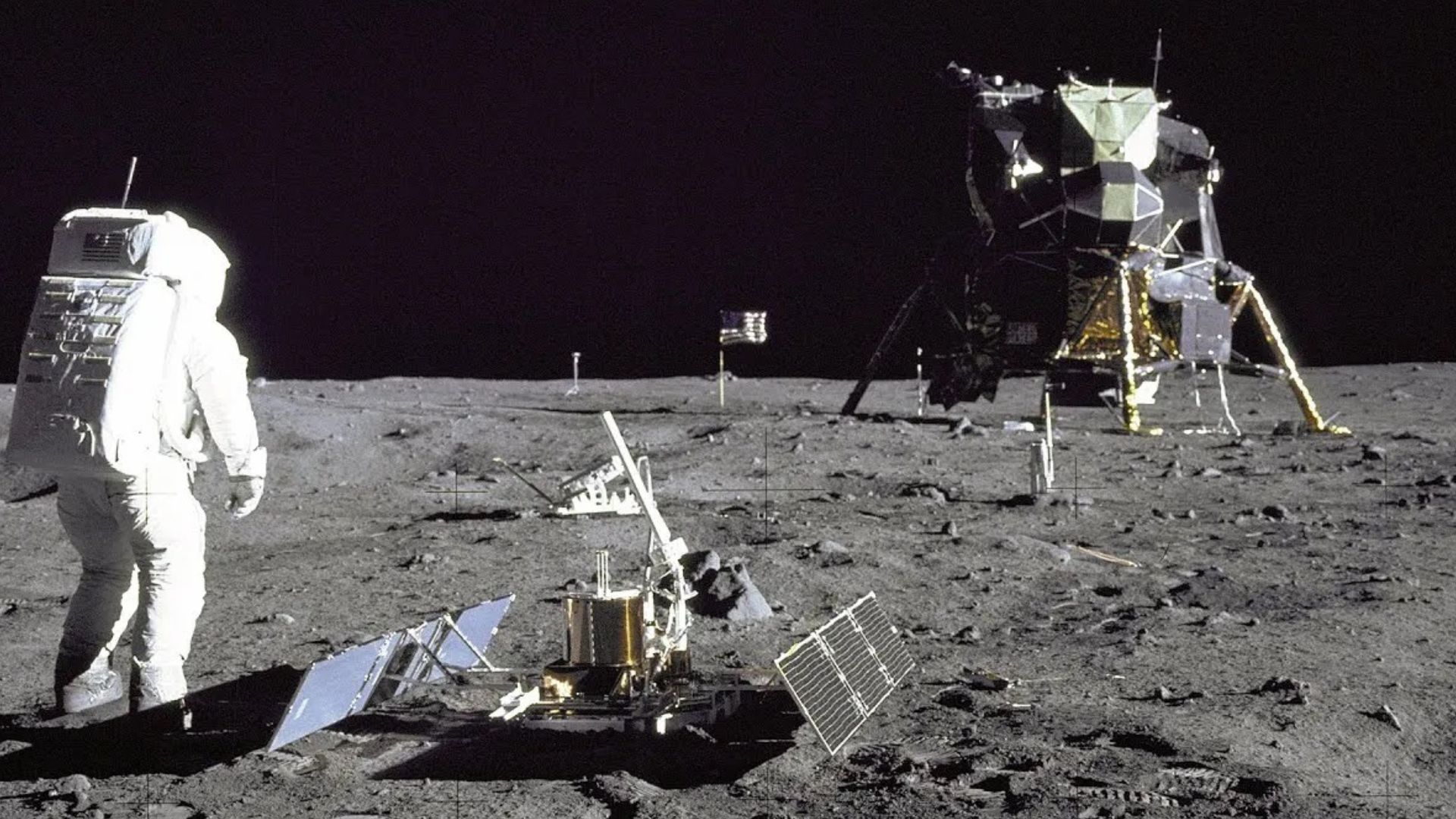
Traditional seismometers are heavy, costly, and only measure a single point. The Apollo program placed a few such instruments and discovered the moon is surprisingly active, with thousands of quakes recorded. But deploying many sensors across large areas would be difficult.
Carly Donahue, a scientist at Los Alamos and corresponding author on the papers, explained that fiber‑optic cables are lightweight, robust, and inexpensive. A robot or rover could simply unspool kilometers of cable without burying it, making installation far simpler.
Moonquakes differ from earthquakes. They are caused by tidal forces from Earth, meteorite impacts, and extreme temperature swings. Because the moon’s interior is fractured, seismic energy can linger for a long time, creating prolonged shaking.
Understanding these quakes is important for astronaut safety. As NASA’s Artemis program aims for a sustained human presence, engineers need data to choose safe base locations and design structures that can withstand repeated vibrations.
WATCH ALSO: China commissions world’s largest open-sea offshore solar photovoltaic project
A limitation is that the cables would remain on the surface rather than being buried. The researchers tested whether surface‑laid cables could still deliver useful data, and their results suggest it works well enough for seismic monitoring.
If deployed, this system would give scientists a much clearer picture of the moon’s interior structure. It would also help protect future lunar bases, turning a simple communications cable into a powerful safety tool.