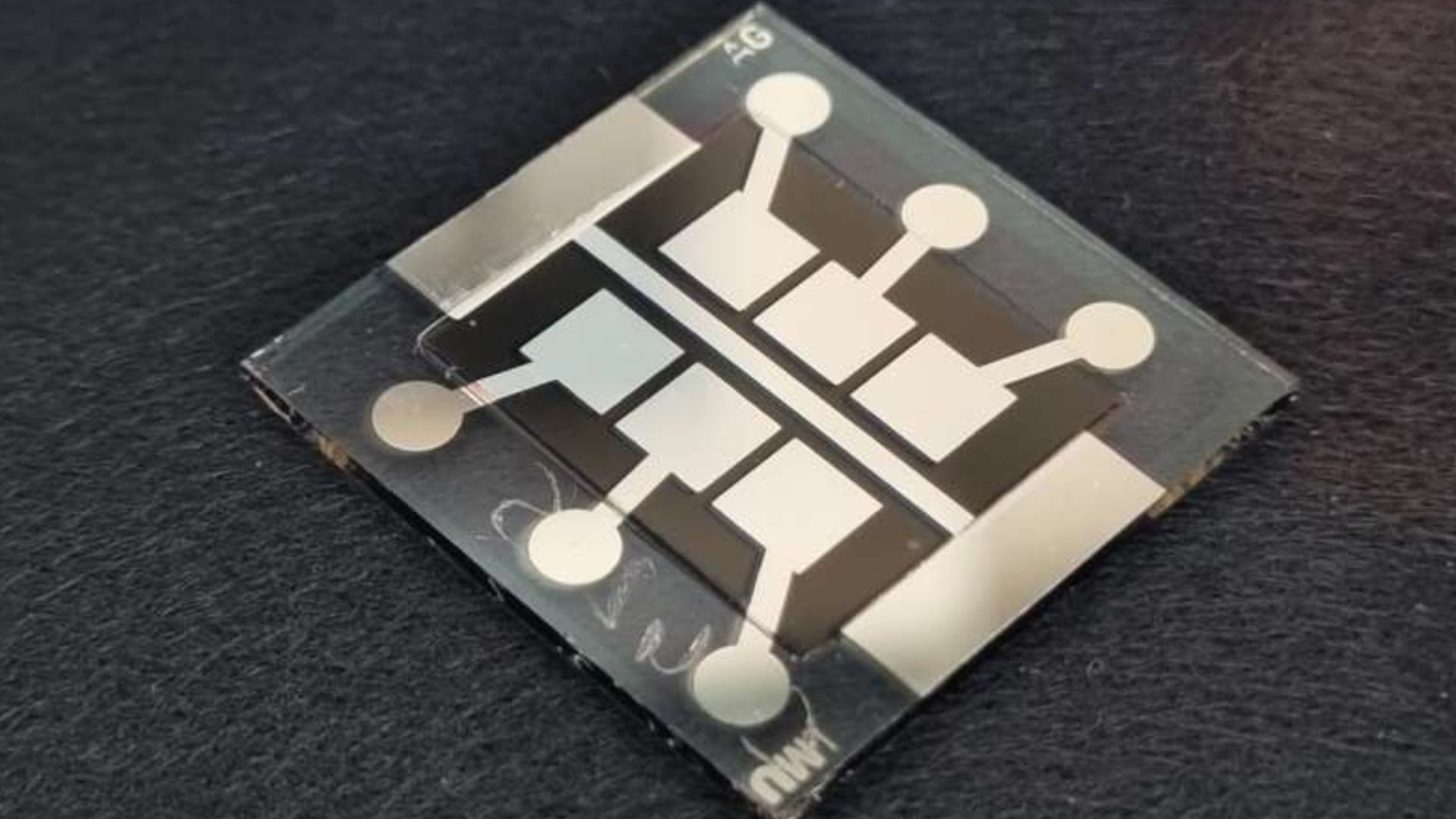
Researchers at LMU Munich have developed a new reinforcement method that significantly improves the durability of perovskite solar cells under extreme temperature fluctuations.
By integrating molecular stabilizers into the cell structure, the team enabled the cells to withstand repeated thermal cycling conditions similar to those in low Earth orbit.
The advancement addresses a long-standing barrier to the use of perovskite technology in space applications, bringing lightweight, high-efficiency solar panels closer to deployment on satellites and other aerospace systems.
READ ALSO: US Johns Hopkins Uses Wine Waste to Recycle Battery Metals
A team led by Dr. Erkan Aydin developed the technique. They published their findings in the journal Nature Communications. The work came from the Aydin Group within the university’s Department of Chemistry and Pharmacy.
Perovskite solar cells are cheap to make and highly efficient. But they are fragile. In low Earth orbit, temperatures range from -80°C to +80°C. Materials inside the cell expand and contract at different rates, leading to cracks and performance drops.
The team used a two‑step molecular reinforcement.
READ ALSO: Japan’s Kawasaki EC-2 Aircraft Just Flew, But Its Real Power Is Hidden in Shadows
First, they added α‑lipoic acid to the perovskite layer. It forms a flexible network at the grain boundaries, reducing defects.
Second, they used a special molecule with a sulfonium group to create a strong chemical bond between the electrode and the perovskite layer.
The improved cells achieved 26% efficiency. After 16 temperature cycles between -80°C and +80°C, they kept 84% of their original performance. The team tested representative conditions based on spacecraft design and orbit.
The research shows that most degradation happens during the first few cycles. While promising, the technology still needs more testing to fully understand how it behaves under long‑term space conditions. Dr. Aydin noted that further work will follow.
WATCH ALSO: Wing expanding drone delivery to additional Walmart stores in US city
This work brings durable perovskite solar cells closer to real‑world use. It could enable lightweight solar panels for satellites and high‑altitude platforms, as well as flexible solar modules of the future. According to the researchers, the findings provide a pathway to targeted improvements in mechanical stability.