China has unveiled a large electric aircraft that could represent the future of flying taxis.
The aircraft, called Matrix, is a prototype electric vertical takeoff and landing vehicle (eVTOL) developed by the Chinese company AutoFlight.
The aircraft was recently demonstrated at the company’s low-altitude flight test facility in Kunshan, a city located about 60 kilometers west of Shanghai. During the test, the aircraft lifted smoothly from a helipad and flew around the test site before landing safely.
The Matrix is considered one of the largest electric aircraft built in China so far. It is designed to carry up to 10 passengers, significantly more than most current flying taxi prototypes worldwide.
AutoFlight was founded in 2017 and focuses on developing electric aircraft for future urban transportation. The company believes the Matrix could eventually become part of a new generation of air taxis that transport passengers across cities.
The aircraft has a 20-meter wingspan, a length of 17.1 meters, and a height of 3.3 meters. It weighs about five tons and is powered entirely by electric motors.
READ ALSO: https://modernmechanics24.com/post/us-army-builds-genesis-missile-defense/
According to the company, the aircraft can fly for about one hour on a single charge.
During the demonstration, technicians moved the Matrix out of a hangar and onto a helipad. After several safety checks, its propellers began spinning and the aircraft slowly lifted into the air.
The aircraft was noticeably quieter than a traditional helicopter, although it still produced some noise.
The Matrix then completed two laps around the heliport, remaining airborne for roughly ten minutes before returning for a smooth landing.
Despite the successful demonstration, experts say flying taxis will not appear in cities overnight.
Steven Yang, senior vice president of AutoFlight, said predicting when flying taxis will become widely available remains difficult.
WATCH ALSO: https://modernmechanics24.com/post/rolls-royce-test-methanol-marine-engine-3/
“This is a good question, but it is a very tough question for me to answer,” Yang said.
AutoFlight has already developed a smaller, two-ton passenger eVTOL aircraft, but it is still awaiting certification from aviation regulators.
Yang said the company aims to obtain a type certificate by 2027, which would confirm that the aircraft meets official safety standards. Even after receiving that certification, additional approvals would still be required before the aircraft could begin carrying passengers commercially.
The Matrix itself remains a prototype and will require further testing and development.
China is not the only country exploring flying taxi technology. Several companies worldwide are developing electric aircraft designed for short urban flights.
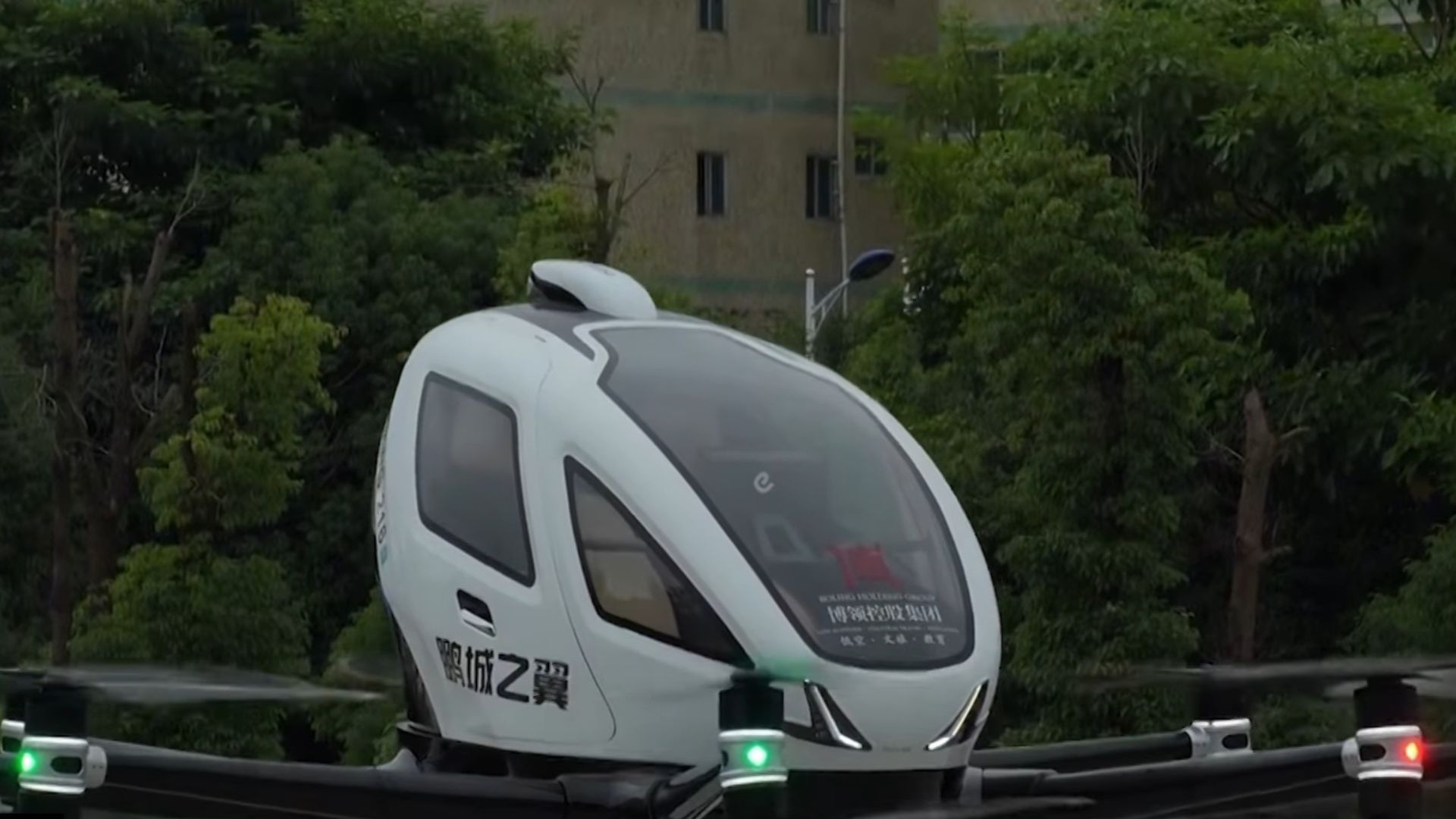
Within China, multiple firms are working on similar projects. One example is EHANG, a company based in Guangdong province that has already received regulatory approval to offer commercial passenger services with its autonomous eVTOL aircraft.
READ ALSO: https://modernmechanics24.com/post/china-space-beam-change-typhoon-path/
However, commercial flying taxi services have not yet begun operating widely.
Experts say the biggest challenge is not just building the aircraft but creating the infrastructure needed to support them.
This includes facilities such as airports for low-altitude vehicles, charging stations, air traffic systems, and new safety regulations.
The concept of urban flying taxis is often connected to China’s growing low-altitude economy. This sector focuses on using drones and other aircraft for services such as transportation, logistics, and deliveries.
In some Chinese cities, parts of this system are already operating. For example, drones are being used to deliver food in the southern technology hub of Shenzhen.
Economists say the flying taxi industry still faces several challenges before it becomes widely available.
WATCH ALSO: https://modernmechanics24.com/post/idaho-lab-receives-nuclear-reactor-fuel/
Gary Ng, senior economist at Natixis Corporate and Investment Banking, said many issues still need to be solved.
“All of this ecosystem surrounding the technology is still underdeveloped,” Ng said.
He added that improvements in infrastructure, safety systems, and air traffic management will be essential.
“I would say it will take at least another three years before we see something more viable,” Ng said.
Even so, many companies remain confident that electric air taxis will eventually become part of urban transportation systems.
Yang believes that building this new industry will require cooperation across many sectors.
“We really believe it will happen,” Yang said. “But this is not only AutoFlight’s job. It requires the entire ecosystem to develop.”