The US Library of Congress has released a restored version of the world’s oldest film featuring a robot-like figure.
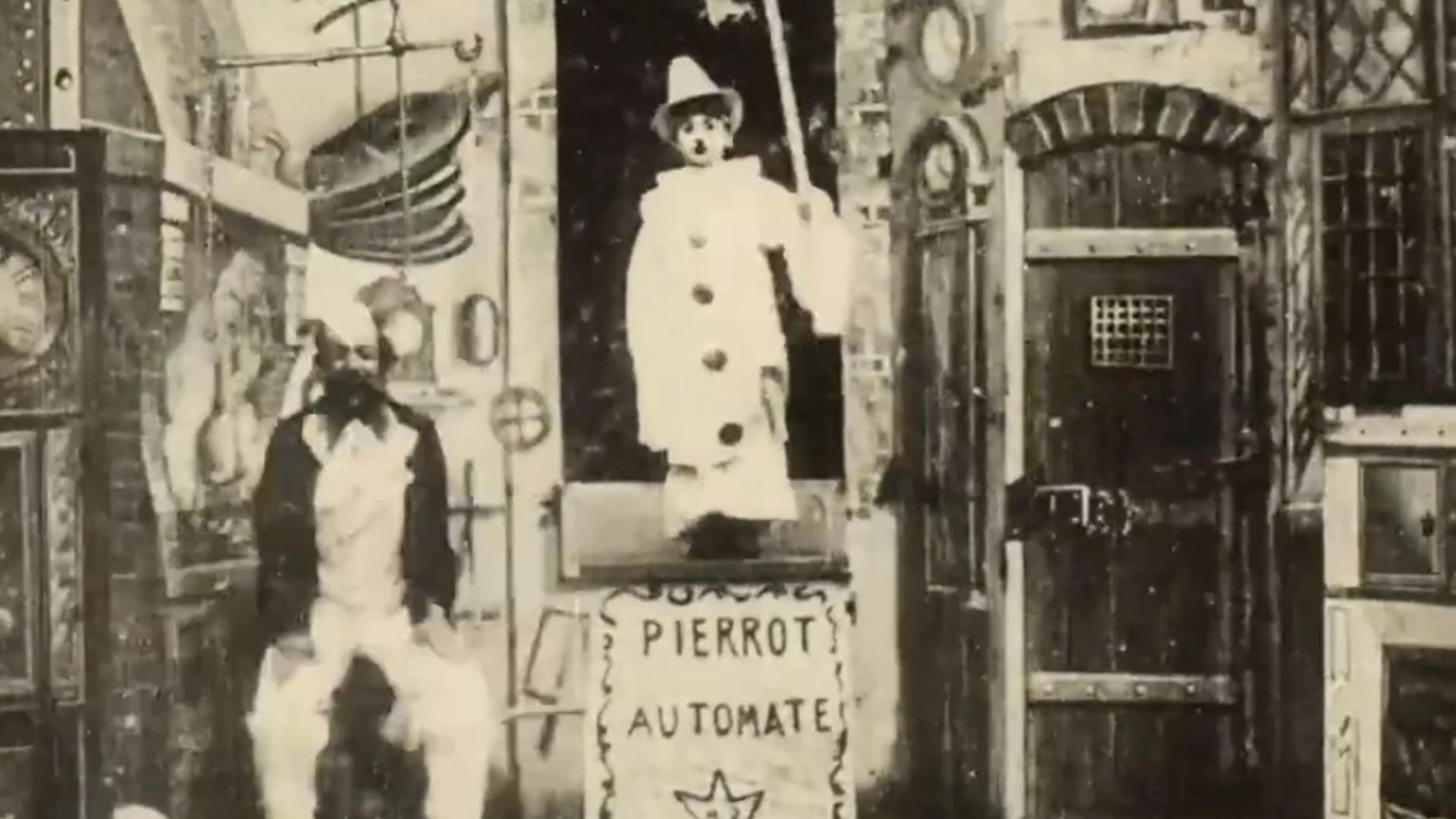
The silent film, titled Gugusse et l’Automate, was created in 1897 by French filmmaker Georges Méliès.
For many years, historians believed the film had been lost forever. However, in 2025, archivists discovered a damaged copy in the Library of Congress’s Culpeper, Virginia, archives. After careful restoration work, the short film is now available to watch again.
Georges Méliès is widely recognized as one of the earliest pioneers of cinema. At a time when many filmmakers simply recorded everyday scenes, he experimented with storytelling and visual illusions. His creative approach helped shape modern filmmaking techniques.
While early films often showed simple events such as trains arriving at stations or people walking through streets, Méliès introduced the idea of staged scenes that formed a connected narrative. This approach lets filmmakers tell imaginative stories on screen.
Méliès also became famous for inventing early special effects. His experiments began in 1896, when a camera malfunction redirected his work. While filming at Place de l’Opéra in Paris, his camera jammed briefly. When the footage was played back, it appeared as though a bus suddenly transformed into a hearse.
The surprising effect inspired Méliès to explore new cinematic tricks. He began combining stage magic with filmmaking techniques. He experimented with double exposure, dissolves, hand-colored film frames, and matte shots. Many of these effects had to be created directly inside the camera before the film was even developed.
READ ALSO: https://modernmechanics24.com/post/china-organic-lithium-battery-safety/
Through these inventions, Méliès produced a number of influential early films. Some of his best-known works include Le Manoir du Diable, Cendrillon, Le Voyage à travers l’impossible, and the famous science-fiction film Le Voyage dans la Lune.
Unfortunately, many films from that era have disappeared over time. In the early days of cinema, films were often treated as temporary entertainment rather than historical records. After a few screenings, reels were discarded or destroyed. As a result, countless early films have been lost.
Gugusse et l’Automate was long considered one of those lost works. The rediscovered copy was found on ten deteriorating nitrate film reels. The reels had been stored for decades in basements and garages before eventually being donated to the Library of Congress by Bill McFarland of Michigan.
Once archivists identified the film, restoration experts at the National Audio-Visual Conservation Center began the delicate process of saving it. They stabilized the fragile nitrate film and digitally scanned the damaged frames to preserve the footage.
The restored film runs for less than one minute but offers an enthralling glimpse into early cinematic imagination.
WATCH ALSO: https://modernmechanics24.com/post/china-flies-6-ton-tiltrotor-maiden-test/
The story follows a clown named Gugusse who presents an automaton shaped like a small boy. As Gugusse turns a crank, the mechanical figure waves a stick. Suddenly, the automaton grows larger and continues waving. It eventually becomes the size of a grown man and begins striking Gugusse on the head.
Angered by the attack, the clown fights back. He throws the automaton to the ground and hits it with an oversized hammer. With every blow, the figure shrinks until it becomes a puppet, which Gugusse finally destroys.
Although the film is short, its rediscovery delivers valuable insight into the early history of cinema and special effects. It also highlights Georges Méliès’s creative imagination, whose experiments helped shape the future of filmmaking.