Scientists at the U.S. Department of Energy’s Argonne National Laboratory have created an AI-guided method that makes X‑ray analysis five times faster. The new technique reduces human error and protects sensitive samples from damage during experiments.
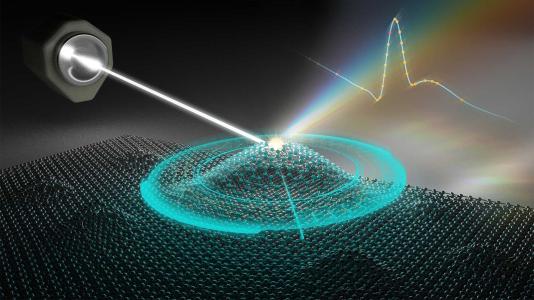
Researchers at Argonne National Laboratory developed an artificial intelligence system that speeds up a common X‑ray technique called XANES spectroscopy. The AI method cuts the number of measurements needed by up to 80 percent while keeping full accuracy.
A team led by Mathew Cherukara, a computational scientist and group leader at Argonne’s Advanced Photon Source (APS), built the new approach. Ming Du, a computational scientist, served as lead author on the study published in npj Computational Materials.
READ ALSO: https://modernmechanics24.com/post/china-largest-compressed-air-energy/
Traditional XANES spectroscopy requires scientists to make dozens or hundreds of manual choices about where and how long to measure. This slow process risks human error and can damage samples from prolonged X‑ray exposure.
The AI algorithm automatically picks the most useful measurement points instead of scanning everything. It identifies areas rich in chemical information and skips regions that offer little value. The system learns where the absorption edge will appear and focuses measurements there.
Scientists use XANES to study batteries, catalysts, and materials that conduct electricity without resistance. The faster method lets researchers watch chemical changes as they happen in real time, revealing how battery charge states shift or how catalysts react with other chemicals.
The system works best when researchers know the starting and ending states of the material, such as a fully charged versus fully discharged battery. The team continues refining the algorithm for more complex unknown samples.
WATCH ALSO: https://modernmechanics24.com/post/us-firm-sea-launcher-underwater-drones/
This breakthrough moves X‑ray science toward fully autonomous experiments that make decisions during measurements. As the upgraded APS delivers beams 500 times brighter than before, smart AI tools will help capture fast chemical reactions with every photon.