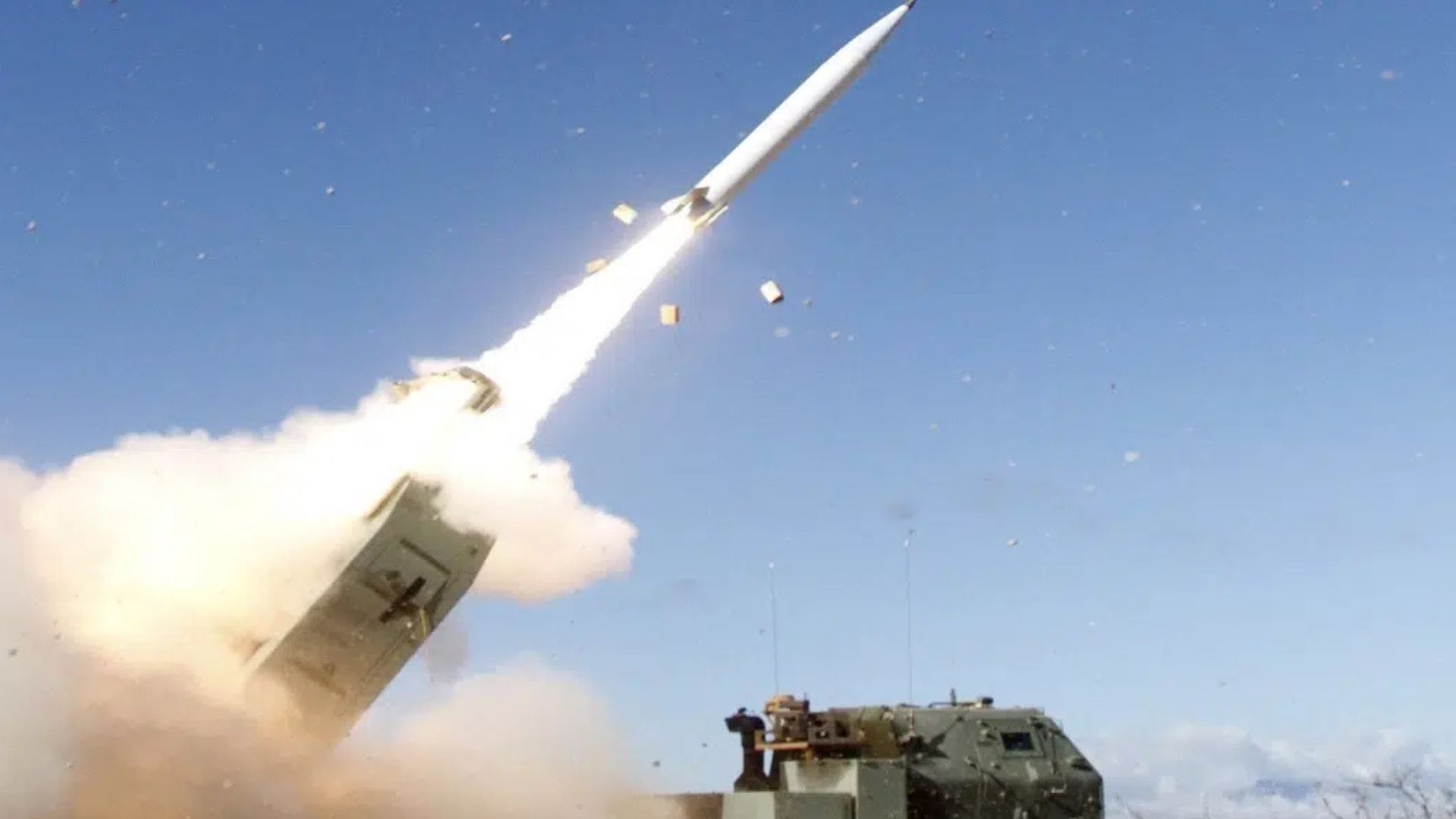
The US has used its new Precision Strike Missile (PrSM) in combat for the first time during ongoing military operations targeting Iran.
The operation is part of ‘Operation Epic Fury.’ It is the US component of joint operations with Israel against Iranian targets.
The US Central Command (CENTCOM) released images and video clips from the first 24 hours of the operation. One image clearly shows a PrSM missile being launched from a wheeled M142 High Mobility Artillery Rocket System (HIMARS).
The Precision Strike Missile only began entering service about two years ago. Until now, it had not been used in real combat.
Defense analyst Colby Badhwar was among the first to identify the missile in the CENTCOM images. The PrSM looks different from its predecessor, the Army Tactical Missile System (ATACMS). It has a different tail fin design and a modern configuration.
READ ALSO: https://modernmechanics24.com/post/iran-building-nuclear-weapon/
The images also show a HIMARS launcher carrying a two-cell ammunition pod. This is important because ATACMS pods carry only one missile. In contrast, PrSM pods can carry two missiles in the same space. This increases firepower without needing more launch vehicles.
The PrSM can be launched from both the M142 HIMARS and the tracked M270 Multiple Launch Rocket System (MLRS). These launchers use standardized pods. They can also fire 227mm guided rockets, which come in six-round pods.
CENTCOM also released video clips of HIMARS launchers firing short-range ballistic missiles. The caption stated, “The Iranian regime was warned. CENTCOM is now delivering swift and decisive action as directed.”
Some of the missiles in the video appear to be PrSM, while others may be ATACMS. Officials have not confirmed the exact number of PrSM missiles used.
READ ALSO: https://modernmechanics24.com/post/china-polymer-solar-cell-19-1-record/
One of the biggest advantages of the PrSM missile is its extended range. The older ATACMS missile has a shorter reach. The new baseline PrSM, known as Increment 1, has already demonstrated the ability to strike targets at least 310 miles (500 kilometers) away.
The US Army aims to extend that range even further. The service has set a goal of reaching about 400 miles (650 kilometers). It is also developing an advanced version that could fly at least 620 miles (1,000 kilometers), or possibly even farther.
This increased range allows US forces to strike deeper into enemy territory. It also expands the number of potential targets American units can hold at risk.
The PrSM’s combat debut is significant for several reasons.
First, it shows that the missile is operational and ready for real-world missions. Second, its longer range changes battlefield planning. US forces can now hit more distant targets without moving closer to enemy defenses.
The ability to carry two missiles per pod also improves efficiency. Launchers can deliver more firepower in a single mission.
READ ALSO: https://modernmechanics24.com/post/cas-sets-15-45-kesterite-solar-record/
Operation Epic Fury highlights how quickly new military technology can move from testing to combat use. The PrSM program has advanced rapidly in recent years. Its first use in Iran-related strikes signals that it is now a key part of America’s modern missile arsenal.
The US Army continues to work on future versions of the Precision Strike Missile. Longer-range models are already in development. These upgrades could further increase the missile’s reach and flexibility.
As tensions remain high in the region, the PrSM is expected to play a larger role in US military strategy. Its combat debut in Operation Epic Fury marks the beginning of a new chapter in the US’s missile capabilities.