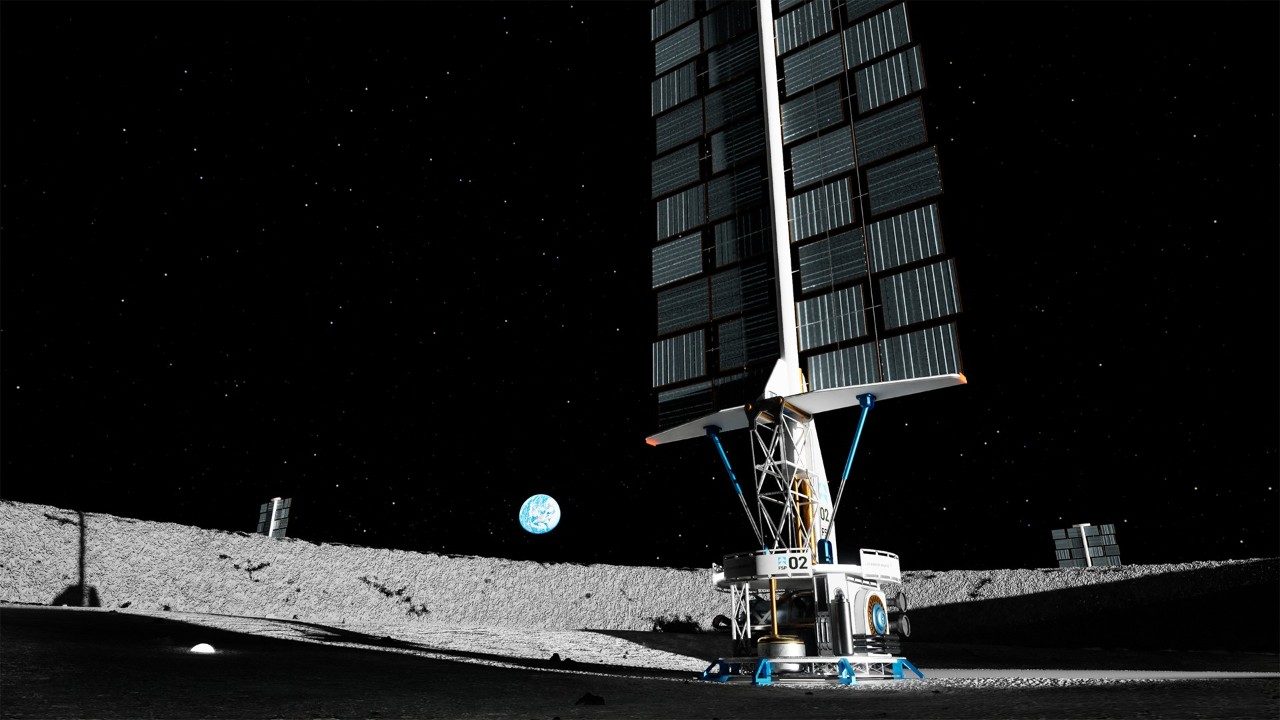
Lockheed Martin is developing a fission surface power system to provide reliable electricity for NASA’s Artemis Moon base. The company aims to have a reactor ready for launch by 2030, solving the challenge of two-week-long lunar nights.
The White House has issued an executive order calling for nuclear reactors on the Moon and in orbit, including a lunar surface reactor ready for launch by 2030. This pushes forward technology that has been in development since the 1960s.
Bill Pratt, director of in-space infrastructure at Lockheed Martin , explained the significance. Prior to the order, it was unclear whether to wait for demand or build first. The order establishes nuclear power as an anchor for future commercialization.
The Moon has two weeks of darkness at a time. Solar power cannot generate electricity during this period. Valuable resources also sit in permanently shadowed regions that never see sunlight. Nuclear power solves both problems.
READ ALSO: https://modernmechanics24.com/post/uw-madison-nuclear-energy-future-tour/
Lockheed Martin brings experience from decades of work on naval submarines, including space-rated avionics and nuclear instrumentation. In June 2022, the Department of Energy and NASA awarded the company a Phase 1 contract to develop a fission surface power concept. A Phase 1A extension in January 2025 added a risk reduction testbed for a space nuclear power conversion system.
The company is focusing on Brayton engines for power conversion because they offer higher efficiency than Stirling engines for systems at or above 50 kilowatts.
The design is flexible. A small 5 to 10 kilowatt reactor could power a single habitat or rover charging station. A 25 to 50 kilowatt system could serve multiple habitats, rovers, and emerging commercial activities. Starting with a 100 kilowatt reactor would provide more power than currently needed and increase program risk.
Kerry Timmons, business strategy lead for Lockheed Martin’s nuclear space programs , noted that making a 100 kW reactor requires more than scaling up a smaller design. It means mastering higher-temperature Brayton cycles, thermal management, and autonomous operation with new materials.
WATCH ALSO: https://modernmechanics24.com/post/baes-cv90120-tank-modern-warfare/
The approach allows for gradual expansion. A lower power demonstrator on the lunar surface can be proven first. Additional modules can then be added step by step to scale generation capacity and support higher energy activities like oxygen extraction from lunar soil and propellant production.
Nuclear power also supports orbital systems. Lower power orbital reactors, around 10 to 25 kW, can demonstrate key technologies and reduce risk before moving to higher power surface and orbital systems. This helps government agencies and commercial partners develop technologies together, share supply chains, and reduce costs.
Pratt emphasized the urgency. “We need to build fast in this space race, but also sustainably if we are to grow the Artemis Moon base and nurture future commercial markets.” Due to the cutting-edge nature of the technology, initial systems will need strong government support.
READ ALSO: https://modernmechanics24.com/post/khamenei-killed-in-us-israel-strikes/
Nuclear power is seen as an enabling technology that will reduce costs for future missions and commercial users. As a national priority, it could become the key enabler of a thriving economy on the Moon and beyond.