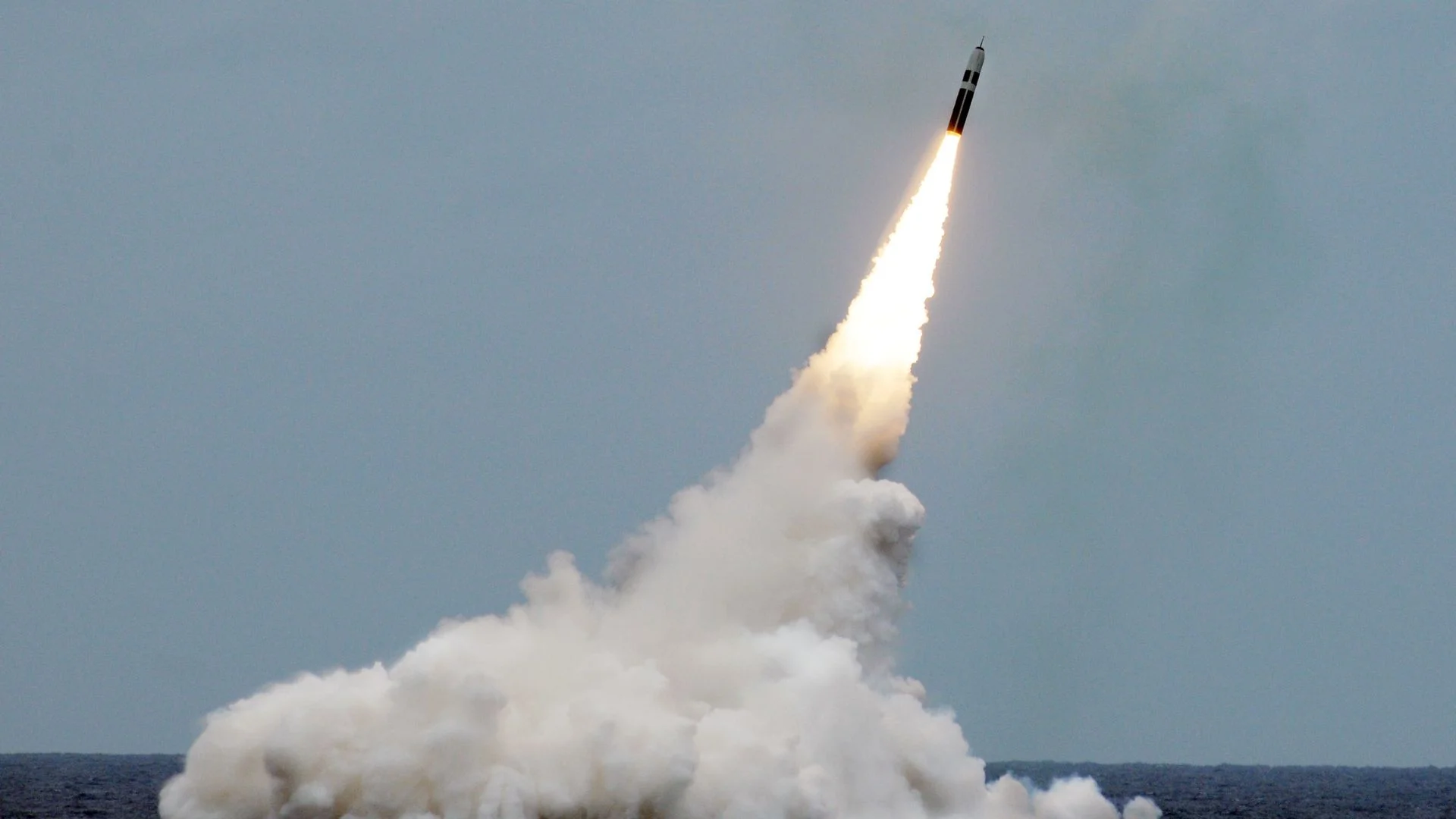
New Fiscal Year 2027 budget documents show the US Navy is fast advancing plans to make the Multi-mission Affordable Capacity Effector (MACE) its primary hypersonic strike weapon.
The plan shows a clear shift. Instead of relying on a few expensive systems, the Navy wants more, faster, more flexible weapons. MACE is at the center of that strategy.
The program gained momentum after Castelion won the competition with its design, known as Blackbeard. The project’s speed stands out. The US Navy, through Naval Air Systems Command, first asked for ideas just over two years ago. Now, it is already preparing for large-scale production.
READ ALSO: This Raytheon Camera Sees Heat Changes First, Targets Can’t Stay Hidden
Funding details show how seriously the Navy takes this. In 2027, it plans to buy 353 all-up rounds (AURs). The budget allocates $156 million to this first batch. Part of this money will go toward building up factories and supply chains to support future production.
Once production reaches full speed, the Navy expects at least 500 Blackbeard missiles to be built every year.
Future plans suggest a sharp increase in numbers. The Navy may buy 691 missiles in 2028. That number could rise to 976 in 2029, then 1,115 in 2030, and 1,375 in 2031. While these figures are not fully confirmed, they show the scale the Navy is aiming for.
The timeline is also aggressive. The program is expected to reach early operational capability in 2027. That means the first missiles could enter service very soon after production begins.
Even the first batch of 353 missiles would make Blackbeard the most widely available hypersonic weapon in the Navy’s inventory.
Earlier hypersonic programs faced delays and uncertainty. One of them, the Hypersonic Air Launched Offensive Anti-Surface weapon, also known as HALO, struggled to move forward. Despite discussions about reviving it, the program remains unfunded and effectively canceled. MACE now fills that gap.
WATCH ALSO: World’s first motorbike backflip between two moving trucks successfully completed
Blackbeard is designed to operate in a similar range category as the AGM-158C Long Range Anti-Ship Missile. That missile can strike targets more than 200 nautical miles away, with some estimates reaching 500 nautical miles.
Instead of focusing on a large warhead, it uses a smaller one weighing about 95 pounds. The design focuses more on speed and quick response. It is meant to hit time-sensitive targets before they can move or react.
This makes it especially useful in fast-changing battle situations. The missile will mainly be launched from Navy aircraft. These include the F/A-18E/F Super Hornet and the F-35C Lightning II.
The F-35C brings a key advantage. Blackbeard is small enough to fit inside its internal weapons bays. Each aircraft can carry up to four missiles without affecting its stealth profile. This gives the jet a new hypersonic strike role while keeping its low visibility. This combination of stealth and speed could change how the Navy conducts air operations.
READ ALSO: BAE Systems Secures $146M Deal to Launch M776 Cannon Production for U.S. Army
Another important detail is flexibility. Blackbeard is not limited to Navy use. The missile is also expected to be integrated with US Army systems. One likely platform is the M142 HIMARS, which is already widely used for long-range strikes. This cross-service use adds more value to the program and helps justify its rapid expansion.
Overall, the MACE program reflects a new way of thinking. The Navy is not just building advanced weapons; it is building them in large numbers and at a faster pace.
By focusing on affordability, scale, and speed, the Navy aims to stay ahead in a changing security environment. If current plans hold, Blackbeard will soon become a key part of that strategy, giving the US military a powerful, widely available hypersonic strike capability.