

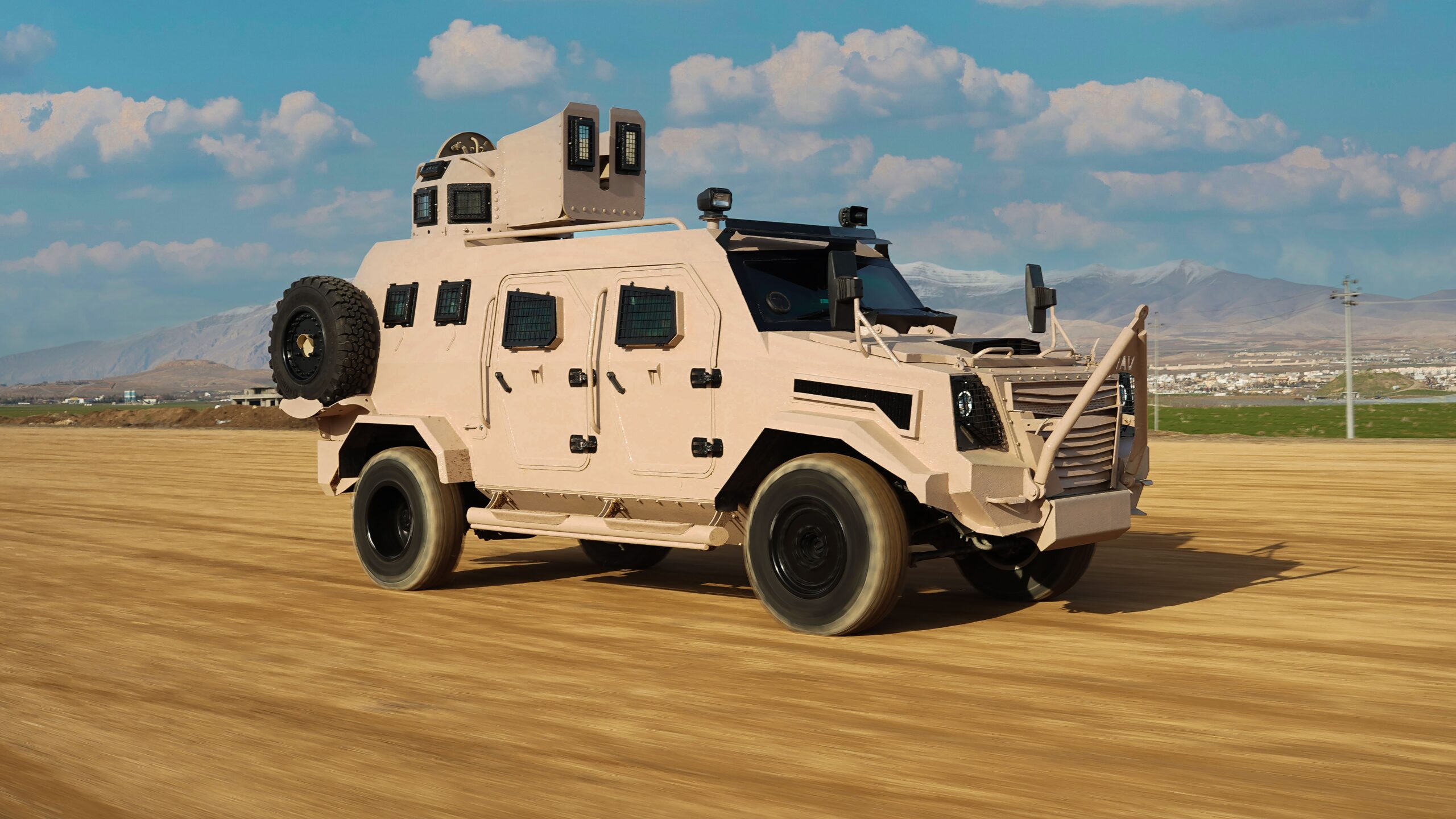
The U.S. Marine Corps is buying 12 Mission Master SP autonomous ground vehicles from American Rheinmetall. The $7.28 million contract also includes five amphibious Marine Kits, training, engineering and other support for testing new ways to move supplies and equipment without putting Marines in every vehicle.
American Rheinmetall received the contract from the Defense Logistics Agency on September 10, 2026. The vehicles will be used by the Marine Corps Warfighting Laboratory for experiments focused on autonomous movement and operations in difficult coastal environments.
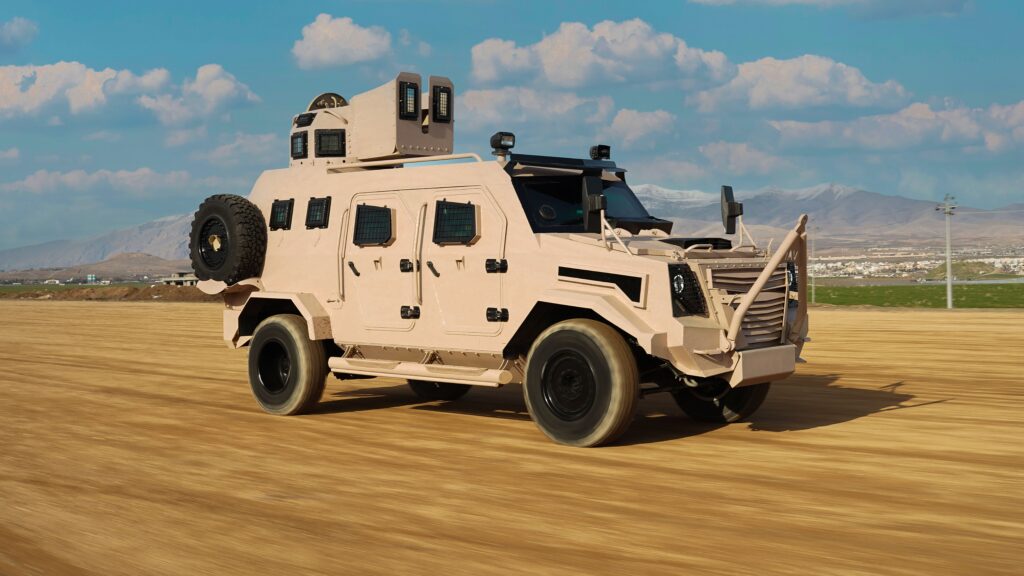
The Mission Master SP is an unmanned 8×8 ground vehicle that can carry up to 1,000 kilograms of cargo on land. The new purchase builds on more than four years of testing with the Marine Corps.
READ ALSO: https://modernmechanics24.com/post/proxima-fusion-lower-saxony-hts-tape/
The Mission Master SP is part of Rheinmetall’s family of autonomous unmanned ground vehicles. American Rheinmetall will handle the U.S. work, with engineering and production support from Rheinmetall Canada, which developed much of the vehicle’s autonomous technology.
The Marine Corps has already tested the platform in exercises including Talisman Sabre 2023 in Australia and Apollo Shield at Twentynine Palms, California. Six additional vehicles were ordered in December 2023 for III Marine Expeditionary Force.
The Marine Corps is looking for ways to move supplies, equipment and casualties while reducing the number of Marines exposed to danger. Autonomous vehicles could perform some transport and support missions without requiring a driver inside the vehicle.
This could be especially useful during distributed maritime operations, where small Marine units may operate across large areas and need regular resupply. Unmanned vehicles could also help move equipment through areas where roads are damaged or under enemy observation.
The Mission Master SP uses Rheinmetall Canada’s PATH autonomy software. Sensors such as cameras, radar and LiDAR help the vehicle understand its surroundings, avoid obstacles and plan routes.
The system can operate in several modes, including following a person or vehicle, travelling along a planned route and moving with a convoy. One operator can also supervise multiple autonomous vehicles, allowing a small team to control a larger group of unmanned platforms.
WATCH ALSO: https://modernmechanics24.com/post/anduril-altius-700m-loitering-munition/
The SP measures about 3.05 meters long and weighs 1,134 kilograms before payload. It can travel up to 40 km/h on land and carry up to 1,000 kilograms of cargo.
The vehicle has already been tested in realistic military exercises. During Talisman Sabre 2023 and Apollo Shield, Mission Master SP vehicles carried out resupply, casualty evacuation and urban missions, including autonomous movements of up to 50 km.
The platform can also be fitted with different equipment. Possible payloads include cargo systems, medical evacuation equipment, surveillance sensors, communications gear and weapons.
The new contract includes five amphibious Marine Kits. These are intended to improve the vehicle’s performance and reliability during coastal operations, although the basic Mission Master SP is already capable of amphibious movement.
The vehicle can carry up to 300 kilograms while operating in water. Its speed also drops from 40 km/h on land to about 4 km/h in water, showing the trade-off between amphibious capability and payload.
The Mission Master SP is still being used by the Marine Corps mainly for experimentation and capability development. The new purchase does not represent a service-wide acquisition or a confirmed full-rate production program.
Autonomy also does not mean the vehicle operates without human supervision. The PATH system can control driving, navigation and obstacle avoidance, but weapons release remains under human control.
The vehicle also faces basic physical limits. Its payload and speed change significantly during amphibious operations, while batteries, terrain and mission equipment can affect how far it can travel.
The new purchase gives the Marine Corps a larger group of autonomous vehicles to test together. Twelve vehicles can help researchers examine how unmanned systems work as part of distributed units rather than as individual experimental platforms.
READ ALSO: https://modernmechanics24.com/post/us-navy-149m-radar-upgrade-uss-pinckney/
The vehicles could eventually support logistics, surveillance, casualty evacuation and other missions while keeping Marines farther from danger. Their ability to carry different payloads also means one basic vehicle could perform several roles.
For now, the key point is experimentation rather than mass deployment. The September 2026 order shows that the Marine Corps is continuing to move from small demonstrations toward larger tests of autonomous ground vehicles in expeditionary and amphibious operations.








One Response