The US and Israel launched coordinated airstrikes on Iran, deploying fighter jets, long-range precision missiles, and advanced surveillance systems in a large-scale combat operation.
In the early hours of Saturday, the skies over the Middle East became a theater for one of the most sophisticated displays of modern military power in recent history.
Three heavily armed nations, the US, Israel, and Iran, found themselves positioned in a high-risk confrontation defined by technology, readiness, and strategic strength.
For the US, the operation highlights its unmatched global military reach and real-time surveillance, enabling rapid power projection across land, sea, air, space, and cyber.
Israel brings precision-driven lethality and layered missile defense, built for deep penetration and the elimination of key targets.
Iran relies on a ballistic missile arsenal, hardened underground sites, mobile launchers, drones, and proxy networks designed for survivability, saturation strikes, and strategic deterrence.
US President Donald Trump said in a video message that American forces had started major combat operations in Iran.
He said Iran continued its nuclear and missile programs and warned that the conflict could bring casualties. “That often happens in war,” he said.
Israeli Prime Minister Benjamin Netanyahu described the attack as a joint effort to remove an existential threat. He said the operation aimed to weaken Iran’s military and strategic capabilities.
Strike Near Supreme Leader’s Office
The first reported explosion struck near the offices of Supreme Leader Ayatollah Ali Khamenei in central Tehran.
Smoke rose above the capital as additional blasts were heard across multiple districts. Iranian state media confirmed nationwide strikes but gave no immediate casualty figures.
READ ALSO: https://modernmechanics24.com/post/robots-replace-scientists-catalyst-labs/
Roads leading to Khamenei’s compound were sealed off. Airspace over Iran was closed. Mobile networks were disrupted. The rapid shutdown signaled that Iran activated internal security protocols designed to protect command-and-control centers.
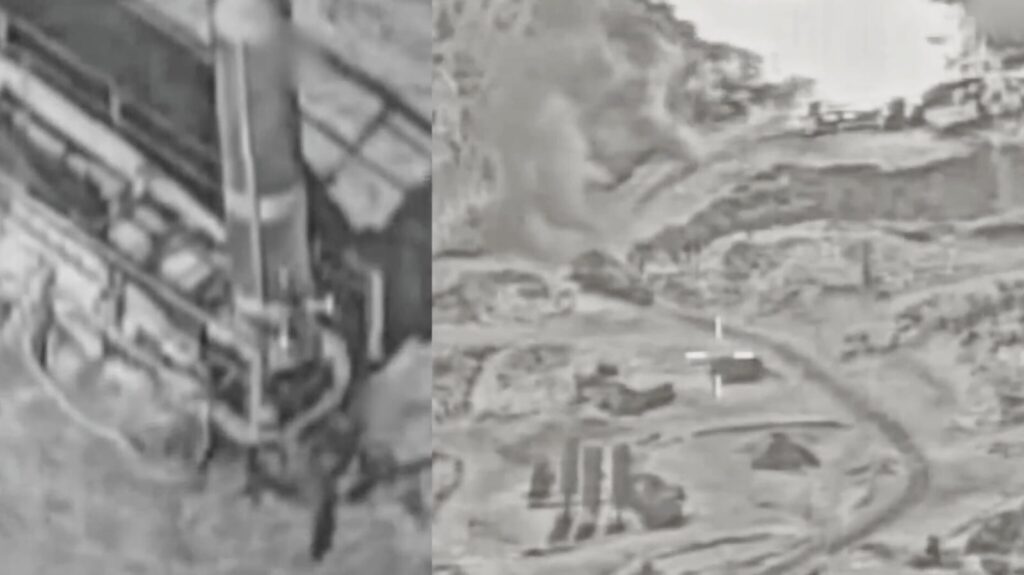
The strikes seemed to target military and intelligence infrastructure. Reportedly, targets included Iranian Revolutionary Guard facilities, missile storage depots, and strategic research locations.
Firepower on Display
The US and Israel have assembled military assets in recent weeks.
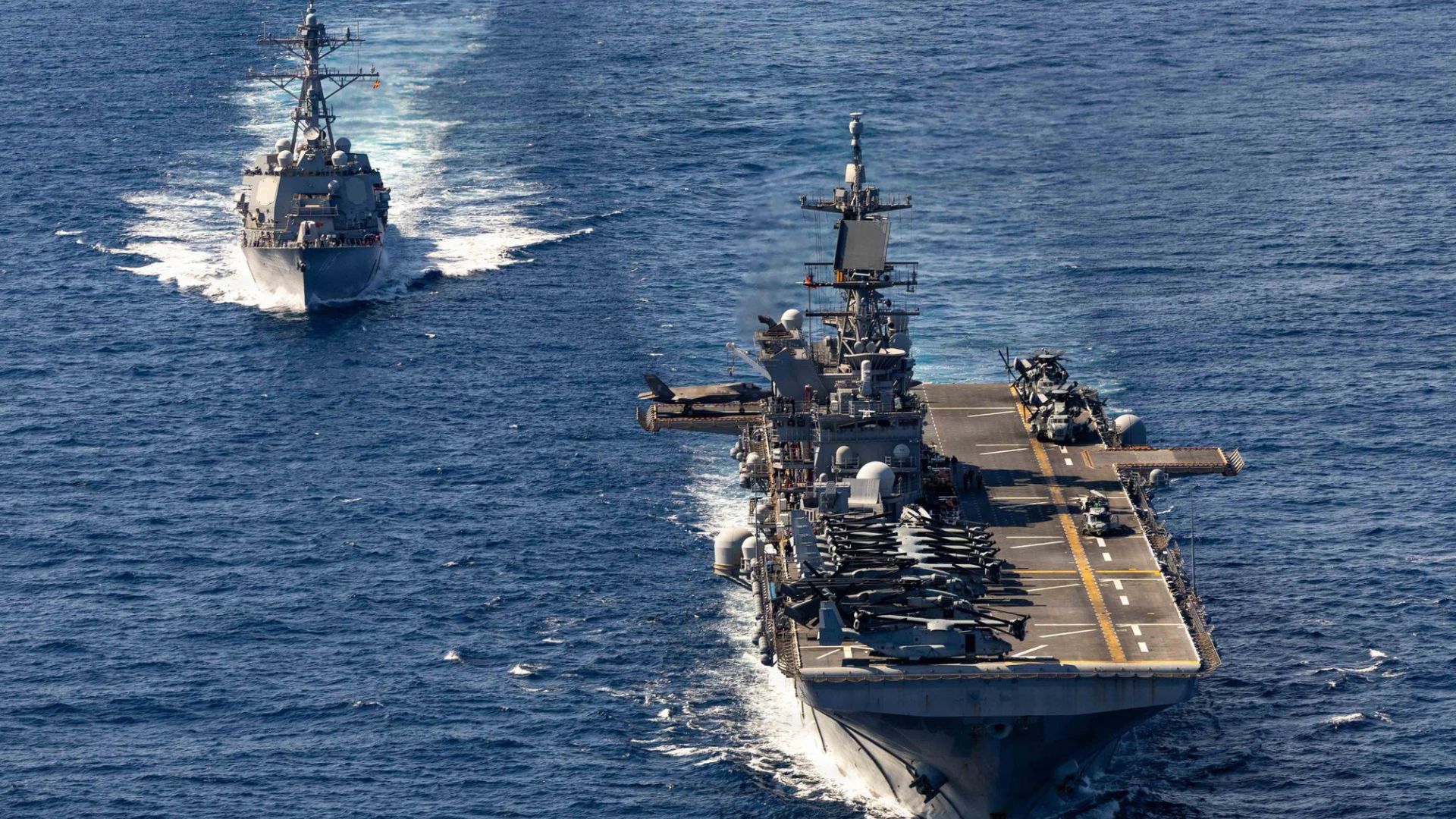
Amid heightened tensions in the Persian Gulf region, the US has recently repositioned several high-value naval and air assets within operational reach of Iran.
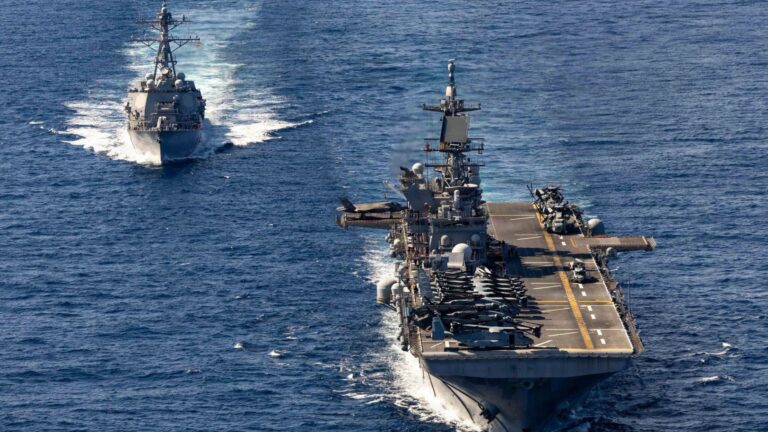
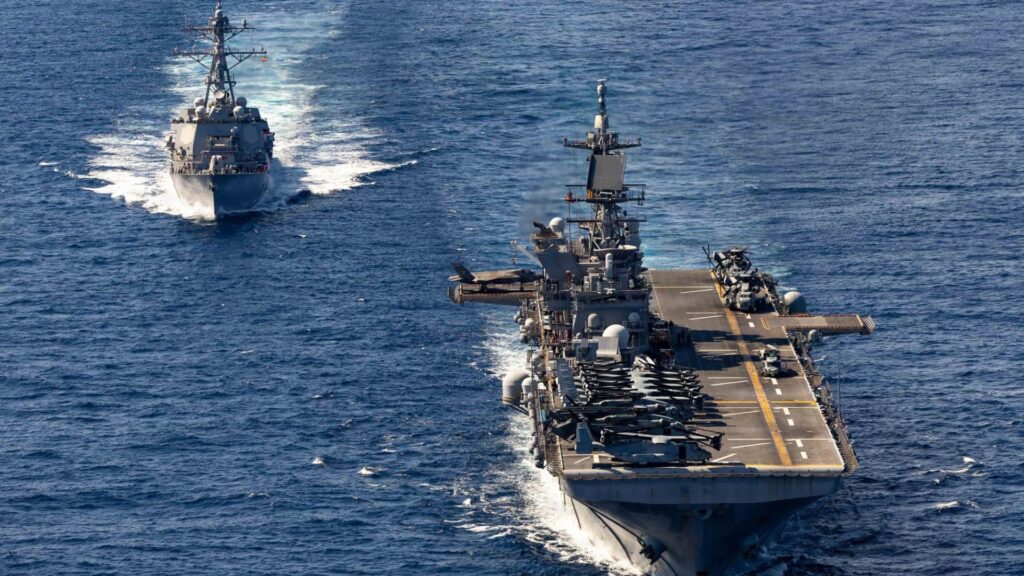
A prominent presence includes the USS Gerald R. Ford, the US Navy’s newest nuclear-powered aircraft carrier. It is capable of launching advanced strike missions with its embarked air wing of F/A-18E/F Super Hornets, EA-18G Growlers for electronic warfare, and F-35C Lightning II stealth fighters.
Operating alongside guided-missile destroyers equipped with the Aegis combat system and Tomahawk cruise missiles, the carrier strike group provides layered air defense, ballistic-missile interception capability, and long-range precision strike power.
READ ALSO: https://modernmechanics24.com/post/engineers-cancer-eating-bacteria/
The USS Gerald R. Ford and USS Abraham Lincoln carry thousands of 2,000-pound BLU-109 bunker-buster bombs designed to penetrate hardened targets before detonating.
On the air front, the US has deployed advanced stealth aircraft such as the F-22 Raptor. It is one of the world’s most sophisticated air superiority fighters.
Designed with low radar visibility and capable of supercruise speeds above Mach 1.5 without afterburners, the F-22 can conduct precision strikes and dominate contested airspace. The F-35 Lightning II adds multirole flexibility, integrating intelligence, surveillance, and reconnaissance with strike capability.
These warships and fighter jets signal a strong deterrent posture, combining sea-based missile power, stealthy air dominance, and rapid-response capability in close proximity to Iranian territory.
Israel has relied heavily on its long-range airpower and precision weapons to signal deterrence and battle readiness. It includes advanced fighter aircraft such as the F-35I Adir, a customized Israeli variant of the F-35 equipped with locally integrated electronic warfare systems and precision-guided weapons.
WATCH ALSO: https://modernmechanics24.com/post/neural-blueprint-human-like-soft-robots/
Designed for stealth penetration missions, the Adir can strike key targets deep inside hostile territory while evading radar detection. F-15I Ra’am jets are built for long-range strike operations and are capable of carrying heavy bunker-penetrating bombs and air-to-surface missiles. These aircraft provide Israel with the ability to conduct rapid, high-precision operations far beyond its borders if required.
At sea, Israel’s strategic reach is reinforced by its Dolphin-class submarine fleet. These submarines are capable of extended-range patrols and are believed to be loaded with advanced cruise missile systems.
With layered missile defense systems such as Arrow 3, which intercepts long-range ballistic missiles outside the atmosphere, Israel maintains a combination of offensive reach and defensive shielding.
The scale of deployment reflected the seriousness of the mission. Warships in the region are equipped with missile defense systems capable of intercepting ballistic threats. Fighter squadrons provide layered air cover. The strategy emphasized speed and precision.
Iran’s Military Response
Iran has long warned it would respond to any direct attack. Within hours of the initial strikes, explosions were heard in northern Israel. The Israeli military confirmed that air defense systems were activated to intercept incoming Iranian missiles.
Iran maintains one of the largest ballistic missile arsenals in the Middle East. Its self-imposed limit of 2,000 kilometers places Israel, Gulf states and parts of Eastern Europe within range. Though there is no public evidence that Iran possesses intercontinental ballistic missiles, its missile development and space launch programs remain under scrutiny.
Instead of matching the air power of the US or Israel, Tehran focuses on volume, range, and strategic deterrence. Underground missile silos and mobile launch platforms increase survivability.
Nuclear Facilities Under Watch
The strikes occur amid mounting tensions over Iran’s nuclear program. Iran has maintained that it has the right to enrich uranium for civilian purposes. Enrichment levels and restricted inspections raise concerns.
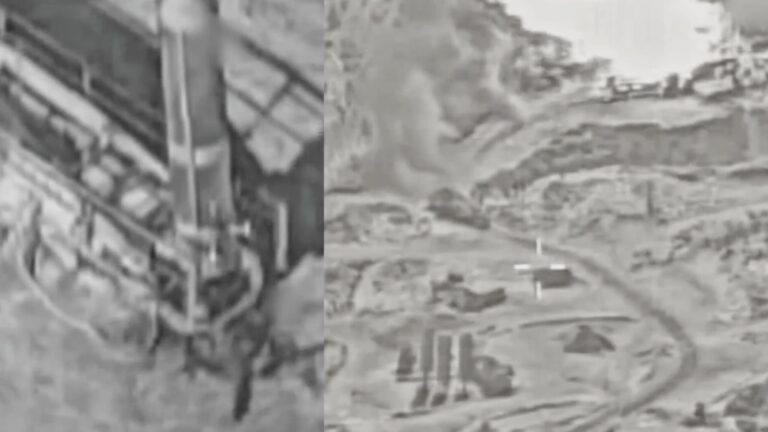
Earlier satellite imagery had shown renewed activity at previously damaged nuclear-related sites. Analysts suggested Iran may have been assessing damage or attempting recovery operations after earlier confrontations.
WATCH ALSO: https://modernmechanics24.com/post/buildroid-ai-expands-robotics-platform/
The US has long emphasized that preventing Iran from developing a nuclear weapon is still a strategic priority. Officials argue that precision strikes are aimed at delaying or degrading capabilities tied to weapons development.
Iran denies seeking nuclear arms. It says its program is peaceful. However, international inspectors have faced restrictions in recent months, limiting transparency.
Iran counters with asymmetric capabilities. These include ballistic missiles, drones and proxy networks across the region. It also operates fast attack boats in the Strait of Hormuz, a vital energy corridor.
The current conflict showcases these clashing doctrines. Air power and naval projection versus missile deterrence and regional depth.
Witnesses in Tehran described hearing multiple waves of explosions. Smoke drifted over parts of the city. Authorities gave limited information but confirmed that security forces were on high alert.
Neighboring Iraq closed its airspace as a precaution. Commercial flights were rerouted. Military analysts said regional air corridors remain at risk during high-intensity exchanges.
The Israeli Defense Minister said the strikes were carried out to remove threats. He did not specify operational details.
At its core, the conflict centers on military leverage. The US seeks to constrain Iran’s nuclear and missile capabilities through force projection.
READ ALSO: https://modernmechanics24.com/post/china-sets-maglev-700kmh-record/
Israel views Iran’s weapons programs and regional armed networks as strategic threats. Iran sees its missile arsenal and enrichment capacity as deterrence tools against superior air and naval forces.
Each side uses military power to shape negotiations, not only territory.
Regional Escalation Risk
Iran escalated tensions in the Gulf region by launching ballistic missiles at US military sites, including facilities linked to the US Navy’s Fifth Fleet stationed in Manama. Authorities in Bahrain confirmed that a support services area within the naval headquarters was hit, prompting the activation of air-raid sirens and reports of smoke rising near the compound.
Blasts were also reported in Abu Dhabi, while air defense systems were activated in Qatar and other Gulf states to intercept incoming projectiles.
Iran has repeatedly warned that US bases across the Middle East could become targets. Thousands of US troops remain stationed in the region. Missile defenses at these bases are now on heightened alert.
The situation remains unstable. Military planners on all sides are recalculating. Air defense systems are active. Naval vessels are repositioning. Intelligence networks are tracking movements across land and sea.
For now, the skies over parts of the Middle East are dominated by fighter jets, drones, and missile interceptors. Warships patrol tense waters. Nuclear facilities are under watch. The balance between deterrence and escalation hangs in uncertainty.
The coming days will test the strength, endurance, and strategy of three powerful militaries operating under extreme pressure.