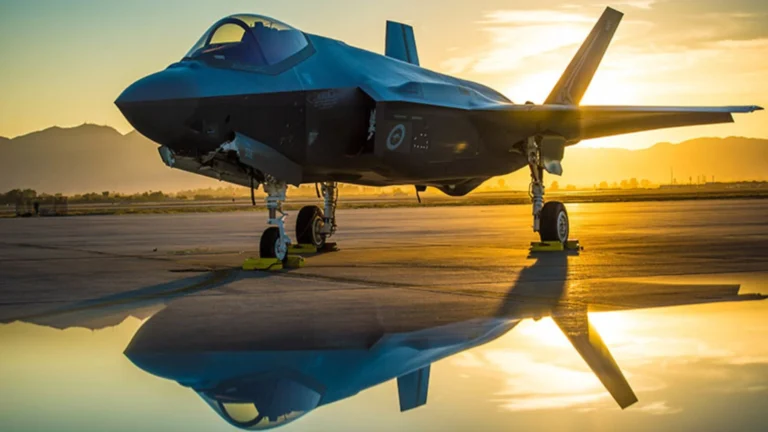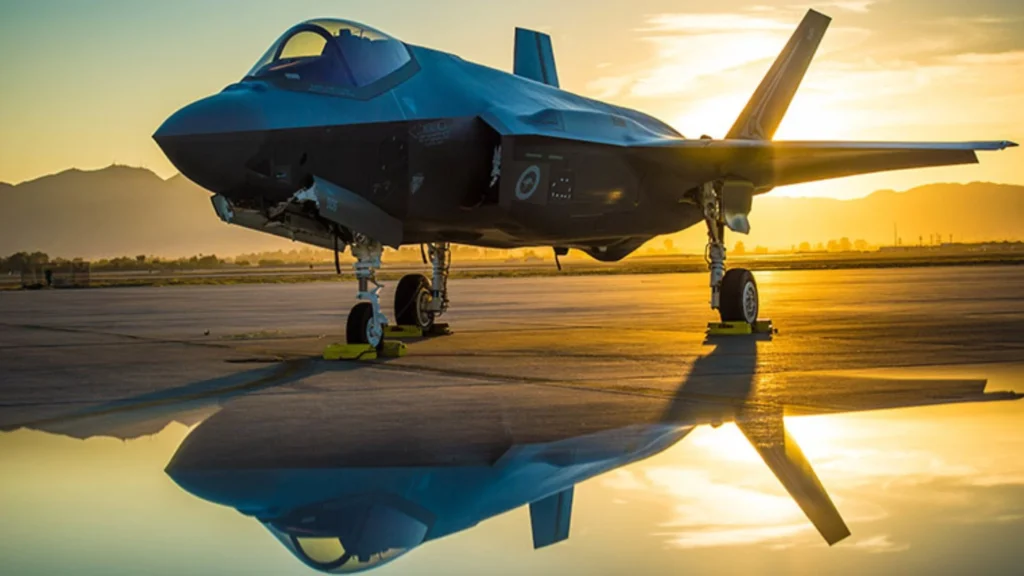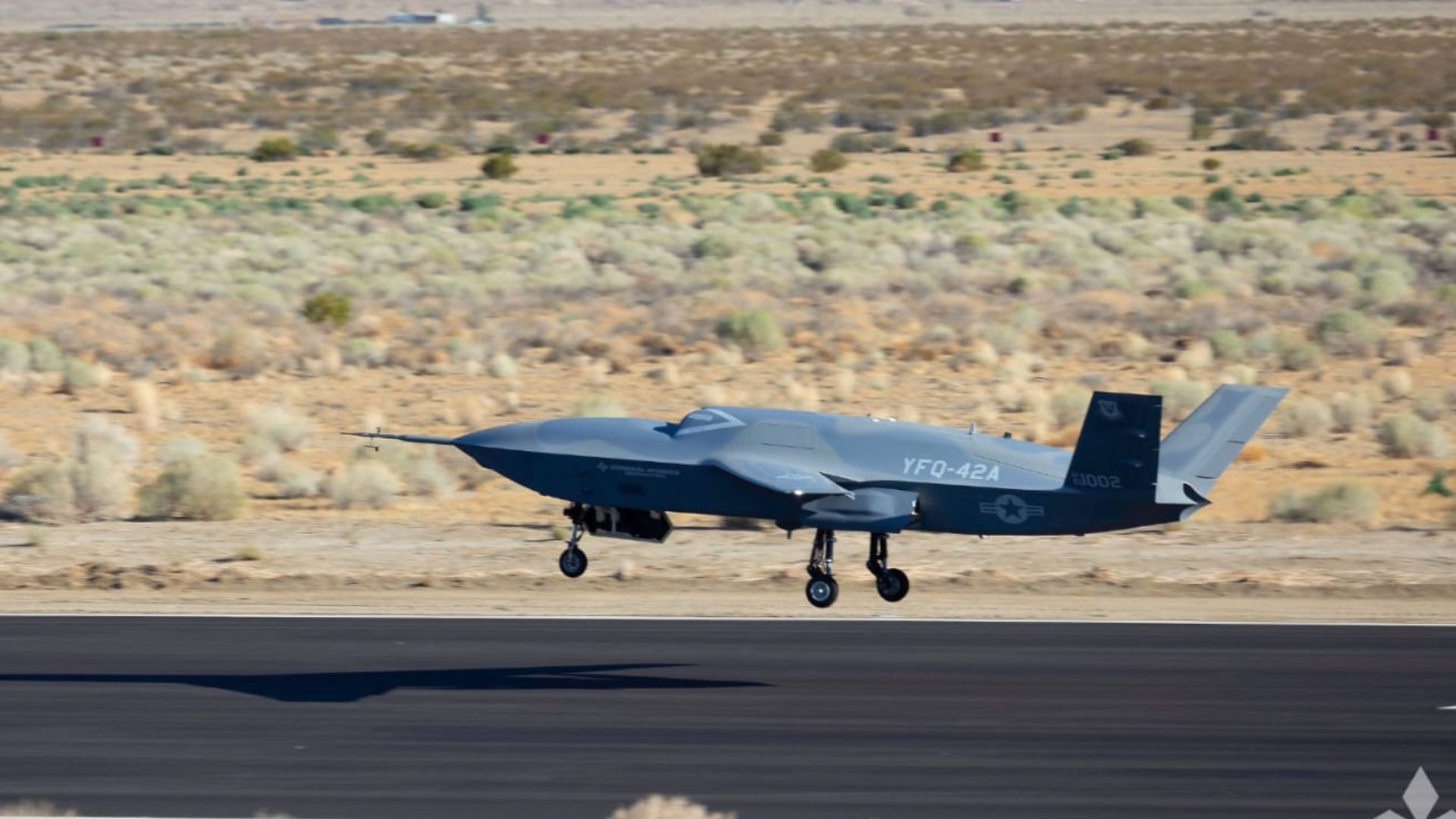
The US Marine Corps selected General Atomics’ YFQ-42A uncrewed aircraft to test a government-built AI ‘digital brain’ designed to fly and fight alongside crewed fighter jets.
Under the Marine Air-Ground Task Force (MAGTF) Uncrewed Expeditionary Tactical Aircraft (MUX TACAIR) Collaborative Combat Aircraft (CCA) program, the YFQ-42A will act as a surrogate platform.
The focus is not just on the aircraft itself, but on the advanced AI system installed inside it. This is definitely a bold step towards AI-powered air combat. This “digital brain” will control how the drone thinks, reacts, and cooperates with human pilots during missions. This will showcase how autonomous aircraft can operate as loyal wingmen in high-risk combat zones.
General Atomics Aeronautical Systems Inc. (GA-ASI) confirmed that the contract includes integrating a Marine Corps mission kit into the YFQ-42A. The aircraft will then undergo evaluation within the MAGTF structure to measure how effectively it works with crewed fighters.
READ ALSO: https://modernmechanics24.com/post/legendary-stinger-missile-45-year/
In its statement, the company said the agreement combines its experience in autonomy and uncrewed aircraft systems with a government-provided mission package. The YFQ-42A will serve as a flying testbed to explore human-machine teaming in real combat conditions.
The installed AI system will help the drone to process battlefield data, follow mission commands, and adjust to changing threats. That means the aircraft will not just fly remotely; it will make calculated decisions in coordination with human pilots.
The Marine believes Collaborative Combat Aircraft will multiply forces. These drones could conduct surveillance, jam enemy systems, carry weapons, or even draw hostile fire away from manned aircraft. As a result, they reduce risks for pilots while expanding combat capability.
The YFQ-42A aircraft is one of two uncrewed fighter drones selected by the Marine Corps for flight testing. The other is Anduril’s YFQ-44A.
General Atomics already supports the broader US Air Force CCA effort. In April 2024, the Air Force selected the company to build production-representative test aircraft. The YFQ-42A completed its maiden flight in August 2025, showing it was ready for operational evaluation.
WATCH ALSO: https://modernmechanics24.com/post/china-humanoid-robot-combat-moves/
The aircraft’s modular design has a key role in its appeal. Engineers can quickly adapt it for different mission sets and service requirements. This flexibility allows the integration of new sensors, weapons, and AI software without redesigning the entire platform.
The Marine Corps contract also speeds up the development of autonomy within the government-supplied mission kit. General Atomics described the kit as a “cost-effective, sensor-rich, software-defined suite capable of delivering kinetic and non-kinetic effects.”
Mike Atwood, vice president of advanced programs at GA-ASI, emphasized the significance of the program. He said, “This selection builds upon the GA-ASI autonomous systems in use today and demonstrates our commitment to delivering next-generation capabilities for critical USMC missions.”
Atwood added, “Our FQ-42, combined with our proven autonomy architecture and integration expertise, positions us to rapidly deliver an affordable CCA solution that enhances the Marine Air-Ground Task Force’s operational effectiveness in contested environments.”
READ ALSO: https://modernmechanics24.com/post/machine-eye-beats-human-vision-speed/
The Marine Corps testing a drone is a testimony to how artificial intelligence can transform air warfare. If successful, the YFQ-42A’s digital brain could shape a future where AI wingmen fly beside human pilots, share the workload, and help win battles in increasingly complex skies.