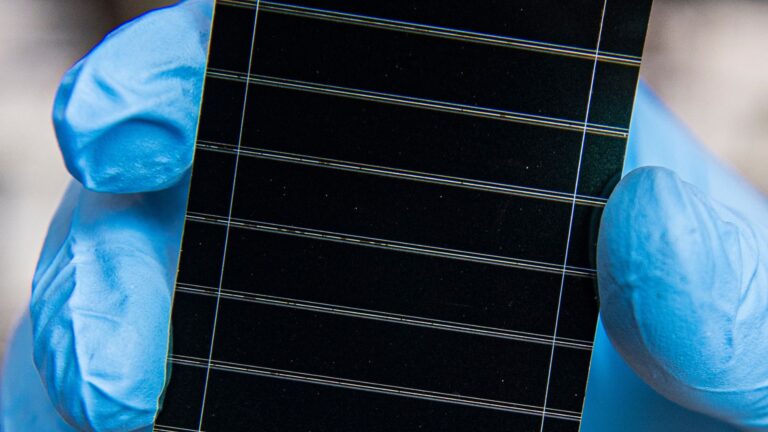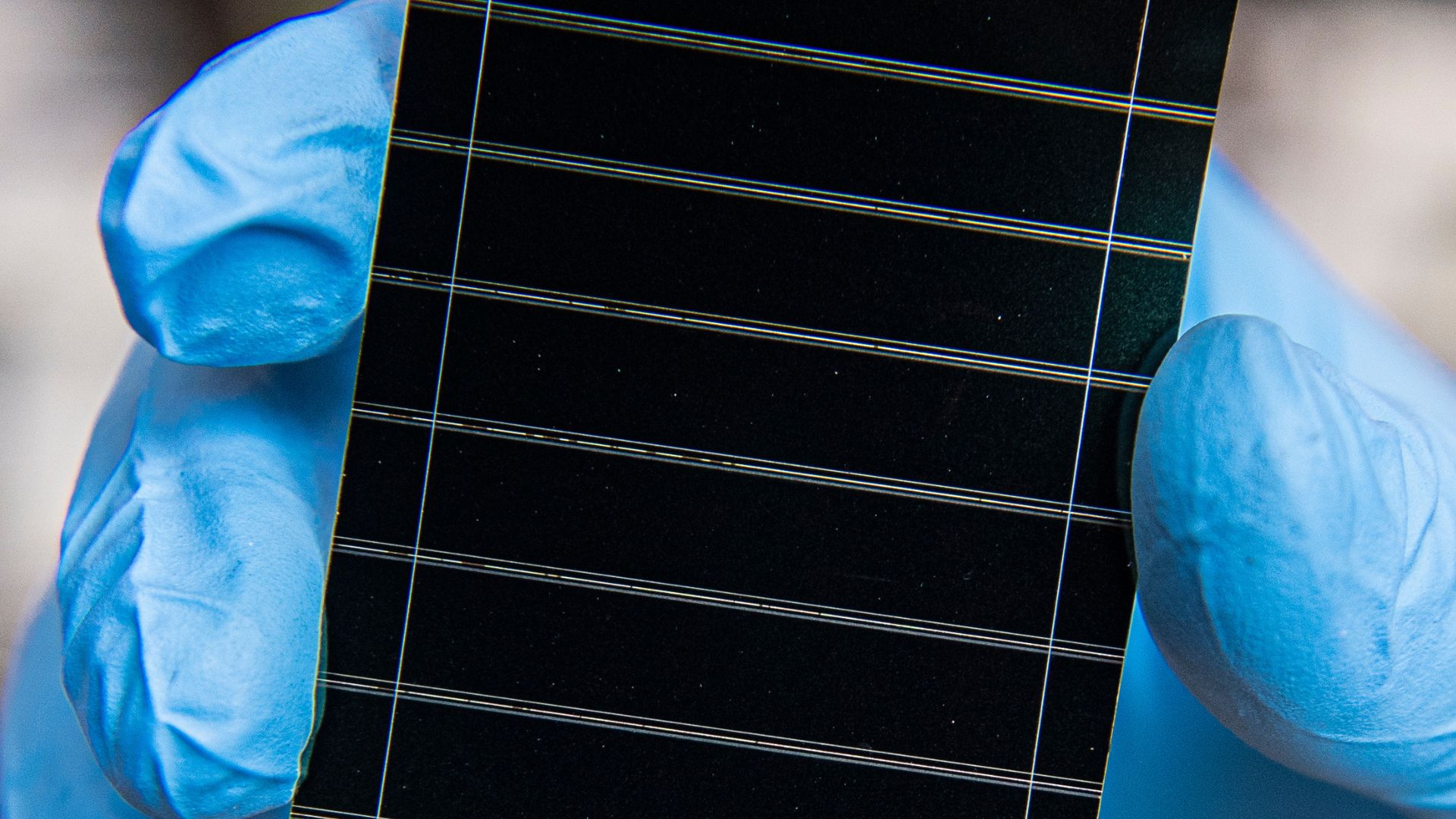
Researchers at the Technical University of Munich( TUM) have made a key breakthrough in improving the durability of perovskite solar cells.
These next-generation solar devices are known for their high efficiency, but their weakness under real-world conditions has limited their use.
Now, scientists say they have found both the cause of the problem and a way to solve it.
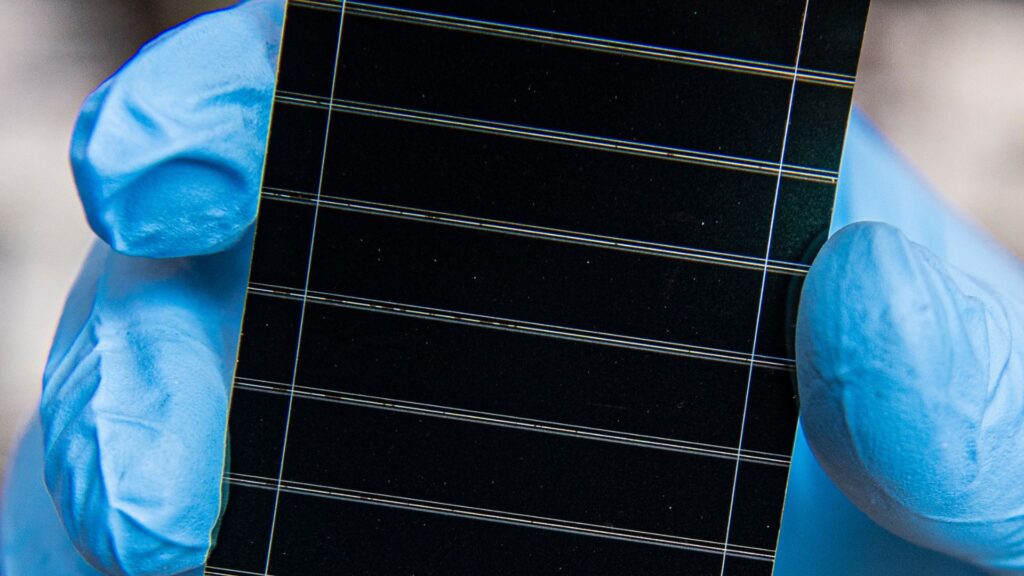
Perovskite solar cells are seen as the future of solar energy. They use a special crystal material that can convert sunlight into electricity more efficiently than many existing technologies.
But there is a catch. These cells struggle to survive outside the lab.
READ ALSO: A Robot That Never Needs Charging? Meet Cranfield’s 3D-Printed WANDER-bot
In everyday conditions, solar panels are subject to constant temperature fluctuations. They heat up during the day under the sun and cool down at night. This repeated cycle, known as thermal cycling, puts stress on the material. Over time, this stress reduces the performance of perovskite cells.
“If we want these cells on every roof, we must ensure they survive real weather conditions,” said Peter Müller-Buschbaum, who led the research. He added that strong performance in the lab is not enough; durability in real life is essential.
Perovskite Solar Cells and Their Hidden “Burn-In” Problem
In a study published in Nature Communications, the research team closely examined how these solar cells behave under changing temperatures.
They focused on high-efficiency wide-bandgap cells, which form the top layer in tandem solar cells. Tandem cells stack multiple layers to capture more sunlight and produce more power.
Using advanced X-ray techniques at DESY, the scientists observed the material at a microscopic level. The material inside the solar cell expands and contracts as temperatures change. This movement creates internal stress, like a constant push-and-pull within the structure.
Dr. Kun Sun explained that this tug-of-war damages the structure and reduces efficiency.
The biggest loss happens early. In what scientists call the burn-in phase, cells can lose up to 60% of their performance.
“We found that internal tension changes the structure and reduces power,” Dr. Sun said. “If we can stop this early damage, we can greatly improve stability.”
READ ALSO: Lenovo’s 1000Wh Battery Reveal Signals More Than Just Better Battery Life
A New Way to Strengthen Solar Cells
After identifying the problem, the team worked on a solution. In a second study published in ACS Energy Letters, they tested ways to make the material more stable.
The idea was to support the crystal structure so it does not break under stress. To do this, the researchers used special organic molecules called spacers. These molecules act like tiny supports, holding the structure together during temperature changes.
The team tested different types of spacers to find the most effective one. They discovered that a larger molecule, PDMA, worked best. Unlike smaller spacers, PDMA provided stronger support and prevented the structure from collapsing.
This made the solar cells more durable, even under rapid heating and cooling. The findings could help bring perovskite solar cells closer to everyday use. By reducing early damage and improving stability, these cells can last longer and perform better over time.
WATCH ALSO: China’s military showcases modern battlefield capabilities in new exercise
“The future of solar technology lies in tandem designs,” Müller-Buschbaum said. He added that understanding these tiny structural changes is key to building solar panels that can last for decades.
The research marks an important step in making high-efficiency solar technology practical for real-world conditions. If these improvements continue, perovskite solar cells may soon move from the lab to rooftops, helping meet global energy needs with cleaner and more efficient power.