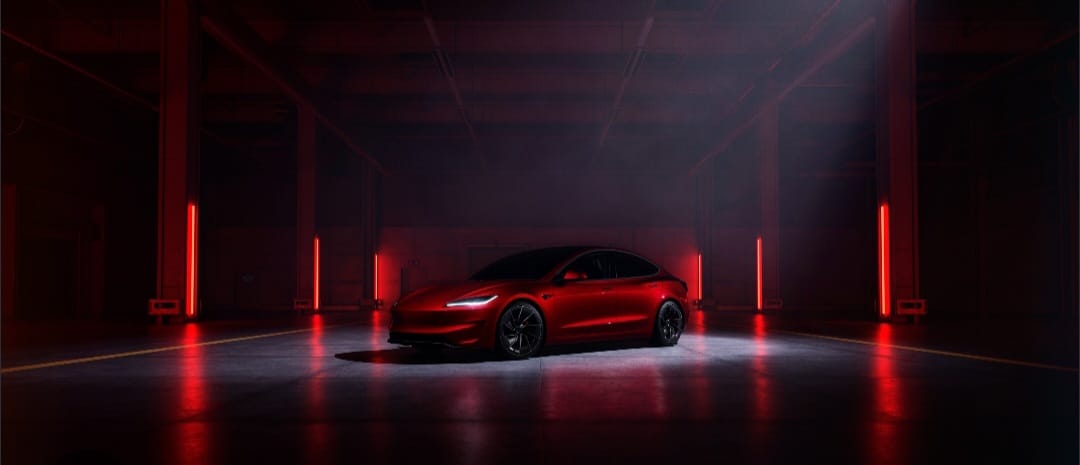
A Tesla Model 3 was reportedly stopped in the middle of an Arizona highway when it was struck from behind, killing its driver.
The vehicle had an automated driving system engaged at the time, according to a crash report submitted by Tesla to US regulators.
The previously undisclosed details have renewed attention on how Tesla’s driver-assistance systems behave during highway driving and how such crashes are reported.
Crash Details Emerge
The collision happened at about 3 a.m. on October 31, 2025, on the eastbound Loop 202 in Mesa, Arizona. A Ford F-350 pickup truck hit the 2020 Tesla Model 3 after the Tesla had stopped on the highway. The Tesla driver was pronounced dead at the scene.
READ ALSO: https://modernmechanics24.com/post/waste-wood-powers-dutch-biomethanol/
Initial reports about the crash did not state whether the Tesla was using a driver-assistance system. Electrek later matched the incident to a redacted crash report that Tesla had submitted to the National Highway Traffic Safety Administration (NHTSA). The filing was made under a federal reporting requirement covering crashes involving advanced driver-assistance systems.
According to the report, an automated driving system was engaged when the collision occurred. The relevant section does not identify whether the system was Tesla’s Autopilot or its Full Self-Driving (FSD) software. The report also records the Tesla’s pre-crash movement as ‘stopped – 0 mph,’ indicating that the vehicle was stationary when the pickup truck struck it.
What The System Did
Tesla’s Autopilot and FSD systems are not fully autonomous driving systems in the conventional sense.
They provide automated steering, braking and other functions under certain conditions, but the driver remains responsible for monitoring the vehicle and responding when necessary. The systems are generally classified within the SAE Level 2 category, where automation assists the driver but does not replace the driver.
The reason the Model 3 stopped remains unknown from the available information. Tesla vehicles have previously been reported to experience ‘phantom braking,’ a term used when a vehicle brakes unexpectedly after detecting what its sensors interpret as a potential hazard.
Such events generally involve sudden deceleration rather than the vehicle coming to a complete stop in a highway lane.
Another possibility is that the driver became incapacitated or was unable to respond to the vehicle’s behaviour. The available crash information does not establish whether a software response, driver condition or another factor caused the Tesla to stop.
Further details are difficult to assess because key sections of the regulatory report were redacted.
WATCH ALSO: https://modernmechanics24.com/post/agibot-a3-martial-arts-humanoid-robot/#google_vignette
Tesla Crash Reporting Faces Scrutiny
The incident is reportedly the second known case in which a Tesla Model 3 with an automated driving system stopped on a highway before a fatal collision involving the vehicle. A similar crash occurred in Florida only weeks before the Arizona incident, according to Electrek.
The cases come amid wider regulatory scrutiny of Tesla’s reporting of crashes involving driver-assistance technology.
Under an NHTSA Standing General Order, automakers must report certain crashes involving Level 2 driver-assistance systems or more advanced automated driving technologies. The requirement is intended to give regulators access to safety data that may help identify recurring problems.
Tesla has frequently redacted portions of its crash reports, citing confidential business information. The practice is permitted under US reporting rules, but extensive redactions can make it difficult for the public and outside researchers to determine which driving system was active during a crash.
Why The Case Matters
The Arizona crash highlights a key challenge facing advanced driver-assistance technology: systems that can control a vehicle still require active human supervision. A vehicle stopping unexpectedly on a high-speed road can create a serious hazard because following traffic may have little time to react.
The case also illustrates the importance of transparent crash reporting as automakers expand the use of automated driving functions. Regulators rely on these reports to identify patterns across vehicles, software versions and driving conditions, while manufacturers use the same data to investigate system performance.
READ ALSO: https://modernmechanics24.com/post/us-army-tethered-drones-jamming/
The NHTSA opened an investigation into Tesla last year over allegations that the company repeatedly failed to submit required crash reports within the prescribed time.
The regulatory focus, combined with the unanswered questions surrounding the Arizona collision, places greater attention on how Tesla and other automakers document incidents involving increasingly capable driver-assistance systems.
For now, the available evidence does not establish why the Model 3 stopped or whether its driving software caused the vehicle to halt. Further regulatory findings or additional crash data may provide a clearer picture of what happened and whether similar incidents represent an isolated failure or part of a broader safety pattern.