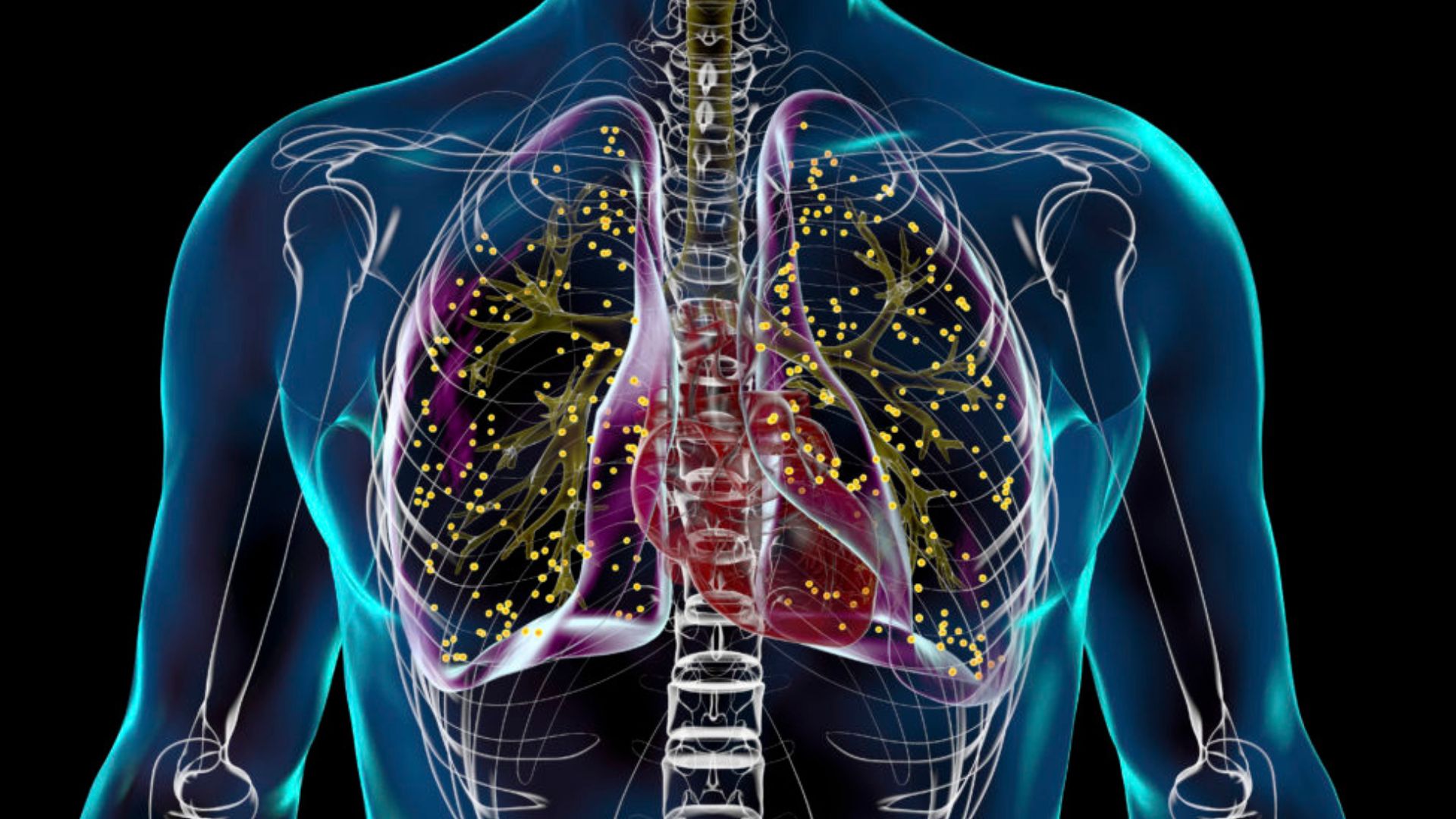
Researchers have uncovered how tuberculosis-causing bacteria deploy a sophisticated stealth mechanism to evade the human immune system.
The findings could pave the path for innovative therapies to strengthen the body’s natural defenses.
Tuberculosis (TB) is caused by Mycobacterium tuberculosis. It has killed more than a million people each year and remained a major public health crisis across Asia, Africa, and Latin America.
Despite decades of medical advances, the pathogen continues to overcome immune responses through complex survival strategies.
Now, scientists at the National Institute of Science Education and Research (NISER) have identified an elegant biophysical tactic used by mycobacteria to survive inside human immune cells.
READ https://modernmechanics24.com/post/scientists-slow-down-quantum-chaos/ALSO:
The study will be presented at the Biophysical Society Annual Meeting in San Francisco from February 21–25, 2026. It has also been shared as a preprint on bioRxiv.
How Bacteria Build Protective Shield?
When harmful bacteria invade the body, immune cells called macrophages engulf them in bubble-like compartments known as phagosomes. Under normal conditions, these phagosomes fuse with lysosomes, enzyme-filled compartments that digest and destroy pathogens.
However, the research team found that tuberculosis bacteria release microscopic particles known as extracellular vesicles. These vesicles carry specialized lipid molecules that integrate into the membranes of immune cells. The result is a stiffening of the phagosome membrane, physically preventing it from merging with lysosomes.
“If the membrane becomes more rigid, it becomes much harder for the phagosome to fuse with the lysosome,” explained Ayush Panda, formerly a graduate researcher in Mohammed Saleem’s laboratory at NISER. “It’s an elegant biophysical mechanism. It shows how the bacteria remodel the membrane architecture to escape the very process that would have killed them.”
WATCH ALSO: https://modernmechanics24.com/post/china-military-modern-exercise/
By altering the mechanical properties of the host cell membrane, the bacteria effectively construct a protective bunker inside the immune cell itself. This stealth adaptation allows them to survive and replicate without being destroyed.
Previous tuberculosis research largely focused on bacterial proteins that interfere with immune signaling pathways. In contrast, this study takes a lipid-centered approach. It highlights how fatty molecules alone can disrupt immune function.
“The most surprising finding was when we introduced mycobacterial lipids into membranes that mimic the host phagosome, we saw remarkable physical changes, the membrane properties were completely altered,” Panda said.
The discovery marks a significant shift in how scientists understand immune evasion. Instead of merely interfering with biochemical signals, tuberculosis bacteria exploit physical properties of cell membranes, manipulating their rigidity to prevent immune attack.
The researchers also found that extracellular vesicles released by mycobacteria are not confined to infected cells. These vesicles can travel to neighboring immune cells, weakening them even before direct bacterial contact occurs. This increases the pathogen’s reach and enhances its ability to spread within the host.
READ ALSO: https://modernmechanics24.com/post/top-lithium-metal-starts-ev-batteries/
Similar membrane-altering strategies were observed in other dangerous pathogens, including Klebsiella pneumoniae and Staphylococcus aureus. This suggests that membrane stiffening through lipid delivery may represent a conserved evolutionary strategy among multiple bacterial species.
Future Treatments
The findings open promising new paths for combating tuberculosis. Instead of targeting bacterial proteins alone, researchers could develop therapies to block the production of extracellular vesicles or counteract the membrane-stiffening effects of bacterial lipids.
“Now that we understand how the bacteria protect themselves, we can start looking for ways to stop them,” Panda said. “If we can block the bacteria from stiffening those membranes, our immune cells might be able to do their job and stop the infection.”
Given the high burden of tuberculosis in countries like India, where outbreaks remain frequent, the discovery carries particular relevance. By targeting this newly identified stealth mechanism, scientists aim to improve treatment strategies and potentially reduce the risk of drug resistance.
WATCH ALSO:https://modernmechanics24.com/post/china-6-ton-tiltrotor-first-flight/
Amid the global fight against tuberculosis, this finding shows that sometimes the deadliest battles occur not with visible weapons, but through subtle, microscopic shifts in the architecture of life itself.