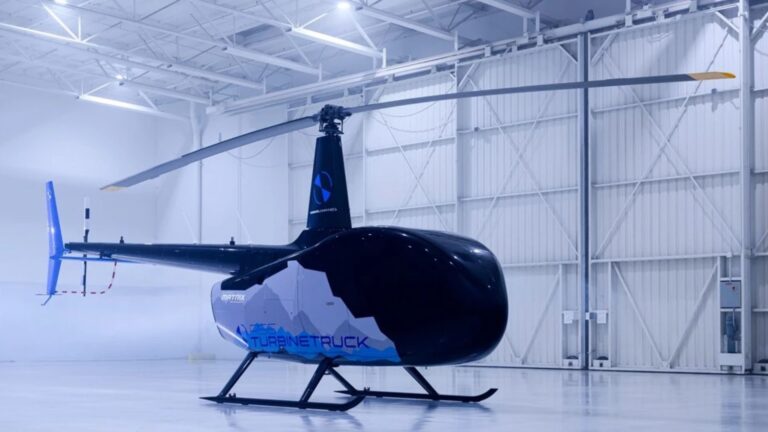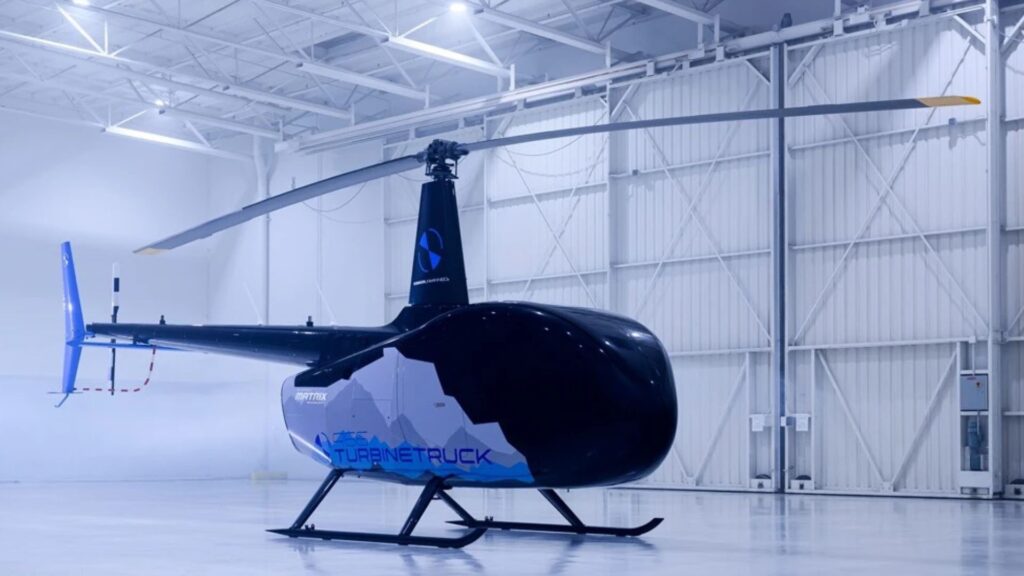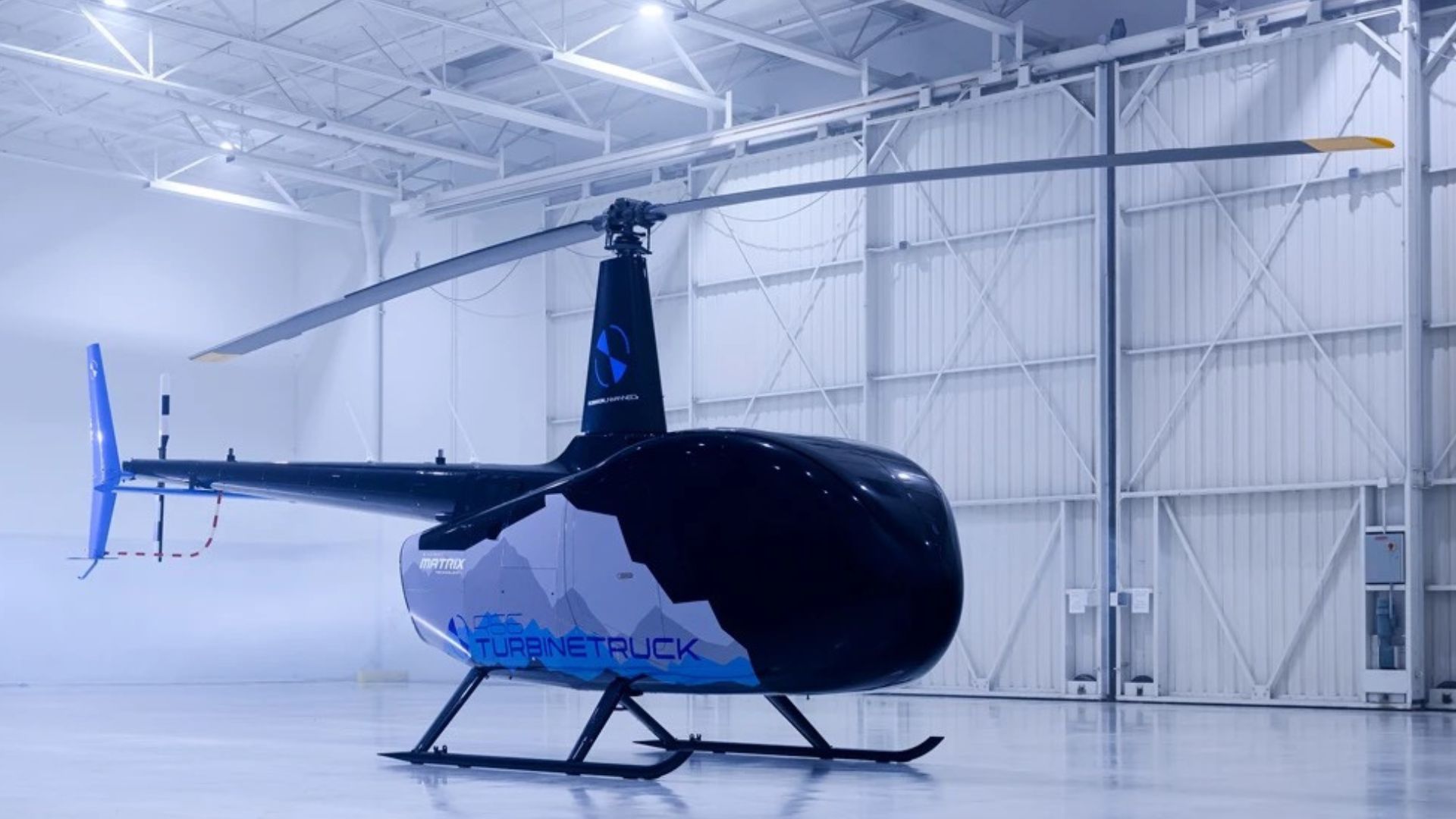
The Robinson R66 Turbinetruck removes the pilot seat entirely, replacing it with cargo space, challenging the traditional cockpit-based aircraft design.
The small turbine helicopter is designed as an uncrewed cargo aircraft capable of supporting both commercial and military missions.
Instead of a cockpit, the front of the helicopter features large clamshell cargo doors. These doors allow the aircraft to carry freight or equipment in the space normally reserved for pilots.
Aircraft engineers constantly try to improve efficiency. The goal is to make aircraft lighter, faster, and capable of carrying more payload.
One common strategy is to remove unnecessary weight from the airframe. Designers often replace heavier materials with lighter alloys or redesign structures so the aircraft’s shape carries the load.
READ ALSO: US Lockheed Martin Plans Nuclear Reactor for Moon Base by 2030
The Turbinetruck follows the same philosophy. By removing the cockpit and flight crew, the aircraft gains additional space and reduces weight.
Autonomous Technology From Sikorsky
The helicopter was developed with technology support from Sikorsky. The aircraft uses Sikorsky’s MATRIX autonomy system, which allows the helicopter to fly without a pilot.
This technology first appeared on the Sikorsky S-70 U-Hawk, an autonomous version of the famous Sikorsky UH-60 Black Hawk.
In that aircraft, the cockpit was replaced with cargo doors while autonomous software handled flight operations.
Smaller, Cheaper Than the U-Hawk
The new Turbinetruck applies the same concept to a much smaller helicopter platform.
WATCH ALSO: International Space Station crew wishes New Year 2026
The U-Hawk is a large military aircraft powered by two GE T700-GE-701C turboshaft engines. It weighs about 22,000 pounds (9,979 kg) and can carry up to 7,000 pounds of internal cargo or 9,000 pounds externally.
It also cruises at 159 knots (183 mph) and can remain airborne for up to 14 hours with auxiliary fuel tanks.
In comparison, the Turbinetruck is designed to be light, simple, and affordable.
Turbinetruck Performance and Payload
The Turbinetruck is powered by a single Rolls‑Royce RR300 engine, designed to provide reliable performance for a lightweight autonomous helicopter.
The aircraft has a maximum gross weight of about 2,900 pounds (1,315 kilograms) and can carry a payload of up to 1,200 pounds (544 kilograms) either internally or externally.
It can cruise at around 120 knots (138 mph / 222 km/h) and remain airborne for up to 4 hours, depending on mission requirements and payload configuration.
These specifications make the Turbinetruck suitable for short- to medium-range cargo and support missions while maintaining lower operating costs than larger helicopters.
WATCH ALSO: Chinese humanoid robot plays basketball with almost human-like accuracy
Because the helicopter is smaller and cheaper to operate, it can be used in high-risk missions where losing an aircraft would be acceptable. It also consumes less fuel and requires less maintenance than larger military helicopters.
Modular Mission Capability
The Turbinetruck features a modular design that allows operators to quickly change mission equipment depending on operational needs.
This flexibility enables the aircraft to perform a wide range of missions. It can be used for cargo transport and resupply operations, particularly in remote or dangerous locations where sending crewed aircraft may be risky.
The helicopter can also support surveillance and reconnaissance tasks, providing aerial monitoring without putting pilots in harm’s way. In military operations, it can assist with logistics by delivering equipment and supplies to forward areas.
Additionally, the aircraft could play a valuable role in disaster relief by quickly and efficiently transporting essential aid, medical supplies, and emergency equipment to affected regions.
Autonomous flight also allows the aircraft to operate in dangerous environments without risking human pilots. Sikorsky believes adding smaller aircraft, such as the Turbinetruck, will expand the use of autonomous aviation.
Rich Benton, vice president and general manager at Sikorsky, said the company sees both aircraft working together in future missions.
READ ALSO: DuraPatcher Tech: End To US’s Pothole Crisis?
“We welcome every new platform that joins the MATRIX family,” Benton said. “The U-Hawk and R66 Turbinetruck act as complementary systems that serve both defense and commercial missions.”
He added that MATRIX autonomy technology is becoming a reliable standard for safe and repeatable autonomous flight.
The Turbinetruck represents a shift toward more accessible autonomous rotorcraft. Instead of adapting large military helicopters, the concept brings advanced autonomy to smaller and more affordable aircraft.
If the design succeeds, pilotless helicopters could soon become a common tool for logistics, military operations, and remote cargo transport.