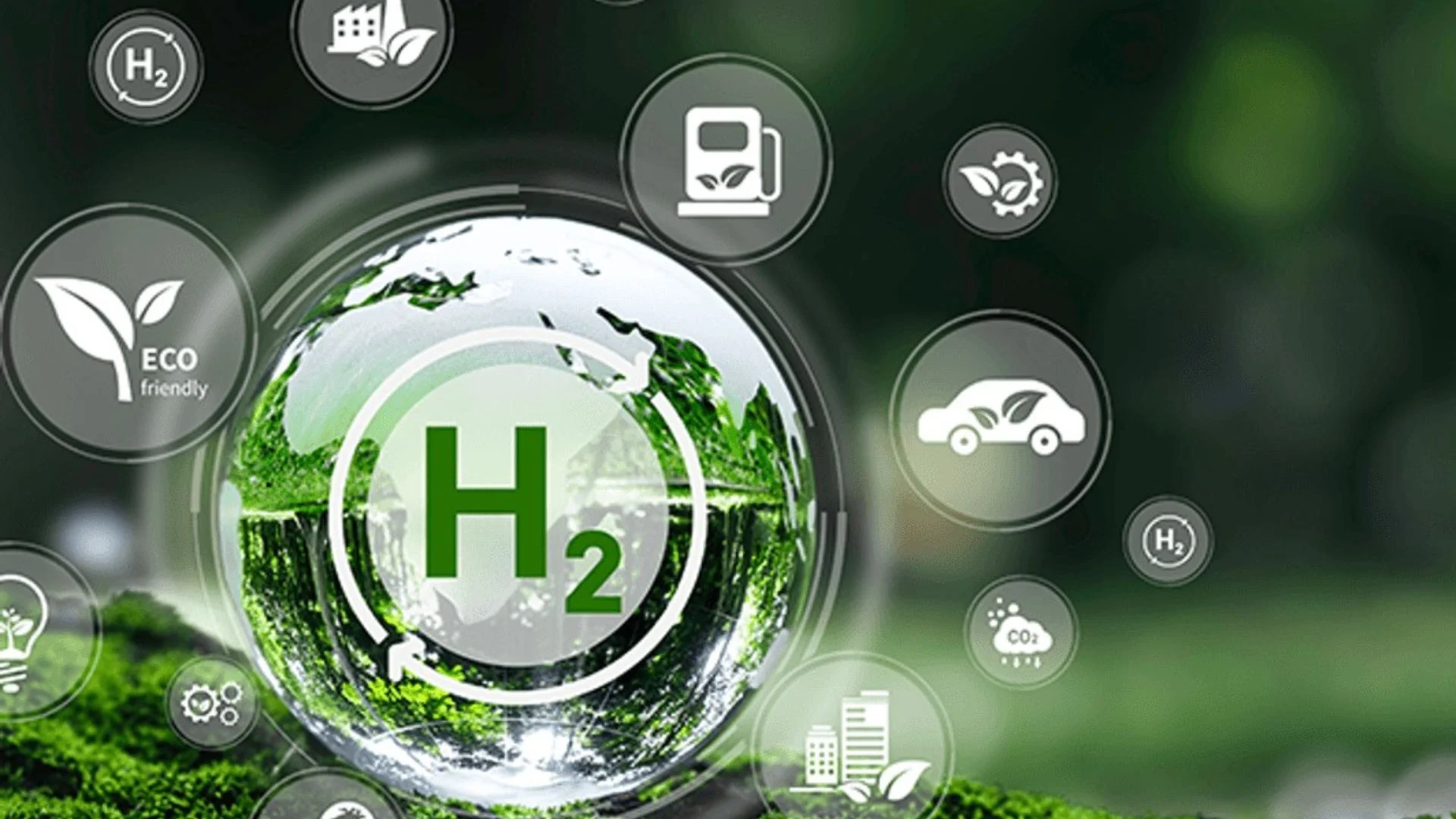
Depleted oil fields may soon get a second life, not as fossil fuel sources, but as underground storage hubs for clean energy.
New research shows that these exhausted reservoirs can safely hold hydrogen using a special liquid system, while also helping extract leftover oil. The idea offers a practical way to address one of hydrogen energy’s biggest challenges: storage.
Hydrogen is widely seen as a key fuel for the future. It burns clean and produces no carbon emissions at the point of use. But storing and transporting it remains difficult and costly. It often requires high-pressure tanks or extremely cold conditions, making large-scale use complex.
READ ALSO: Sikorsky Lands $65M US Army Deal for UH-60M Black Hawk to Sustain Airlift
Scientists at King Abdullah University of Science and Technology (KAUST) have explored a different approach. Instead of storing hydrogen as a gas, they used Liquid Organic Hydrogen Carriers, or LOHCs.
These are carbon-based liquids that can absorb and release hydrogen through chemical reactions. The study was published in the Fuel journal.
LOHCs work in a simple but effective way. Hydrogen is chemically bonded to a liquid molecule using a catalyst. This creates a stable, hydrogen-rich liquid that can be handled like conventional fuel. When needed, another reaction releases the hydrogen, and the original liquid can be reused.
“LOHCs offer a practical and efficient alternative to traditional hydrogen storage,” said Hussein Hoteit, who led the research team.
WATCH ALSO: Top research robot integrated with new intelligence platform
One major advantage is infrastructure. These liquids can move through existing pipelines, storage tanks, and tankers already used in the oil and gas industry. This avoids the need to build entirely new systems.
“This reduces both cost and complexity, which are major barriers to hydrogen adoption,” said Zeeshan Tariq.
To test the idea, the team simulated how LOHCs would behave deep underground. They used a model of a depleted sandstone oil reservoir about 2,200 meters below the surface. This depth is typical for oil fields in Saudi Arabia.
The researchers studied two types of LOHC systems. They examined factors such as flow behavior, stability, and the amount of hydrogen each system could store.
In the first system, hydrogen was combined with toluene to form methylcyclohexane. Both substances are already used in existing LOHC technologies. Toluene can store about 6.2% of its weight in hydrogen. Methylcyclohexane, on the other hand, flows easily because of its low viscosity.
In the simulation, methylcyclohexane was injected into the underground reservoir for five months. It was then left undisturbed for two months before being extracted over another five months. This one-year cycle was repeated 15 times.
READ ALSO: USAF Revives Standoff Attack Weapon Push for Affordable Strike Power
The results were promising. Around 75% of the injected liquid was recovered after each cycle. Over time, more than half of the trapped residual oil in the reservoir was also extracted.
This dual benefit is important. The recovered oil could help offset the cost of storing hydrogen. According to the study, the overall project could generate about $70 million in value, exceeding its costs.
The second LOHC system showed mixed results. While it could store more hydrogen per molecule, it had a major drawback. Its higher viscosity made it harder to inject and extract from the underground reservoir. This reduced its overall performance.
The findings suggest that not all LOHCs are equally suitable for underground storage. Flow properties and ease of movement are critical.
The environmental impact was also considered. Extracting additional oil would result in some additional carbon emissions. However, the researchers say these emissions are small compared to the long-term benefits of using hydrogen as a clean energy source.
“Carrier-based storage supports climate goals,” Hoteit said. “It makes hydrogen use possible at a large scale while using existing infrastructure.”
WATCH ALSO: Skid AI to boost development of its robotic intelligence platform, raises USD 1.4 billion
The concept also fits into a broader energy transition strategy. Instead of abandoning old oil fields, they can be repurposed for cleaner energy systems. This reduces waste and uses already developed sites.
Looking ahead, the research team plans to expand its work. They aim to study more complex reservoir systems with multiple wells operating simultaneously. This will help test how the method performs under real-world conditions.
Summarily, the approach could change how hydrogen is stored and distributed globally. It serves as a bridge between today’s fossil-fuel infrastructure and tomorrow’s clean energy systems.