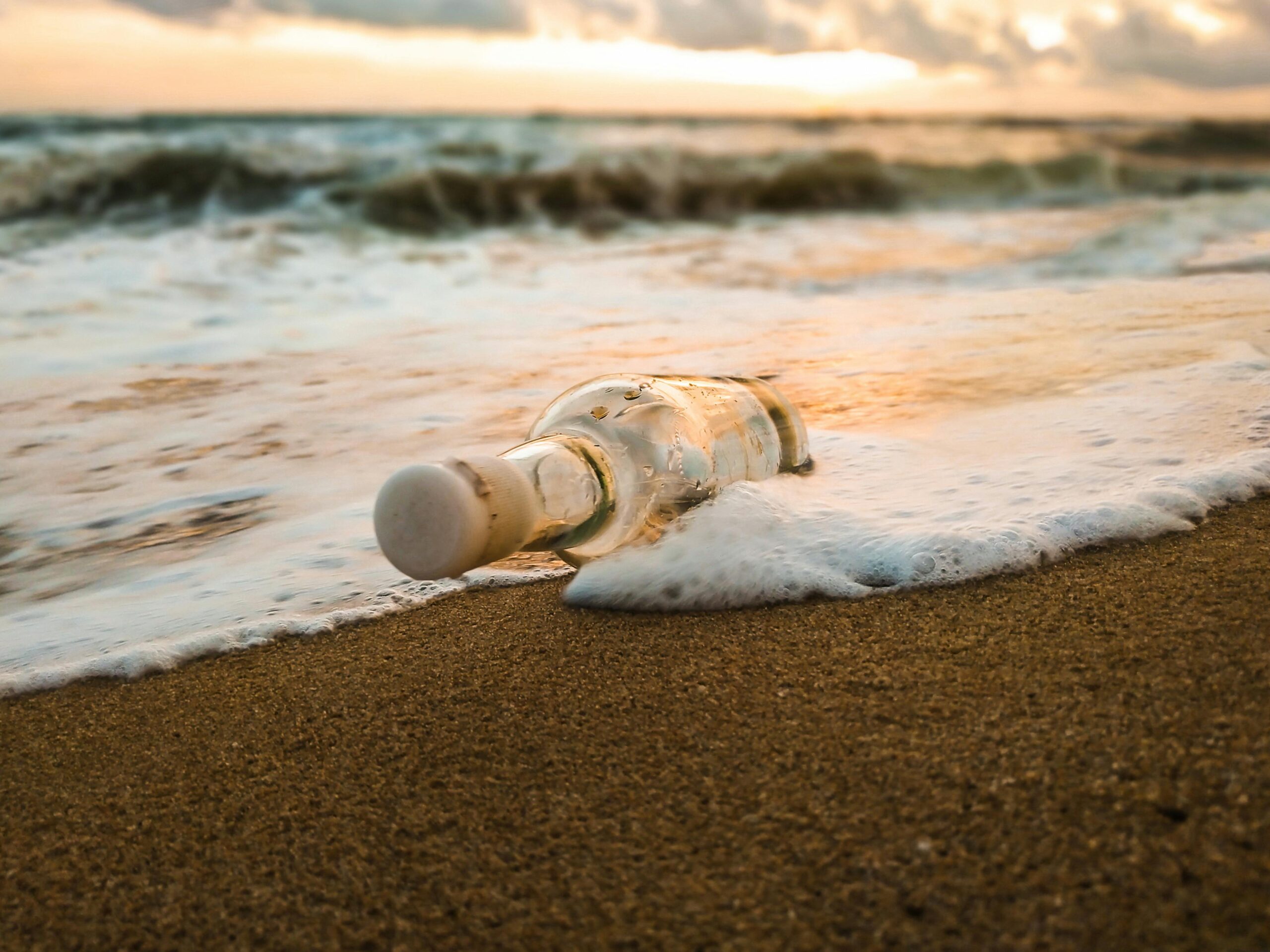
A partnership between Florida community volunteers and international researchers has solved a coastal mystery: oily plastic and rubber debris that washed ashore in 2020 traveled over 5,200 miles (8,500 kilometers) from a 2019 oil spill near Brazil. Published in ACS’ Environmental Science & Technology, the study reveals how plastic pollution can act as a long-distance raft for hazardous oil, carrying it far beyond where spills occur.
When strange, oil-coated plastic bottles and rubber chunks began littering the beaches of Palm Beach, Florida, in 2020, a local cleanup group knew something was amiss. With no recent spills reported locally, the Friends of Palm Beach turned detective, noting Portuguese and Spanish labels on the debris. Their curiosity launched an international scientific investigation that would trace the pollution on an epic transatlantic journey. “If they hadn’t been willing to investigate and share their observations, this discovery would still be lost at sea,” said lead author Bryan James, a researcher at Northeastern University.
Typically, crude oil doesn’t travel far in the ocean; sunlight and microbes break it down within a few hundred miles. The persistence of this oily material hinted at an unusual carrier. Researchers, led by James and Christopher Reddy from the Woods Hole Oceanographic Institution, hypothesized a link to a major 2019 oil spill along Brazil’s coast and possibly the sunken WWII ship SS Rio Grande. To prove it, they deployed a trio of scientific methods: ocean current modeling, travel time estimates, and forensic chemical analysis.
READ ALSO: https://modernmechanics24.com/post/china-e-waste-gold-recovery-record/
The models told a compelling story. They traced the debris’s path backwards, pointing to origins in the Gulf of Mexico, Central America, and Brazil. The estimated drift time was 240 days—a perfect match for currents carrying material from the Brazil spill to Florida. The chemical evidence sealed the case. The “fingerprint” of the oily residue on the Florida plastics matched samples from the 2019 Brazil oil spill, showing signs of refining. This confirmed that the plastic had become a “petroplastic,” a hazardous hybrid pollutant.
“This work demonstrates an additive contaminant effect where plastic pollution can transport oil pollution far beyond its origin,” explained Christopher Reddy. The findings, reported in the journal Environmental Science & Technology, expand our understanding of how two major pollutants—oil and plastic—can combine with devastating mobility, creating a problem that crosses oceans.
WATCH ALSO: https://modernmechanics24.com/post/lockheed-turns-black-hawk-into-pilotless-drone/
The research, made possible by the sharp eyes of local volunteers, underscores the critical role of community science. It also highlights a disturbing new pathway for contamination: plastic waste isn’t just a problem itself; it can become a vehicle for spreading other toxins across the globe, turning a local spill into an international issue.