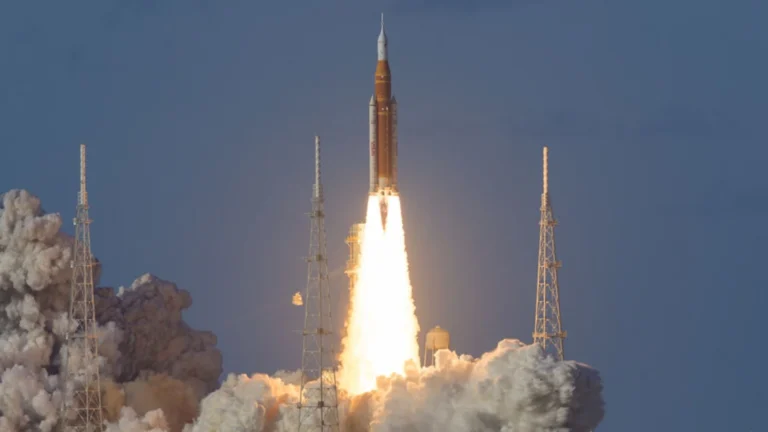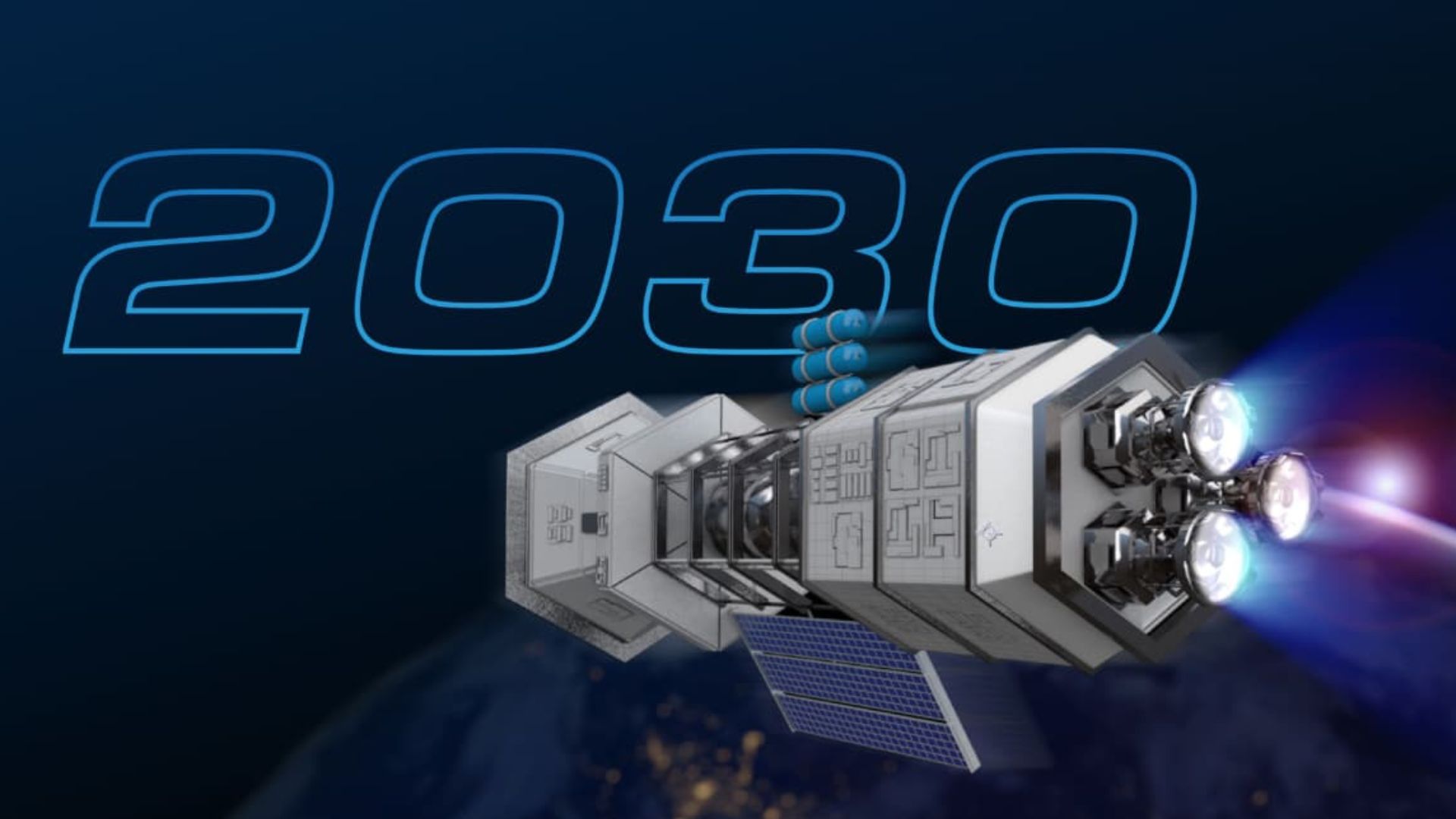
NASA is moving ahead with plans to place a 500-kilowatt nuclear fission reactor on the Moon by fiscal year 2030, marking a major step toward sustained human presence beyond Earth.
Reliable energy remains one of the biggest challenges in space exploration. On Earth, researchers link access to dependable power with better health and longer life. Energy can determine whether astronauts survive in space. Future lunar bases will require a stable power supply for life support, communications, scientific research, and mobility systems.
For decades, spacecraft have relied on radioisotope power systems that convert heat from decaying plutonium into electricity. Missions such as Voyager 1 and 2 and NASA’s Mars rovers used this technology successfully. However, these systems produce limited power. A long-term lunar base will need far more energy.
NASA has now issued a directive on fission surface power. It aims to deploy a reactor on the Moon before the end of the decade. A recent report funded by Idaho National Laboratory (INL), titled Weighing the Future: Strategic Options for US Space Nuclear Leadership, outlines possible paths to achieve that goal.
READ ALSO: https://modernmechanics24.com/post/why-habitable-planets-are-rare-in-space/
“It might sound like science fiction, but it’s not,” said Sebastian Corbisiero, Department of Energy Space Reactor Initiative national technical director. “It is very realistic and can significantly boost what humans can do in space because fission reactors provide a step increase in the amount of available power. What we need now is a clear path forward.”
Unlike radioisotope systems, a fission reactor can generate large amounts of electricity. A 500-kilowatt reactor could power habitats, mining systems, and fuel production plants. It would also support missions during the Moon’s two-week-long night, when solar panels cannot produce energy.
Designing a reactor for space comes with unique challenges. Engineers must balance performance with strict weight limits. Every kilogram sent to the Moon must be carried by a rocket, making mass a critical factor.
“The big differences are mass, temperature and component endurance,” Corbisiero said.
Traditional nuclear reactors on Earth often use water as a coolant. But water would require heavy, high-pressure vessels in space, increasing launch weight. For this reason, engineers are studying alternative cooling methods and advanced materials.
Temperature is another key concern. Space reactors are expected to operate at much higher temperatures to maximize efficiency and reduce size. Materials that perform well in terrestrial plants may not survive the harsher conditions of space.
Also, reactors on Earth shut down every 18 to 24 months for refueling and repairs. A lunar reactor, however, must run for about 10 years without human servicing. That means components and electronics must withstand radiation, extreme temperatures, and vacuum conditions for long periods.
NASA’s Fission Surface Power project is evaluating these technical hurdles. Researchers across national laboratories are testing fuels, materials, and designs that can meet these demands.
WATCH ALSO: https://modernmechanics24.com/post/humanoid-robots-no-human-control/
Earlier, the US and the Soviet Union experimented with space reactors during the Cold War. The US launched the SNAP-10A reactor in 1965, making it the only American fission reactor sent into space. Since then, nuclear energy in space has focused mainly on radioisotope systems.
As NASA prepares for Artemis missions and long-term lunar habitation now, this space-nuclear technology has taken the spotlight. The INL-backed report outlines three possible strategies to advance US leadership in space nuclear power.
Go Big or Go Home
The first option, known as “Go Big or Go Home,” proposes building a large 100- to 500-kilowatt electric system under NASA or the Department of Defense, with support from the Department of Energy. This approach aims for rapid impact but would require strong leadership and stable funding.
Chessmaster’s Gambit
The second strategy, called “Chessmaster’s Gambit,” suggests two smaller projects totaling less than 100 kilowatts of electric power through public-private partnerships. One would focus on a NASA-led lunar surface or orbital reactor. The other would develop an in-space system under the Department of Defense. This path spreads risk and allows private companies to choose technologies within set deadlines and budgets.
READ ALSO: https://modernmechanics24.com/post/jaguar-electric-gt-frozen-lake-test/
Light the Path
The third option, “Light the Path,” recommends a smaller demonstration of less than 1 kilowatt. While limited in scale, it would help establish regulatory frameworks and technical groundwork for future expansion.
Each strategy carries different financial and technical commitments. However, experts agree that progress must accelerate to maintain US leadership in space nuclear technology.
INL plays a central role in this effort. As the lead national laboratory supporting space reactor development, it coordinates work across multiple labs. Facilities such as the Transient Reactor Test Facility allow engineers to test fuels and reactor systems under extreme conditions.
Corbisiero believes the country stands at a turning point.
“We’re potentially on the cusp of a major step forward regarding nuclear power for space applications,” he said. “To be a part of an effort like this, that is as exciting as it gets. That’s something you tell your grandkids.”
WATCH ALSO: https://modernmechanics24.com/post/china-40000t-sichuan-assault-ship/
NASA’s lunar nuclear reactor could lay the foundation for permanent settlements on the Moon. It’ll eventually support human missions to Mars. It will encourage reliable nuclear power to become the backbone of deep-space exploration, turning long-held ambitions into practical reality.