

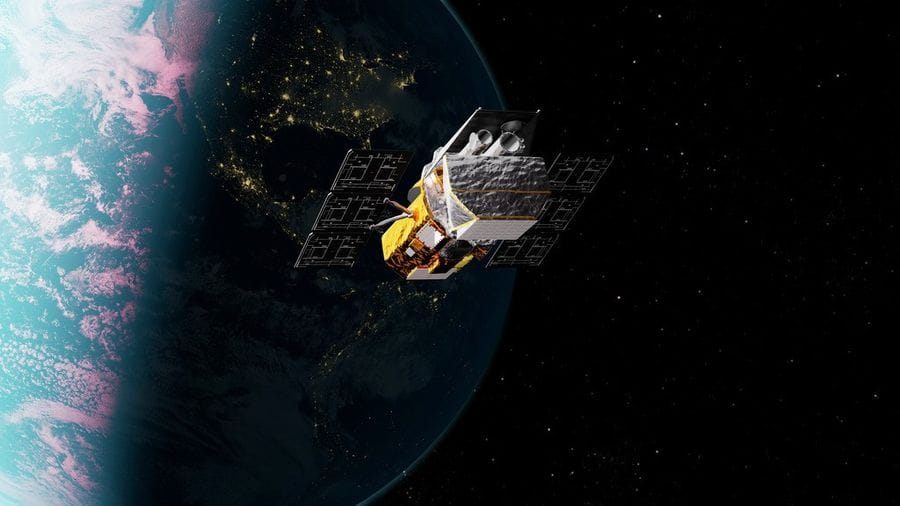
NASA and Katalyst Space have changed the plan for the LINK commercial spacecraft after an Cproblem prevented it from carrying out the mission’s main objective.
LINK will no longer capture NASA’s Neil Gehrels Swift Observatory and raise its orbit to extend the aging space telescope’s science operations. Instead, the spacecraft will attempt rendezvous and proximity operations with Swift, allowing engineers to collect valuable data and test technologies needed for future satellite servicing.
The decision follows weeks of work to establish communications with LINK and complete its initial in-orbit checks. The spacecraft encountered problems controlling its orientation, a critical function that allows a satellite to point itself accurately and maneuver through space. NASA and Katalyst are now assessing how to proceed while seeking to gain as much useful information as possible from the mission.
READ ALSO: https://modernmechanics24.com/post/fastest-star-milky-way-orbit-black-hole/
Swift Rescue Plan Changes
Swift was launched in 2004 to study gamma-ray bursts, extremely powerful explosions that occur across the universe.
The observatory was originally designed for a two-year primary mission, but it continued operating for more than two decades and produced important observations of gamma-ray bursts and other cosmic events. Its low Earth orbit has recently begun declining more quickly as increased solar activity expands Earth’s upper atmosphere and creates more drag on satellites.
NASA had planned to use the LINK mission to give Swift additional time in orbit. Under the original plan, LINK was expected to approach Swift, capture it using robotic servicing capabilities, and move the observatory into a higher orbit where it could continue scientific observations for longer.
That plan is no longer possible because of the spacecraft’s attitude control issue. Without a successful intervention, NASA expects Swift will likely re-enter Earth’s atmosphere later this year, marking the eventual end of a mission that has operated far beyond its original design life.
Rendezvous Test Remains
Although LINK will not perform the planned orbit-raising operation, NASA and Katalyst still intend to attempt rendezvous and proximity operations with Swift.
In simple terms, this means LINK will try to approach and operate near the observatory while demonstrating how a servicing spacecraft can navigate around another satellite. The attempt can provide engineers with information about spacecraft navigation, control, coordination and close-range operations even without a successful capture.
NASA Administrator Jared Isaacman said the mission was designed to move quickly and accept a higher level of risk because of the potential scientific and technological benefits.
WATCH ALSO: https://modernmechanics24.com/post/china-6-ton-tiltrotor-first-flight/
He said the outcome was not what the team wanted, but emphasized that the mission remains valuable because of the lessons gained from the rendezvous attempt and the capabilities developed along the way.
Shawn Domagal-Goldman, director of NASA’s Astrophysics Division at NASA Headquarters in Washington, described LINK as a high-risk, high-reward effort developed on an unusually short schedule because of changing solar activity.
He said the agency had hoped Swift would gain additional science time, while also recognizing that the mission could provide useful lessons regardless of the final outcome.
The upcoming operations therefore serve a different purpose from the original mission objective. Rather than focusing on extending Swift’s operational lifetime, NASA and Katalyst will prioritize collecting information that can improve future missions designed to inspect, repair, relocate or otherwise service spacecraft already in orbit.
Commercial Servicing Gains
The LINK mission is also part of NASA’s broader effort to expand commercial capabilities for work in space. NASA awarded Katalyst a contract in September 2025 to develop and conduct a robotic servicing mission for Swift in less than a year, creating a demanding schedule for design, testing, launch preparation and flight operations.
LINK launched July 3 aboard a Northrop Grumman Pegasus XL rocket from Kwajalein Atoll in the South Pacific Ocean. After launch, ground teams established communications with the spacecraft and carried out in-orbit checks before the attitude control problem emerged.
The mission has already demonstrated the ability of NASA and a commercial partner to move from contract award to launch on an unusually compressed timeline. NASA said the effort has also strengthened the U.S. space industry pipeline by advancing commercial in-space servicing capabilities and encouraging companies to take on technically difficult missions.
The experience may become particularly useful as the number of satellites operating in Earth orbit continues to increase. Servicing spacecraft that can safely approach existing satellites may eventually help operators extend mission lifetimes, move spacecraft to new orbits, conduct repairs or manage other tasks without launching an entirely new replacement satellite.
READ ALSO: https://modernmechanics24.com/post/beijing-robot-expo-humanoids-at-work/
Lessons For Future Missions
NASA said it will continue working with Katalyst to determine the next steps for the rendezvous attempt. Engineers will focus on gathering detailed flight data that can explain the spacecraft’s behavior and help identify improvements for future servicing systems.
The agency also plans to manage the loss of Swift through other scientific resources. NASA said existing missions will help cover some of the observational needs while it continues looking for new ways to respond rapidly to cosmic events.
Swift’s long operational history makes the situation significant for astronomy as well as spacecraft servicing. The observatory has spent 21 years studying some of the universe’s most energetic events, giving researchers a valuable platform for rapidly detecting and following gamma-ray bursts and other transient phenomena.
The immediate priority is now to make the LINK rendezvous attempt as informative as possible. Even without extending Swift’s mission, the data gathered from the operation can shape the design and planning of future commercial spacecraft servicing missions, helping NASA and industry develop safer and more capable ways to work with satellites already in orbit.
The LINK mission therefore moves forward with a narrower objective but an important technological focus. Its next operations will test whether lessons from a difficult flight can be converted into practical capabilities for the growing field of in-space satellite servicing.















2 Responses