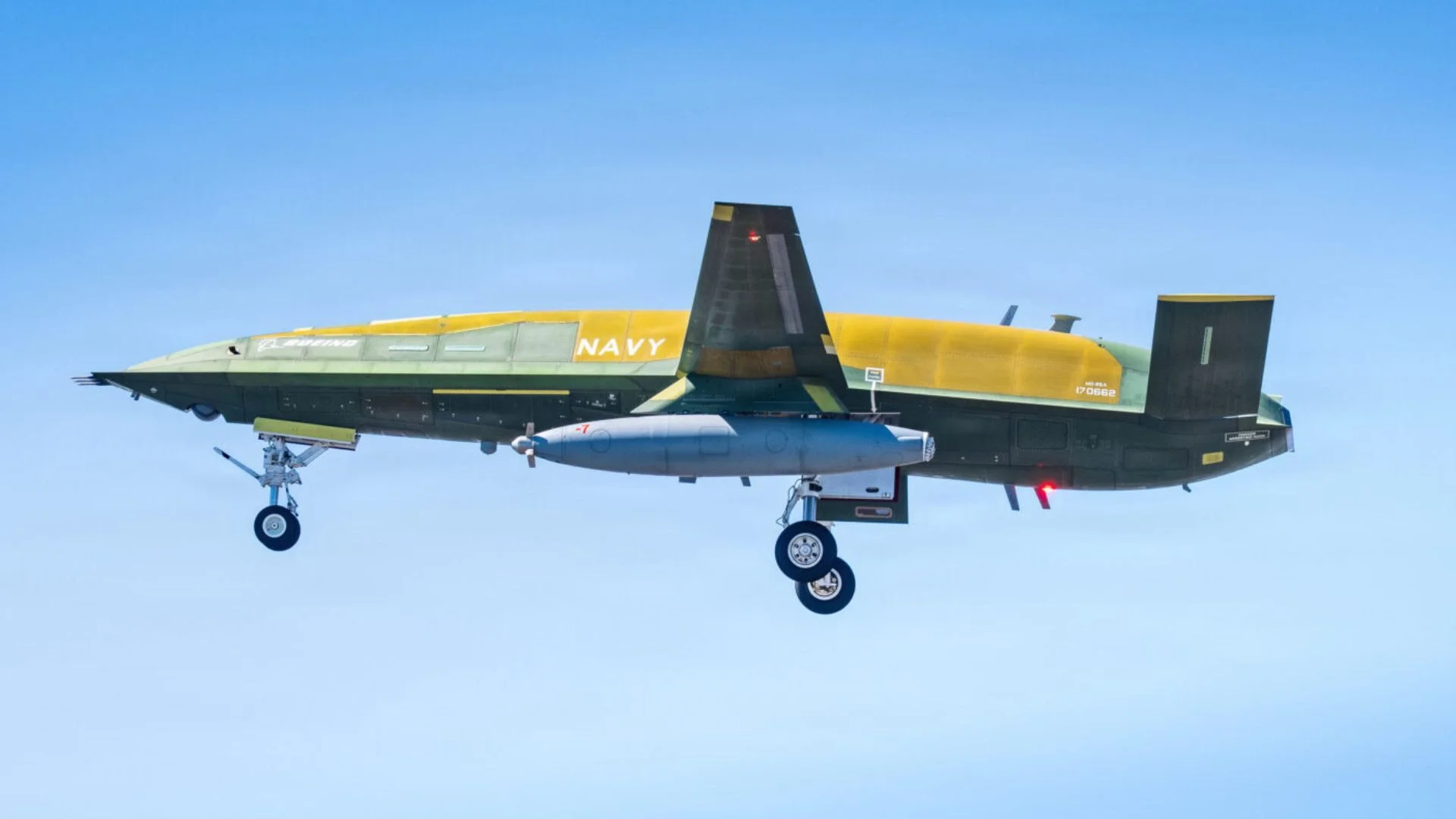
The US Navy announced that the MQ-25A Stingray has received Milestone C approval from the Pentagon.
This approval allows the program to move into low-rate initial production(LRIP). The phase is used to build small numbers of aircraft before full-scale production begins.
The Navy said Boeing is expected to receive a contract for three aircraft in LRIP Lot 1 later this summer. The agreement also includes options for additional aircraft in future production lots. Lot 2 is expected to include three aircraft, while Lot 3 could add five more.
According to a 2025 Government Accountability Office report, the MQ-25A program is valued at about $15.9 billion. The report estimated the cost of each aircraft at around $209 million. The program includes 76 air vehicles, including test and development models.
Why the MQ-25A Matters
The MQ-25A Stingray is the first carrier-based unmanned aircraft designed mainly for aerial refueling missions. Its main role is to refuel Navy fighter jets in the air during long-range operations. This helps aircraft stay in combat zones longer without returning to the carrier for fuel.
READ ALSO: Australia Taps Lockheed Martin for Virginia Submarine Combat Systems Under AUKUS Deal
At present, the Navy uses F/A-18E/F Super Hornets for refueling duties during missions. That task reduces the number of fighter jets available for combat operations. The MQ-25A is expected to free up those aircraft for frontline missions while expanding the carrier air wing’s reach.
Navy officials have also described the MQ-25A as an important first step toward future unmanned naval aviation. The drone is expected to support more advanced autonomous aircraft programs in the coming years. It also reflects the Navy’s growing focus on long-range operations in contested regions.
Delays Push Carrier Deployment to 2029
Boeing completed another planned test flight of an MQ-25A engineering development model last month in Illinois. The company has continued testing the aircraft ahead of operational deployment. Navy officials said both the aircraft and production systems are ready for the next phase.
Despite the production milestone, the Navy recently delayed the aircraft’s operational deployment timeline. Budget documents for Fiscal Year 2027 showed the MQ-25A will now reach initial operational capability in Fiscal Year 2029. Earlier plans called for deploying the drone aboard the USS Theodore Roosevelt (CVN-71) this year.
The Navy said initial operational capability will require three MQ-25A aircraft, trained crews, and deployment equipment aboard a carrier.
WATCH ALSO: Blue dogs spotted in Chernobyl nuclear disaster site spark concern
Production challenges and aircraft carrier scheduling issues contributed to the delay. Even with the revised timeline, the MQ-25A remains one of the Navy’s most important future aviation programs.
Capt. Daniel Fucito, the Navy’s program manager for unmanned carrier aviation, said the aircraft and production line are prepared for the next stage.
He added that the program will help improve fleet capability, capacity, and combat effectiveness. The coming production phase is expected to shape the future of carrier-based drone operations for the US Navy.