At a time when global supply chains are under constant pressure, Locus Robotics has introduced a system that aims to change how warehouses operate.
The company announced the global launch of Locus Array at MODEX, presenting it as a major step toward fully autonomous fulfillment.
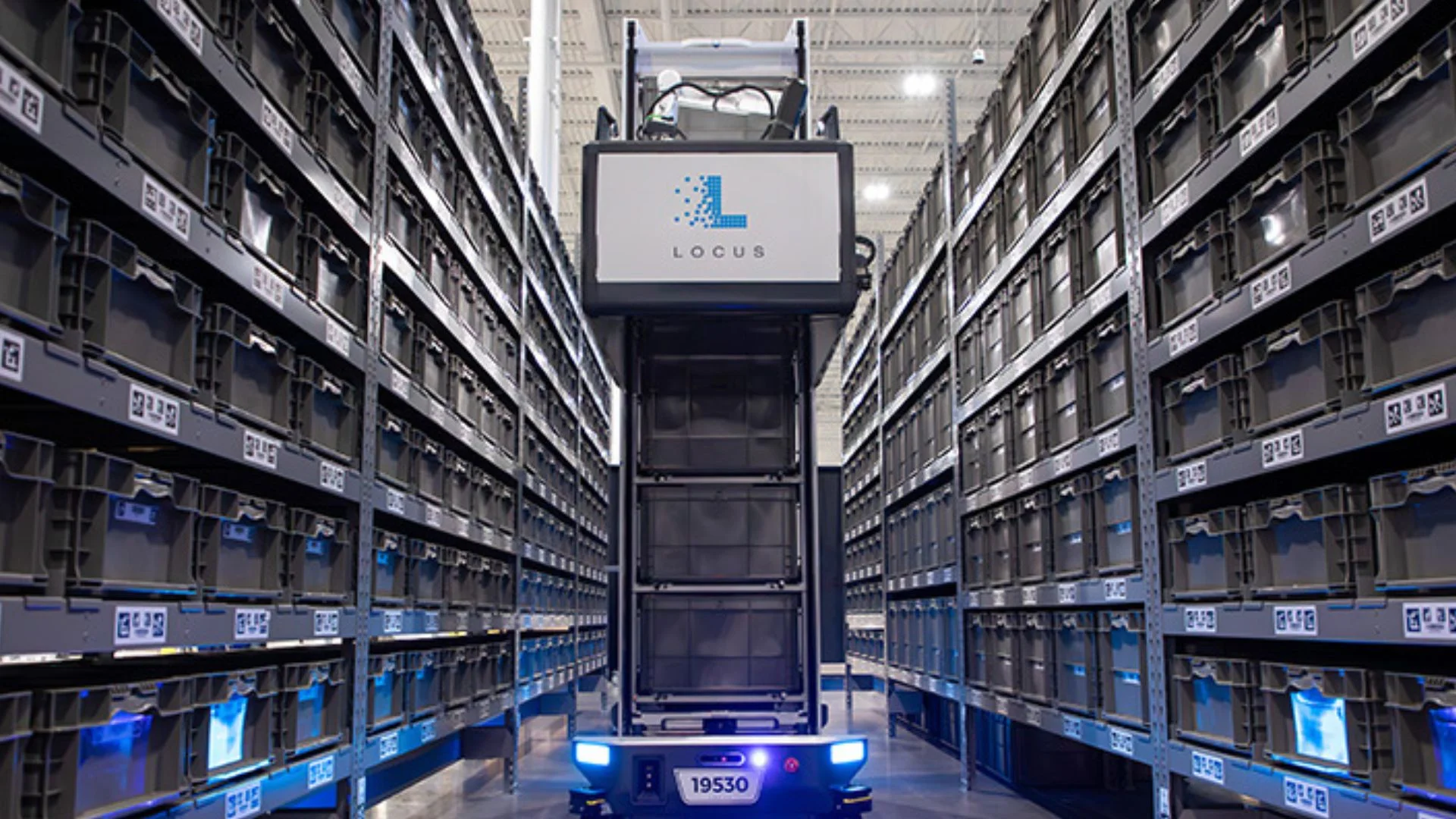
Locus Array combines a mobile robot, a robotic picking arm, and AI-powered vision. These elements allow the system to perform tasks that once required human workers. The goal is simple: reduce dependency on manual labor while improving speed and efficiency.
Rick Faulk, CEO of Locus Robotics, spoke directly about the problem. He said uncertainty remains the biggest challenge in supply chains today. Events like COVID-19, seasonal demand spikes, and changing tariffs have pushed costs higher without improving productivity.
READ ALSO: Artemis II Returns: The Moon Mission That Went Farther Than Ever Before
He explained that warehouses are struggling with labor shortages, rising expenses, and unpredictable demand. Traditional systems cannot handle these pressures. Locus Array is designed to address these issues at a deeper level by bringing real autonomy into operations.
Faulk described the system as a step toward a self-running warehouse. He said it represents the result of a decade-long roadmap. Over the years, Locus has moved from simple human-robot collaboration to deploying over 17,000 autonomous mobile robots (AMRs). These robots have already assisted in more than 7 billion picks worldwide.
Locus Robotics: From Assisted Robots to Full Autonomy
The story of Locus Robotics began with experience. Quiet Logistics, a third-party logistics provider, was an early adopter of Kiva Systems’ robots. When Amazon acquired Kiva in 2012 and kept the technology for its own use, Quiet Logistics had to adapt.
That challenge led to the creation of Locus Robotics. Since then, the company has grown rapidly. It now serves more than 150 customers across 350 facilities in 20 countries. In October 2025, it crossed 6 billion robot-assisted picks, showing the scale of its operations.
WATCH ALSO: EHang’s next-gen autonomous eVTOL completes first public flight
Peter Ashe, senior vice president of operations, highlighted the widespread use of the technology. He noted that 60% of certain medical supplies, including artificial knees, are shipped using Locus robots for next-day delivery in the US.
With Locus Array, the company is now moving beyond assisted automation. The system introduces a new model called robots-to-goods (R2G). In this approach, robots travel directly to inventory and perform tasks within the aisles.
This is different from older systems. In goods-to-person models, inventory is moved to workers. In person-to-goods systems, workers move around the warehouse. Locus Array removes both limitations by allowing robots to handle the movement and execution.
The system supports multiple workflows. It can pick items, store them, move inventory, and even handle replenishment. According to the company, this reduces manual labor by up to 90%.
READ ALSO: World’s Oldest Octopus Fossil Was Never an Octopus, Teeth Reveal True Identity
Another advantage is deployment speed. Locus says the system can be installed within weeks. There is no need to redesign warehouse layouts or add complex infrastructure. This makes it easier for companies to adopt automation without major disruption.
The robots are also designed to adapt. They can adjust to changing product types, layouts, and demand levels. This flexibility is critical in modern supply chains where conditions shift quickly.
AI, Robotics, and Unified System
At the core of the system is LocusONE, the company’s AI-driven platform. It connects all robots into a single coordinated fleet. This includes earlier models like Origin and Vector, as well as the new Array system.
LocusONE uses real-time data to assign tasks. It ensures that robots, inventory, and workflows move in sync. This helps maintain efficiency even during peak demand.
The platform relies on advanced AI models running on edge computing systems powered by NVIDIA technology. These models allow the robots to see, understand, and act in real environments.
Faulk emphasized that this is not experimental technology. He said the company’s advantage comes from real-world deployments rather than lab testing. According to him, the system can already perceive, reason, and execute tasks independently.
Kait Peterson, head of marketing at Locus, pointed out that picking has always been one of the hardest tasks to automate. She explained that the system continues to learn over time, improving efficiency and reducing the cost per pick.
WATCH ALSO: International Space Station crew wishes New Year 2026
The robots also offer practical advantages. Unlike some automated storage systems, items do not get stuck during power failures. Manual picking is still possible if needed, ensuring operational continuity.
DHL Leads Early Adoption of Locus Array
One of the first major users of Locus Array is DHL Supply Chain. The company has been working with Locus Robotics for years and recently reached 1 billion picks using its systems.
DHL has already deployed Locus Array at a facility in Columbus, Ohio. The system is actively used in live operations, marking a significant step in real-world adoption.
Tim Tetzlaff, DHL’s global head of digital transformation, stressed the importance of scaling innovation. He said true innovation only matters when it works at scale. After reaching the 1 billion pick milestone, DHL added 21 million more picks within just a few weeks.
At the Columbus site, three Array units are in operation. These robots use omnidirectional wheels to move easily through the warehouse. They can lift totes weighing up to 66 pounds from racks up to 10 feet high.
The system works alongside other Locus robots. The array retrieves items and passes them to Origin and Vector robots for further processing. This coordination enables smooth, continuous operations.
READ ALSO: Cornell Student Develops Ultra-Precise Microchips to Boost Tech Reliability
Locus estimates that Array can handle 60% to 70% of e-commerce products. It can even manage 30% of polybag items, which are often difficult for automation systems.
The robots also act as buffers for batch picking and sorting. This helps maintain flow during busy periods and reduces delays.
Sally Miller, global CIO at DHL Supply Chain, described the deployment as a major step forward. She said the company is moving beyond assisted picking into a new phase of autonomous fulfillment.
She added that the system helps maximize vertical space and reduce manual handling. This improves both speed and reliability, which are critical for customers.
Locus Robotics plans to expand Locus Array into Europe and the Asia-Pacific region. The company sees strong demand as businesses seek ways to manage uncertainty and rising costs.
The system also reflects a broader trend in automation. Warehouses are no longer just storage spaces. They are becoming intelligent systems that can adapt, learn, and operate with minimal human input.
Locus Array brings together mobility, manipulation, and intelligence into a single platform. It moves beyond simple automation and introduces a system-level approach to fulfillment.
READ ALSO: 5,000-Pound Radio Telescope’s Rugged Climb to Chase Dark Matter in Space
Faulk highlighted that flexibility and resilience are now as important as efficiency. He said ongoing collaboration with partners like DHL helps improve operations and ensure long-term success.
The launch at MODEX has drawn attention from across the industry. Companies are closely watching how systems like Locus Array perform in real environments.
As supply chains continue to evolve, solutions that combine speed, intelligence, and adaptability will define the future. Locus Array positions itself as one of those solutions, aiming to transform how goods move from warehouses to customers.
In a world where demand never stops, the idea of a warehouse that runs itself is no longer feasible. With systems like Locus Array, that vision is steadily becoming a reality.