KNDS has unveiled a new long-range artillery system that fires standard ammunition up to 60 kilometers without relying on rocket-assisted projectiles.
The new weapon, called Loras, combines a longer barrel, increased propellant capacity, and automated operation to significantly extend the reach of modern artillery.
The system was presented at the Eurosatory defense exhibition in France and is expected to enter production in the next decade.
Modern militaries are placing greater emphasis on long-range firepower. Artillery remains one of the most important weapons on today’s battlefield. The ability to strike targets from farther away offers tactical advantages while helping crews stay outside enemy engagement zones.
Loras: 58-Caliber Artillery Power
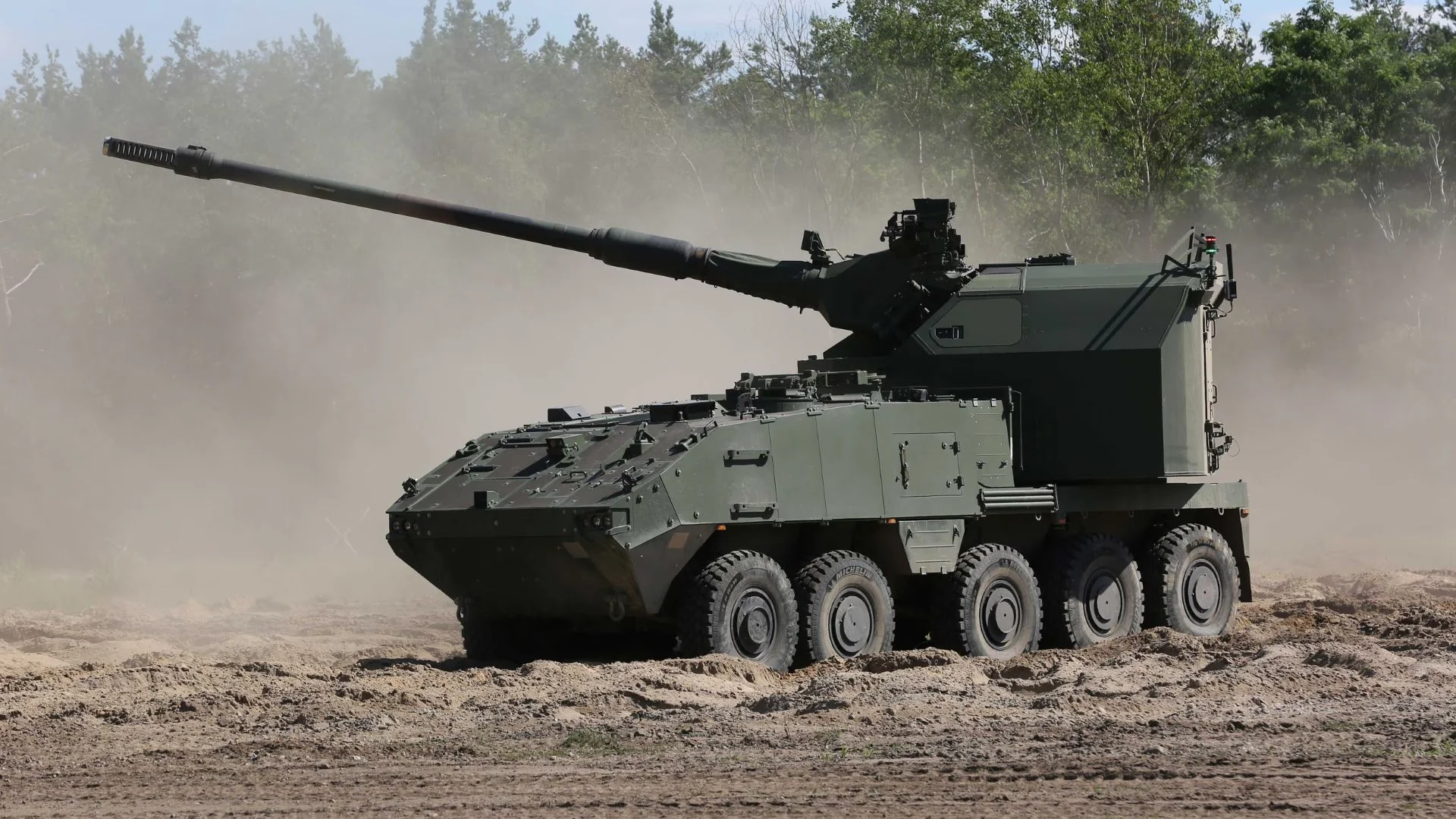
Loras stands for Long-Range Artillery System. The weapon combines KNDS Germany’s Artillery Gun Module with a tracked Boxer armored chassis. It also uses a newly developed barrel produced by KNDS France.
The centerpiece of the system is its 155mm gun fitted with a 58-caliber barrel. This barrel is around 12 percent longer than the 52-caliber barrels used by most modern European artillery systems. It is also substantially longer than the 39-caliber barrel used on the US Army’s M109 Paladin self-propelled howitzer.
A longer barrel allows expanding gases from the propellant to push the shell for a longer period. This increases muzzle velocity and extends firing distance. KNDS also increased the maximum propellant charge to gain additional range.
According to KNDS artillery engineer Pierre Septfons, the project was designed to achieve a range of 60 kilometers using conventional high-explosive ammunition. This removes the need to rely on expensive rocket-assisted projectiles for long-range missions. The approach focuses on improving the gun itself rather than depending entirely on specialized ammunition.
For comparison, most current 155mm artillery systems with 52-caliber barrels have an effective range of around 40 kilometers. The new Loras system increases that distance by roughly 50 percent. This provides commanders with greater flexibility during military operations.
READ ALSO: Wing Shape Holds the Key to Amphibious Drones That Leap From Water to Sky
KNDS has already fired a prototype of the system. The company is funding development largely from its own resources. Serial production is planned for 2032-2035.
The project also received limited support from France’s Directorate General for Armament during its early study phase. The support helped validate the concept before full-scale development began. KNDS continues to lead the program independently.
Lessons From Previous Extended-Range Artillery Programs
The launch of Loras follows several countries pursuing longer-range artillery projects. One of the most closely watched efforts was the US Army’s Extended Range Cannon Artillery program. That project sought to dramatically increase artillery range through a longer barrel design.
The US program was canceled in March 2024. Testing revealed excessive wear inside the 58-caliber gun barrel after a relatively limited number of rounds. The issue highlighted one of the biggest engineering challenges associated with longer artillery barrels.
As barrel length increases, internal pressures and forces become more demanding. This can accelerate wear and reduce service life. Maintaining performance while preserving barrel durability remains a key challenge for artillery designers.
Septfons said the Loras design uses a larger combustion chamber than the US ERCA prototype. This creates a gentler pressure curve inside the barrel. Lower stress levels help reduce wear while still delivering long-range performance.
European manufacturers have decades of experience developing and refining 52-caliber artillery systems. KNDS believes this expertise provides a strong foundation for managing the technical challenges associated with longer barrels. The company sees barrel durability as a key part of the program.
WATCH ALSO: Chinese firm’s humanoid robot can perfectly pick up tennis ball
Automation, Ammunition and Future Growth
Loras features a fully automated loading system. The automation reduces crew workload and supports faster firing operations. It also allows more efficient handling of ammunition during combat missions.
The loading mechanism incorporates concepts from the Panzerhaubitze 2000. However, KNDS says the overall architecture is newer and uses updated electronics. The company also developed an entirely new loading system for the weapon.
The gun can use between one and eight modular propellant charges. By comparison, the Caesar truck-mounted artillery system operates with between one and six charges. The larger charge range gives operators more flexibility to adjust firing performance.
KNDS is also developing a dedicated family of ammunition for the 58-caliber gun. Planned rounds include high-explosive, smoke, and illumination shells. These munitions are specifically designed to exploit the full potential of the longer barrel.
The system will remain compatible with standard 155mm ammunition used by existing 52-caliber guns. However, standard shells will not necessarily achieve the same extended range. The highest performance will come from ammunition optimized for the new weapon.
READ ALSO: Canadian Floating Solar System Survives Harsh Winter Ice-Free Using Air-Bubbler Technology
KNDS estimates that advanced guided, gliding, or ramjet-powered projectiles could eventually reach distances of up to 100 kilometers. For now, the company is concentrating on conventional ammunition development. It plans to work with partner companies interested in developing more advanced long-range munitions.
The unveiling of Loras reflects a growing international focus on artillery modernization. Recent conflicts have highlighted the importance of range, mobility, and rapid response capabilities on the battlefield. Nations are seeking systems that can engage targets at greater distances while maintaining operational efficiency.
As development progresses toward production, Loras represents another step in the evolution of long-range artillery. If testing continues successfully, the system could become one of the longest-reaching conventional artillery platforms in service, expanding the options available to future military forces.