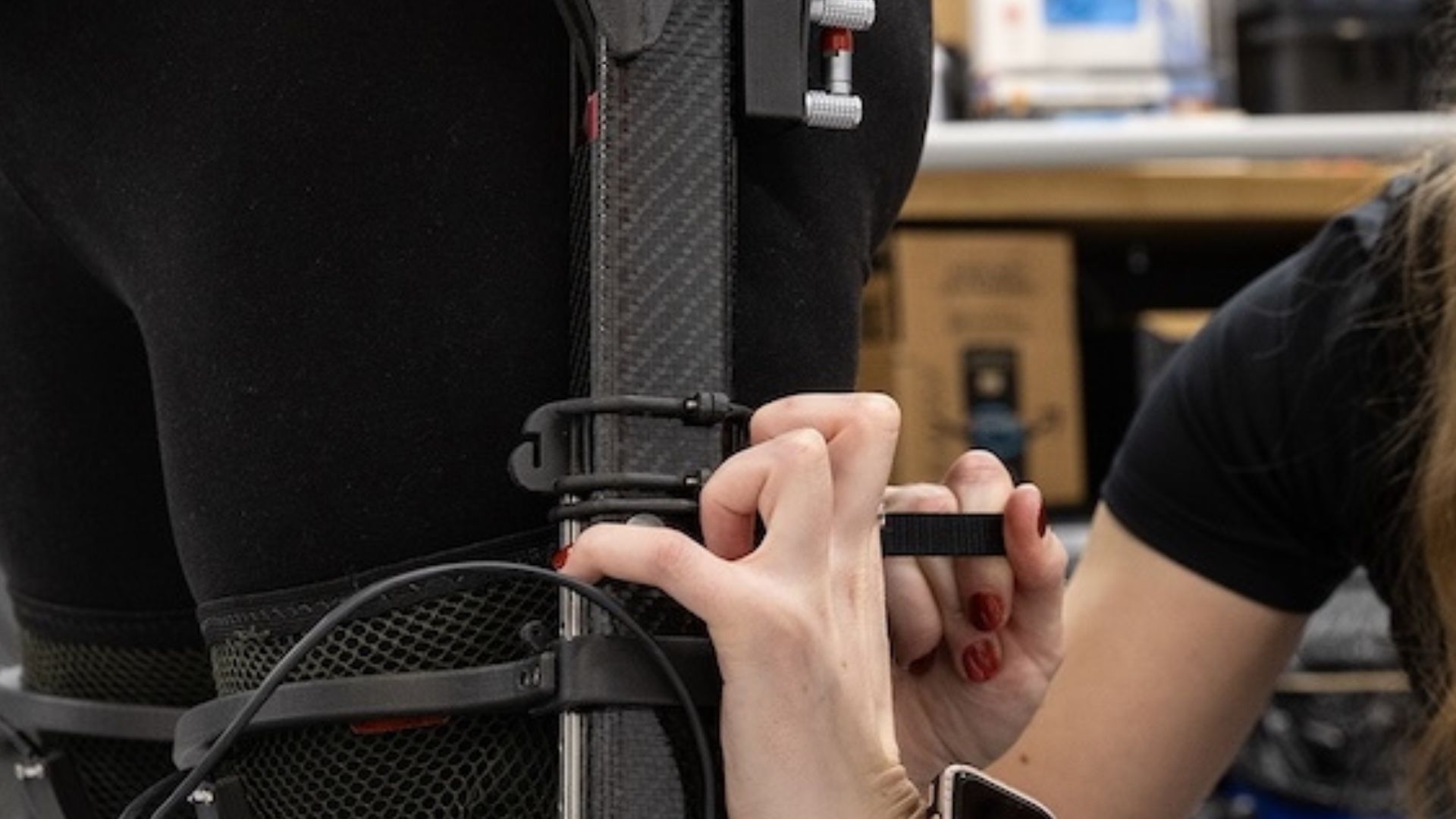
Engineers at the University of Utah have developed a lightweight robotic hip exoskeleton that could improve mobility for stroke survivors living with hemiparesis.
Hemiparesis is a condition that weakens one side of the body and affects nearly 80% of stroke patients.
The innovative 5.5-pound wearable device is designed by researchers at the university’s John and Marcia Price College of Engineering in collaboration with the College of Health.
It has demonstrated an 18% reduction in the metabolic cost of walking among patients with post-stroke hemiparesis. The findings were published in Nature Communications, marking a milestone in wearable rehabilitation robotics.
Walking may appear effortless, but it involves complex coordination between muscles and joints. In individuals with hemiparesis, impaired motor control, muscle weakness and spasticity disrupt that coordination. As one side of the body weakens, the other side compensates, dramatically increasing energy expenditure.
READ ALSO: https://modernmechanics24.com/post/why-ai-prosthetic-arms-feel-unsettling/
Researchers estimate that stroke survivors with hemiparesis use up to 60% more energy to walk than individuals with a healthy gait. This results in slower movement, reduced endurance, higher fall risk and chronic discomfort. These factors collectively diminish independence and quality of life.
“Improving quality of life after a stroke is one of the biggest unmet challenges in healthcare today,” said Tommaso Lenzi, associate professor in the Department of Mechanical Engineering and senior author of the study. “We’re now showing that robotics can make a measurable impact here.”
A New Approach
Previous attempts to address post-stroke walking inefficiencies have largely focused on ankle assistance, targeting issues such as foot drop and weak propulsion. However, portable ankle exoskeletons have struggled to meaningfully reduce energy costs in stroke patients.
Kai Pruyn, the study’s lead author and a graduate researcher in Lenzi’s HGN Lab for Bionic Engineering, explained why the team shifted its focus.
“Patients with ankle weakness often compensate with their hip joints, which requires extra energy,” Pruyn said. “Our goal was to develop a powerful and fully portable hip exoskeleton. Hip exoskeletons can be extremely lightweight because they sit closer to the body’s center of mass and require less torque than ankle devices.”
WATCH ALSO: https://modernmechanics24.com/post/chinese-company-s-humanoid-robot-dodges-arrow-with-side-flip/
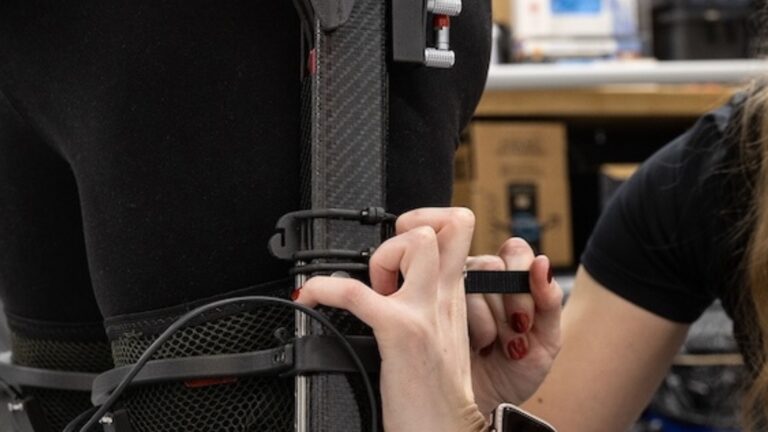
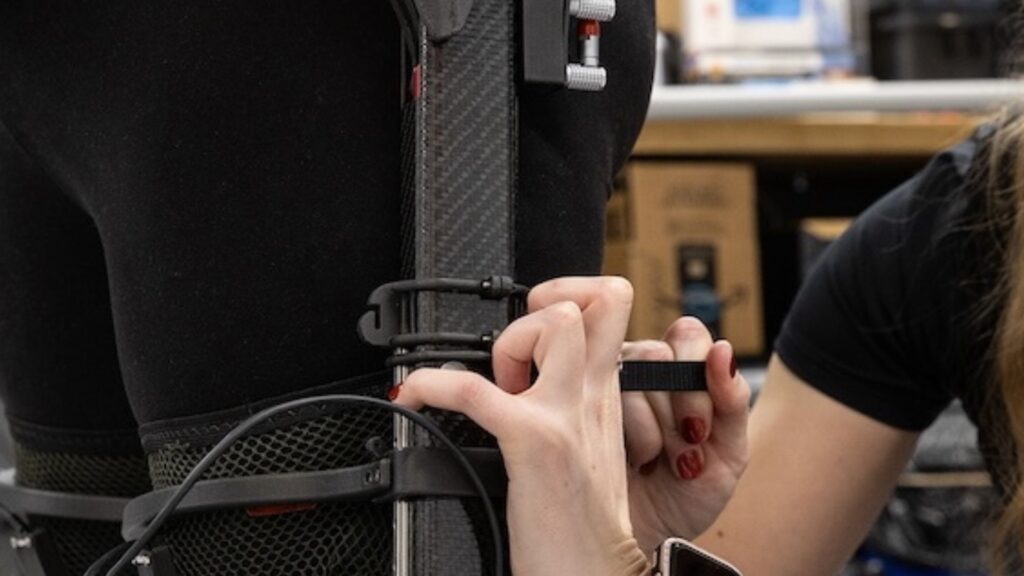
The result is a battery-powered system worn around the hips, with straps extending to the thighs. Small motors assist leg movement during each step, while an intelligent control system synchronizes in real time with the user’s natural gait. The level of assistance is individually calibrated. It ensures that the robotic boost activates precisely when the hip needs to lift or push off.
To evaluate effectiveness, the research team studied seven stroke survivors with hemiparesis. Participants walked on an instrumented treadmill both with and without the exoskeleton while motion-capture systems recorded their gait mechanics. They also wore metabolic monitoring equipment to measure caloric expenditure.
The device reduced mechanical workload on the hip joints by nearly 30%, resulting in an 18% decrease in overall metabolic cost.
“For someone with a healthy gait, this would be like taking off a 30-pound backpack,” said Bo Foreman, professor of Physical Therapy & Athletic Training and co-author of the study. “For someone with hemiparesis, that’s a life-changing difference.”
Beyond laboratory metrics, participants reported noticeable improvements.
“In the beginning, I couldn’t move my leg,” said Lidia, a stroke survivor who participated in the study. “But with the device, it’s much better now.”
Her husband, Marcellus, observed additional benefits over time. “The exoskeleton was doing some of that movement for her,” he said. “The more we used it, the better she was, even when she wasn’t wearing it.”
WATCH ALSO: https://modernmechanics24.com/post/us-giant-robot-fights-wildfires/
Building on Bionic Innovation
Lenzi’s laboratory has earned national recognition for its work in wearable robotics. The team previously developed the Utah Bionic Leg, which gained widespread attention for advancing mobility technology.
This latest hip exoskeleton builds on that expertise while addressing a critical unmet need in stroke rehabilitation. While other research groups have tested hip exoskeletons in healthy individuals, Lenzi’s team is the first to demonstrate meaningful improvements in patients with hemiparesis.
What Comes Next?
Although the early results are promising, researchers acknowledge that further development is necessary before widespread clinical adoption. Future efforts will focus on ensuring safety and effectiveness in real-world environments beyond treadmill walking.
The team aims to enhance the device’s mechanical design and control algorithms to support daily activities such as navigating stairs, uneven surfaces and longer walking sessions. To accelerate commercialization, the lab is collaborating with leaders in prosthetics and orthotics to transform the prototype into a user-friendly product.
“Our goal is to ensure that a stroke doesn’t define the limits of where a person can go or how they can live,” Lenzi said.
As stroke remains a leading cause of long-term disability in the US, innovations like this portable hip exoskeleton offer renewed hope. By reducing the energy burden of walking, wearable robotics may not only restore mobility but also rebuild confidence and independence.