Researchers from the University of Illinois Urbana-Champaign and the University of Chicago have developed a new way to calculate the Hubble constant using gravitational waves, subtle ripples in spacetime produced by massive cosmic events.
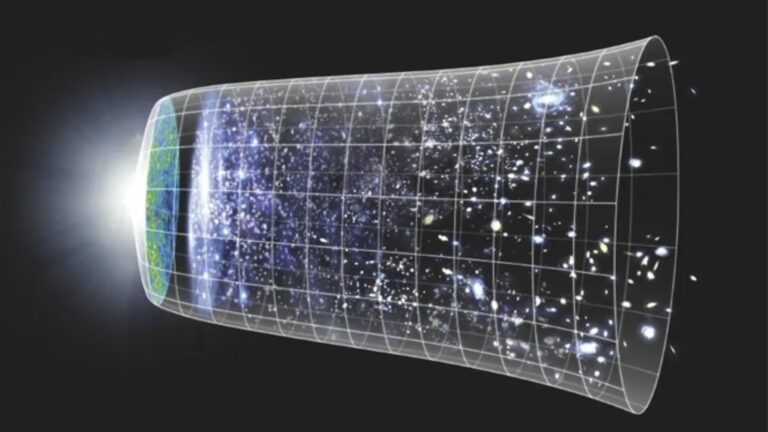
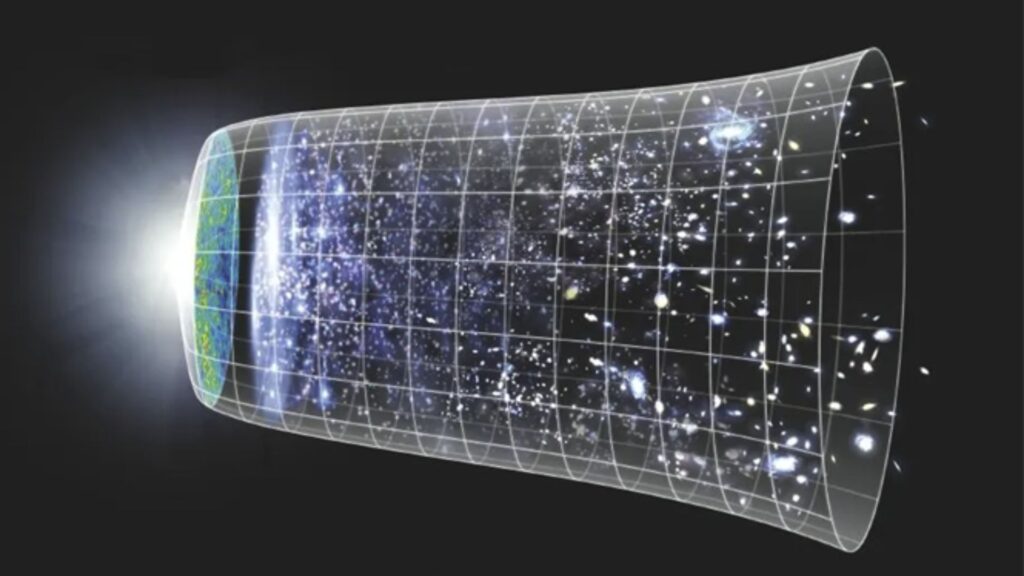
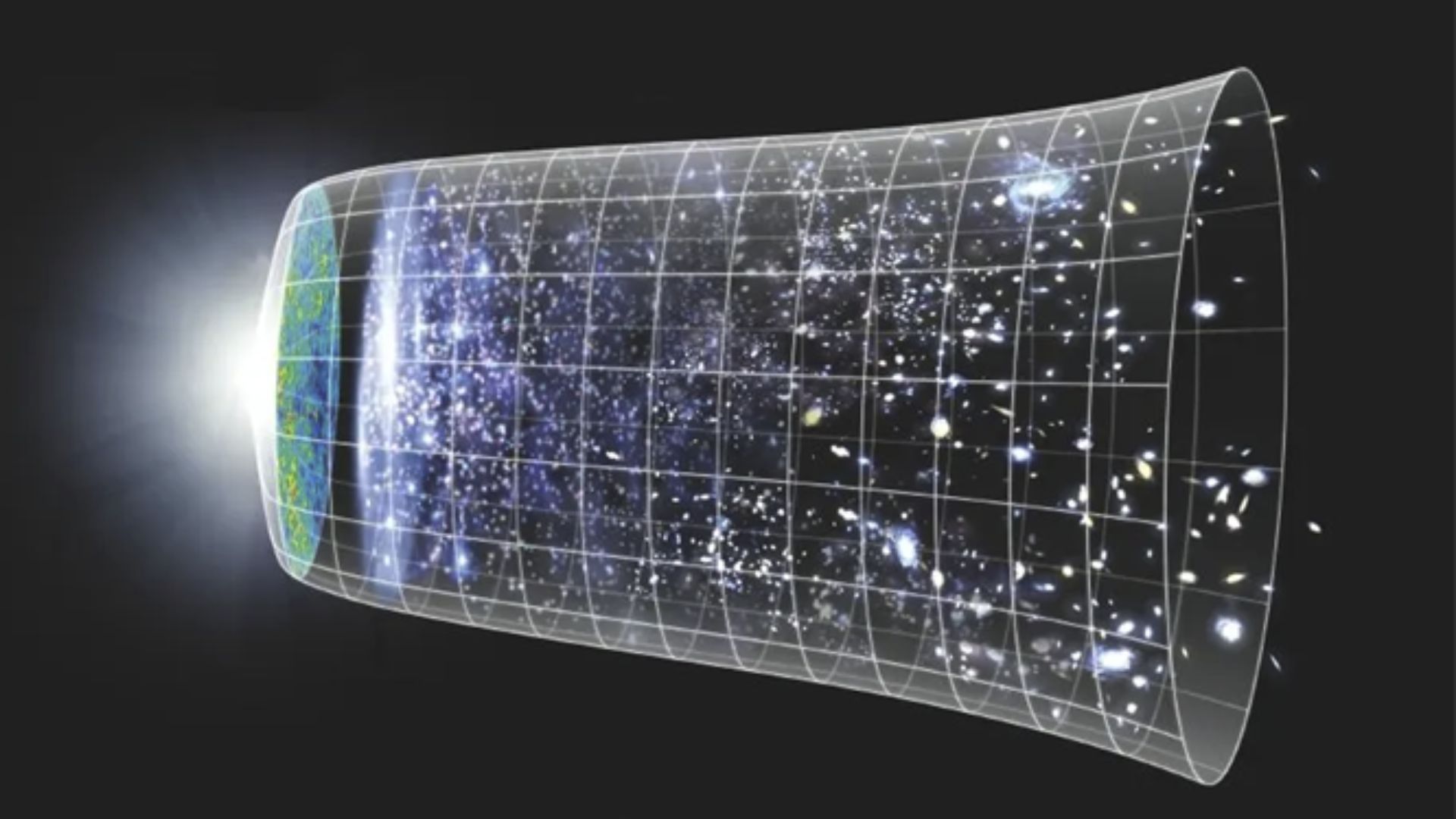
For decades, scientists have known that the universe is expanding. Yet confusion persists over different methods for measuring the universe’s expansion rate, known as the Hubble constant, leading to conflicting results.
This discrepancy is widely referred to as the Hubble tension. It remains one of the most significant unresolved questions in astrophysics.
But researchers’ innovative approach improves the precision of previous gravitational-wave techniques and could bring them closer to resolving the cosmic disagreement.
READ ALSO: https://modernmechanics24.com/post/world-first-quantum-inspired-robot/
The study has been accepted for publication in Physical Review Letters.
Why Hubble Constant Matters
The Hubble constant describes how fast the universe is expanding now. Early-universe measurements based on observations of the cosmic microwave background suggest a single value. Late-universe measurements, derived from supernova explosions and nearby galaxies, suggest a higher one.
These methods are grounded in well-tested physics, so in theory, they should agree. But they don’t.
If the discrepancy persists, it could signal new physics beyond current cosmological models. It may involve early dark energy, interactions between dark matter and neutrinos, or the evolving properties of dark energy itself.
“This result is very important,” said Nicolás Yunes, physics professor at Illinois and founding director of the Illinois Center for Advanced Studies of the Universe. “It’s important to obtain an independent measurement of the Hubble constant to resolve the current Hubble tension. Our method is an innovative way to enhance the accuracy of Hubble constant inferences using gravitational waves.”
WATCH ALSO: https://modernmechanics24.com/post/ubtech-world-first-robot-shipment/
Gravitational Waves as Standard Sirens
Traditionally, astronomers measure cosmic expansion using electromagnetic observations, particularly supernovae. These standard candles allow scientists to determine distances based on intrinsic brightness.
In recent years, gravitational waves have opened a new frontier. Generated by collisions of massive objects such as black holes, these spacetime ripples travel at the speed of light and can be detected on Earth by the global LIGO-Virgo-KAGRA Collaboration network.
Individual black hole mergers serve as standard sirens. Scientists can calculate the distance to these events from gravitational-wave signals.
However, determining how fast the source is moving away often requires identifying electromagnetic light from the merger or locating its host galaxy. That can be challenging.
Stochastic Siren Method
The new research proposes a way around that limitation by using the gravitational-wave background. It’s a faint cosmic hum produced by countless black hole mergers, too distant or too weak to detect individually.
“Because we are observing individual black hole collisions, we can determine the rates of those collisions happening across the universe,” explained Bryce Cousins, lead author of the study. “Based on those rates, we expect there to be a lot more events that we can’t observe, which is called the gravitational-wave background.”
The team discovered that the strength of this background depends on the value of the Hubble constant. If the expansion rate is lower, the observable universe’s volume shrinks, increasing the density of mergers and amplifying the background signal.
READ ALSO: https://modernmechanics24.com/post/japan-wooden-satellite-cut-space-debris/
If detectors fail to observe a strong gravitational-wave background, certain lower values of the Hubble constant can be ruled out.
The researchers named their approach the ‘stochastic siren’ method, referencing the random nature of the underlying black hole mergers.
To validate their idea, the team applied the stochastic siren method to existing data from the LIGO-Virgo-KAGRA Collaboration. Although the gravitational-wave background has not yet been detected, its absence itself provides useful constraints.
As proof of principle, the researchers demonstrated that the absence of background detection excludes slower expansion rates. They then combined the stochastic siren constraints with measurements derived from individually detected black hole mergers.
The result was a more refined estimate of the Hubble constant that falls within the tension region, demonstrating the method’s viability.
“It’s not every day that you come up with an entirely new tool for cosmology,” said Daniel Holz, professor of physics and astronomy at the University of Chicago and co-author of the study. “We show that by using the background gravitational-wave hum from merging black holes in distant galaxies, we can learn about the age and composition of the universe.”
Gravitational-wave detectors are continually improving. As sensitivity increases, scientists expect to detect the gravitational-wave background within the next six years.
Until then, the stochastic siren method will gradually constrain the range of possible Hubble constant values as upper limits improve.
“This should pave the way for applying this method in the future,” Cousins said. “As we increase sensitivity and better constrain the gravitational-wave background and maybe even detect it, we expect to get better cosmological results and be closer to resolving the Hubble tension.”
WATCH ALSO: https://modernmechanics24.com/post/elon-musk-space-internet-ghana/
A New Era in Cosmology?
The introduction of the stochastic siren method marks a significant expansion of gravitational-wave cosmology. Instead of relying solely on visible light or individually identified cosmic events, scientists can now tap into the universe’s background gravitational-wave hum.
If the method continues to mature alongside advances in detector technology, it may provide the independent measurement needed to confirm or challenge existing cosmological theories.
The question still remains: is the Hubble tension a statistical fluke, an experimental oversight, or a hint of new physics waiting to be uncovered?