Israeli defense company Esh-Tech has unveiled a new laser-based air defense system called DroneLight.
The weapon is designed to detect and destroy large numbers of drones quickly. The system addresses the growing challenge posed by drone swarm attacks on military forces and major infrastructure.
Drone swarms have become a growing concern for armed forces worldwide. These attacks involve multiple drones approaching a target simultaneously from different directions. Traditional air defense systems can struggle against large numbers of low-cost aerial threats.
DroneLight was developed specifically to deal with this challenge. According to Esh-Tech, the system can neutralize more than 30 drones in a single minute. This high engagement rate allows it to address multiple targets before they reach protected areas.
Unlike many laser weapons that keep a continuous beam focused on a target, DroneLight uses a different approach. The system fires short and powerful laser pulses at incoming drones. This method reduces the time needed to engage each target and allows the weapon to move quickly from one drone to another.
When the laser strikes a drone, sensors verify whether the target has been hit. Additional laser pulses are then directed at the same drone until it is disabled. Esh-Tech says this process allows a drone to be defeated in as little as one to two seconds.
The fast engagement cycle is one of the system’s key features. In a swarm attack, speed is critical because dozens of drones can arrive nearly simultaneously. Rapid target switching helps prevent enemy drones from overwhelming defenses.
DroneLight: Drone Swarm Defense Technology
DroneLight has a reported operational range of up to 1 kilometer (about 0.6 miles). This places the system in the category of close-range air defense weapons. It is intended to protect military units, vehicles, and important sites from nearby aerial threats.
READ ALSO: Quantum Sensor Defeats Noise Barrier, Opening New Path to Dark Matter Detection
The system can work with several types of sensors. These include radar systems, acoustic sensors, and electro-optical tracking equipment. Together, these technologies help detect, identify, and track incoming drones before engagement.
Radar detects aerial objects at a distance and provides location data. Acoustic sensors listen for drone engine and rotor sounds. Electro-optical systems use cameras and thermal imaging devices to accurately track targets.
The integration of these sensors enables DroneLight to maintain awareness of multiple threats simultaneously. This capability is particularly important when dealing with coordinated swarm attacks. Accurate tracking improves response speed and increases interception efficiency.
Modern militaries are investing heavily in counter-drone technologies. The rapid spread of unmanned aerial systems has changed battlefield dynamics in recent years. Low-cost drones are now used for surveillance, intelligence gathering, targeting, and attack missions.
As a result, defense companies are searching for more affordable interception methods. Traditional missile-based systems are often more expensive than the drones they destroy. Laser weapons offer an alternative because they use electrical power instead of costly interceptor missiles.
Low-Power Laser System for Mobile Forces
One of DroneLight’s most notable features is its relatively low power requirement. Esh-Tech states that the system consumes approximately 4 kilowatts of power. This is significantly lower than many high-energy laser systems currently under development.
Lower power consumption offers several operational advantages. It reduces the need for large generators and heavy support equipment. This makes the system easier to deploy across a wider range of military platforms.
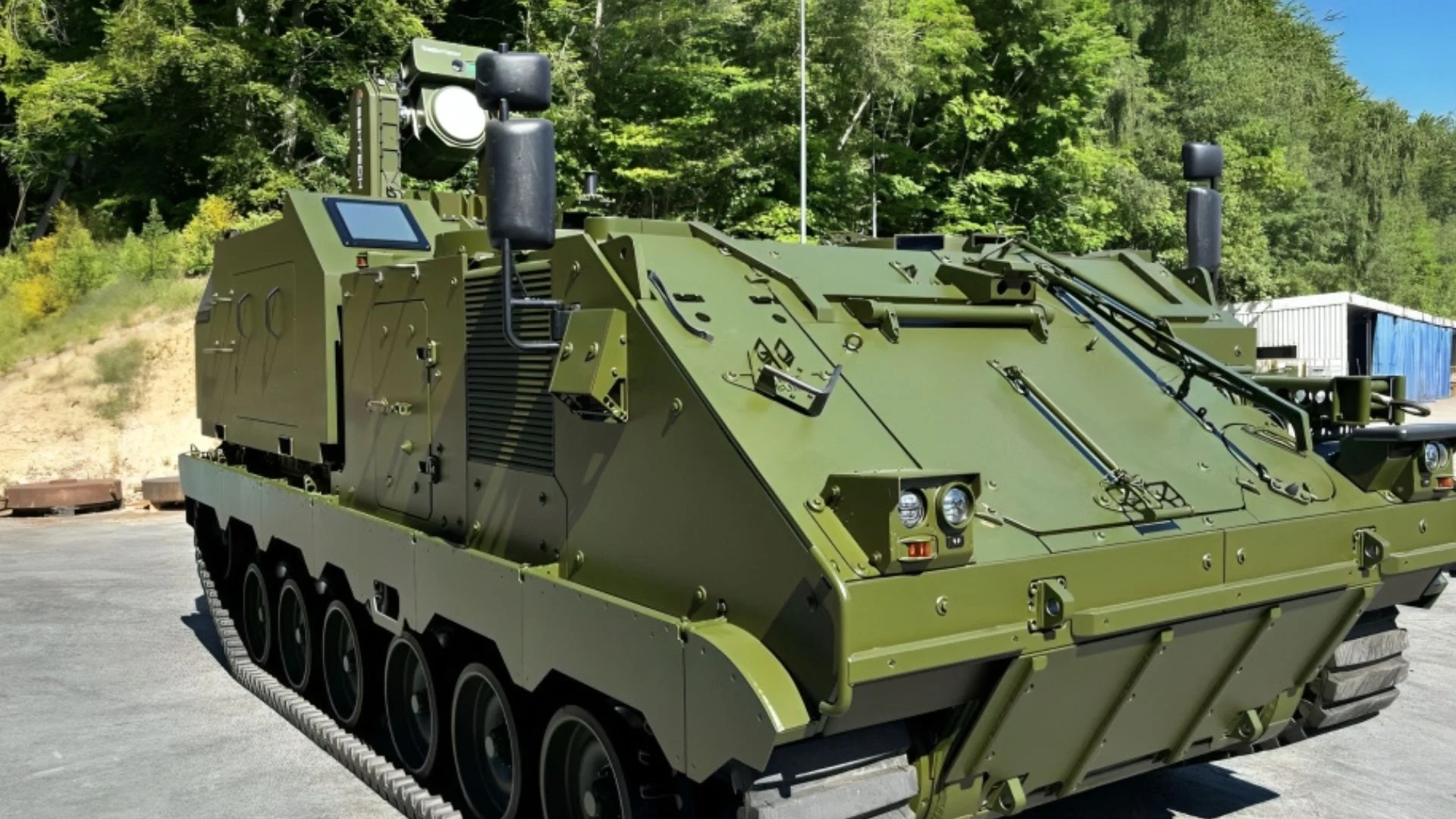
The company is already demonstrating DroneLight mounted on a tracked armored vehicle. This configuration allows military units to carry the laser system directly into operational areas. Mobile deployment also enables protection for moving forces rather than only fixed installations.
READ ALSO: Slower Heating Lets Atoms Self-Organize Into Architectures That Boost Alloys Strength
Esh-Tech is also exploring additional vehicle-based configurations. The goal is to make the system adaptable to different military requirements. Greater mobility expands the range of missions the weapon can support.
Company Chief Executive Officer Erez Riahi said the system was designed to improve military readiness against the growing drone threat.
He explained that the combination of strong performance, low energy consumption, and lower operating costs supports wider deployment. According to Riahi, the technology can help protect both strategic facilities and troops operating in the field.
Growing Demand for Counter-Drone Weapons
The demand for counter-drone systems has increased significantly across global defense markets. Conflicts in several regions have highlighted the effectiveness of drones in both reconnaissance and strike roles. At the same time, these conflicts have exposed the limitations of traditional air defense systems against mass drone attacks.
Laser weapons are attracting greater attention because they provide a nearly unlimited magazine as long as power is available. Unlike missiles, they do not need to be reloaded after each interception. This makes them particularly useful against large numbers of low-cost targets.
Several countries are developing laser-based air defense technologies. Governments view these systems as an important layer within broader air defense networks. They are often intended to complement rather than replace conventional missile systems.
WATCH ALSO: Humanoid robot plays table tennis like human beings
DroneLight enters this increasingly competitive market with a focus on swarm defense and mobility. Its pulsed-laser architecture is designed to improve response times against fast-moving aerial threats. The combination of rapid engagement speed and low power requirements sets it apart from many existing concepts.
According to Esh-Tech, the first operational DroneLight system is scheduled to enter service in September 2026. The deployment will provide an important opportunity to evaluate the technology in real-world military environments.