

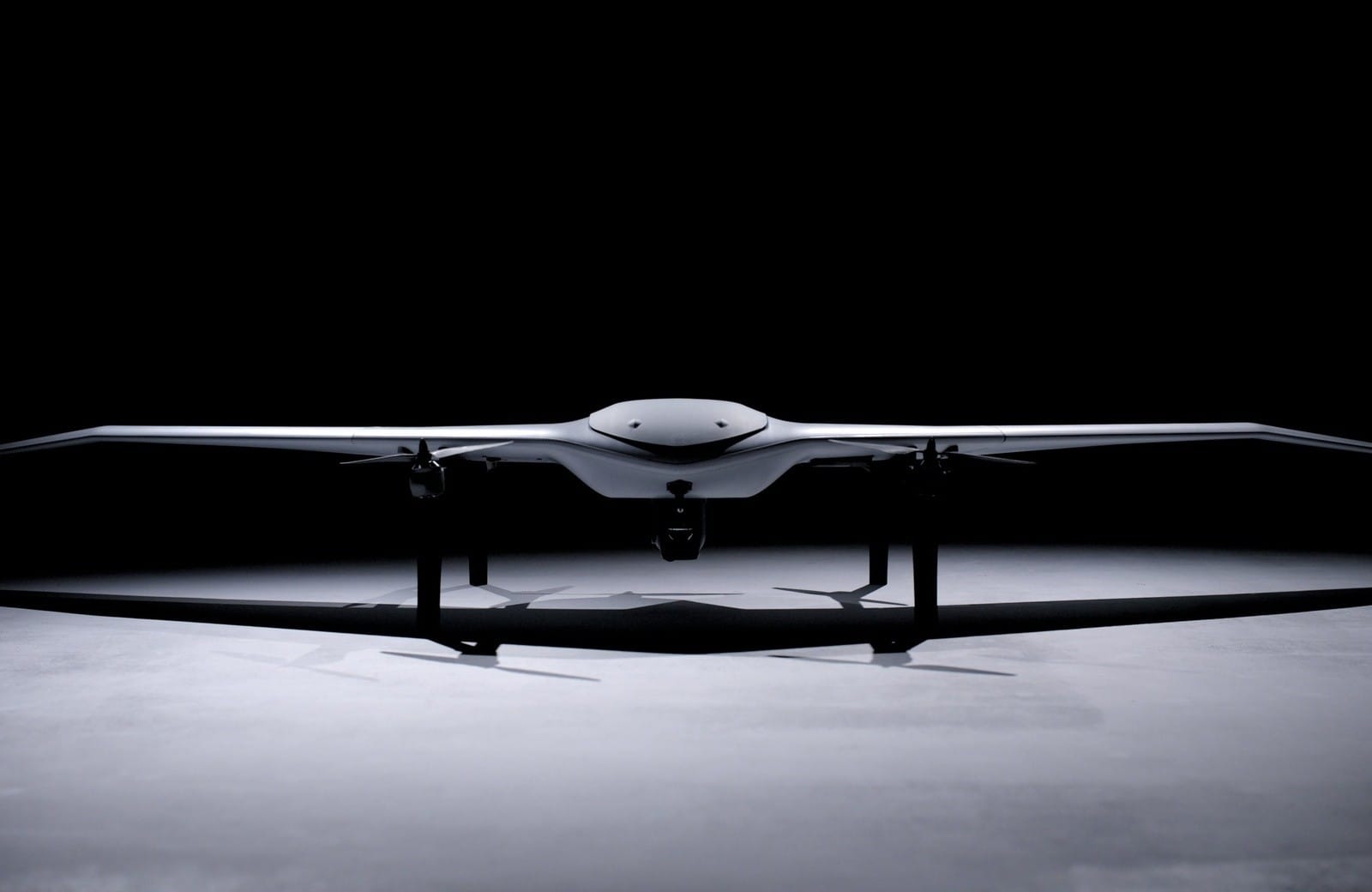
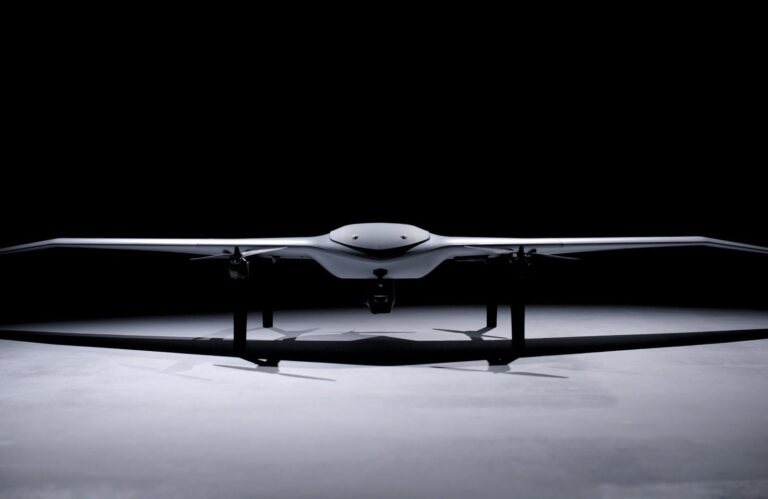
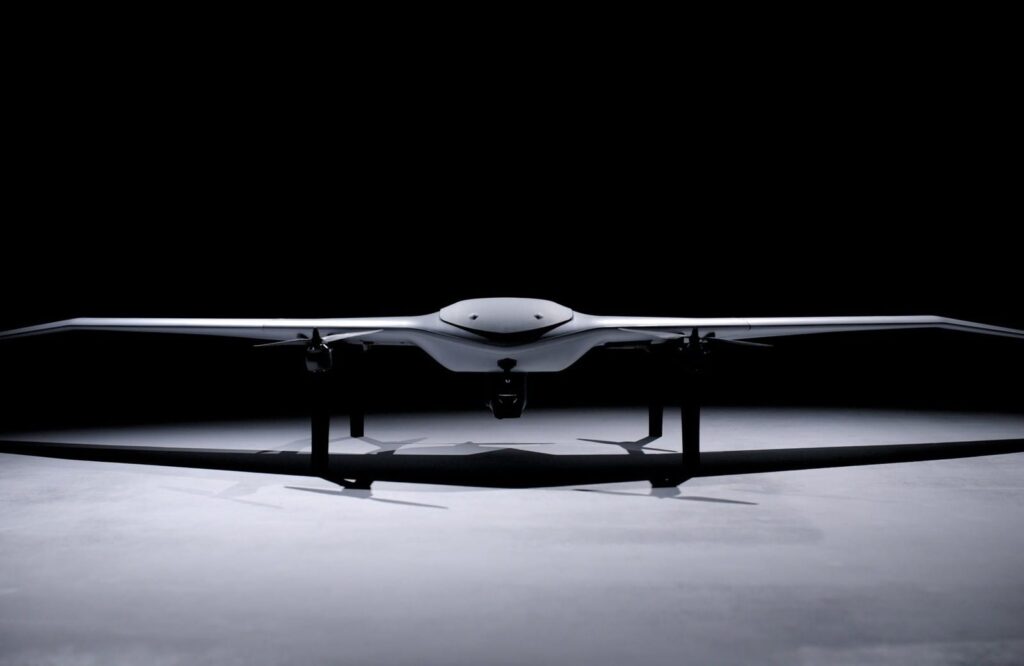
DeltaQuad has introduced the Evo-LE, a new electric fixed-wing VTOL drone designed for long-duration surveillance missions.
The Netherlands-based company says the aircraft can remain airborne for up to eight hours and cover distances of up to 480 km, depending on its payload and operating conditions. The system is aimed at military and security users that need persistent aerial observation without relying on a runway.
The Evo-LE extends DeltaQuad’s Evo family toward missions where endurance is the main requirement. The company is offering the aircraft for intelligence, surveillance, target acquisition and reconnaissance, border security and communications relay missions. It is designed to provide longer coverage over an area while reducing the need for frequent aircraft rotations.
Ross Jackson, DeltaQuad’s chief commercial officer, said longer flight time gives operators more continuity in the information collected from an area of interest. He added that greater endurance can reduce the need to replace one aircraft with another during a mission. The company developed the aircraft using feedback from frontline operators and experience gathered through thousands of operational flight hours.
READ ALSO: https://modernmechanics24.com/post/singapore-lutetium-atomic-clock-record/
The Evo-LE retains the flexibility of an electric vertical take-off and landing aircraft. It can take off and land without a conventional runway, allowing operators to deploy it from confined locations. This feature is relevant to missions in remote areas where prepared aviation infrastructure may be unavailable.
The aircraft has a maximum take-off weight of 13 kg and can carry a payload of up to 1.5 kg. Its radio range is listed at up to 120 km, while its maximum flight range is stated at 480 km. DeltaQuad notes that actual endurance and range depend on payload, mission profile and operating conditions.
Battery System Drives Endurance
The longer endurance of the Evo-LE comes from changes across several parts of the aircraft. DeltaQuad uses higher-energy-density batteries and has made the dual-battery arrangement standard on the new model. The company also redesigned the electrical architecture and upgraded the vertical take-off and landing drivetrain.
Mark van Schie, DeltaQuad’s head of product, said the endurance increase required more than simply adding battery capacity.
He said the company combined higher-energy-density battery technology with the dual-battery system, revised electrical architecture and an upgraded VTOL drivetrain. These changes were intended to support longer missions while maintaining the aircraft’s electric VTOL configuration.
The Evo-LE is based on DeltaQuad’s Block 3 airframe, which is also used by the existing Evo model. The ruggedised structure uses revised composite materials and includes improved protection against water entering the aircraft. DeltaQuad says the airframe is designed to maintain performance during operations in rainy conditions.
The aircraft also includes equipment intended for regular operation in demanding environments. A heated pitot tube helps the flight systems operate in cold conditions, while navigation and anti-collision lights support regulatory requirements. Its landing legs are designed to detach during a hard landing, which can help reduce damage to the main airframe.
WATCH ALSO: https://modernmechanics24.com/post/china-c919-first-international-flight/
Sensors Get Clearer View
DeltaQuad has designed the landing system around the aircraft’s surveillance role. An automatic landing gear system gives onboard sensors an unobstructed 360-degree field of view while the aircraft is airborne. This allows sensors to maintain visibility around the aircraft without fixed landing equipment blocking their line of sight.
The Evo-LE can be configured for operations where communications and navigation may face disruption. Available options include anti-jamming equipment, secure communications and autonomous navigation. These features are intended to support missions in more complex operating environments.
Compared with the standard Evo, the Evo-LE has a more specialised configuration. The standard aircraft can operate with either one or two batteries and is designed to support a wider range of payload requirements. The Evo-LE uses two batteries as standard and is configured for customers that place greater emphasis on persistent coverage and longer-distance missions.
Its combination of electric propulsion, VTOL operation and eight-hour stated endurance places the aircraft between short-duration tactical drones and larger unmanned systems built for much longer missions. Its 1.5 kg payload limit means customers will need to balance sensor and equipment choices against endurance requirements.
Support Extends Beyond Delivery
DeltaQuad is positioning the Evo-LE for international defence and security customers. The company says the aircraft is available to order for surveillance and communications missions, including military intelligence and border monitoring. Operator training, field support and lifecycle services will also be available to customers.
READ ALSO: https://modernmechanics24.com/post/f35-gets-25-percent-more-cooling-power/
The aircraft represents an expansion of the existing Evo family rather than a completely new design. DeltaQuad has retained the Block 3 airframe and VTOL concept while modifying the power and electrical systems to support longer flights. Actual endurance and range will vary with payload, weather and mission conditions.
For military and security operators, the main consideration will be how the Evo-LE performs during sustained surveillance missions. Its runway-independent operation gives users flexibility in selecting deployment locations, while its communications and navigation options support a range of mission requirements. Customer operations will provide further evidence of how the stated endurance and range translate into real-world use.


One Response