Chinese military-linked researchers have called for deeper integration between the country’s commercial space technology and its defence systems.
The scholars at the National University of Defence Technology, an institution affiliated with China’s Central Military Commission, urged, warning that modern warfare is rapidly reshaping the strategic role of outer space.
In a recent article, the researchers stated that Beijing must accelerate the development of dual-use satellite systems that serve both civilian and military purposes.
Their call reflects growing global concern over the expanding role of private space companies in defense operations. The US military has increasingly relied on commercial satellite networks, such as SpaceX’s Starlink, to strengthen battlefield communications and command systems.
READ ALSO: https://modernmechanics24.com/post/kia-ev-electric-hatch-cold-test/
The researchers wrote, “As commercial satellites become more deeply involved in modern warfare, the traditional boundaries between military and civilian uses are increasingly blurred. Space is rapidly shifting from a domain of strategic deterrence towards one of tactical operations.”
SpaceX recently sought approval to launch up to one million satellites to support artificial intelligence data centres. This move would significantly expand its existing Starlink constellation. The company already operates around 10,000 satellites in orbit.
Chinese officials previously raised concerns that the rapid deployment of such large satellite networks contributes to orbital congestion and increases the risk of collisions.
Against this backdrop, the Chinese researchers urged the creation of a coordinated military-civilian framework.
They wrote, “A military-civil coordination mechanism should be established to integrate the development of military, civilian, and commercial space capabilities, and to build a ‘military-civil collaborative’ satellite application system, thereby comprehensively enhancing the resilience and flexibility of China’s space architecture.”
The article appeared in the latest issue of China Defence Conversion, a journal managed by the State Administration for Science, Technology and Industry for National Defence.
WATCH ALSO: https://modernmechanics24.com/post/chinese-company-s-humanoid-robot-dodges-arrow-with-side-flip/
It showed how commercial remote-sensing and synthetic-aperture radar satellites can provide high-definition imagery comparable to that of dedicated military reconnaissance systems. Such capabilities can support battlefield monitoring, intelligence gathering, and disaster response.
Over the coming decade, the researchers have predicted a surge in global commercial space activity, driven by private investment, reusable rocket technology, and expanding satellite applications. They have warned that this rapid growth could strain existing international governance systems.
“In particular, commercial space flight will advance at a faster pace, with its utilisation and control becoming more extensive. This will inevitably pose serious challenges to the global space governance system,” they wrote.
The authors urged Chinese policymakers to act proactively. “China should maintain clear strategic awareness and carry out early planning and deployment in order to seize the initiative and respond in a measured and prudent manner,” they said.
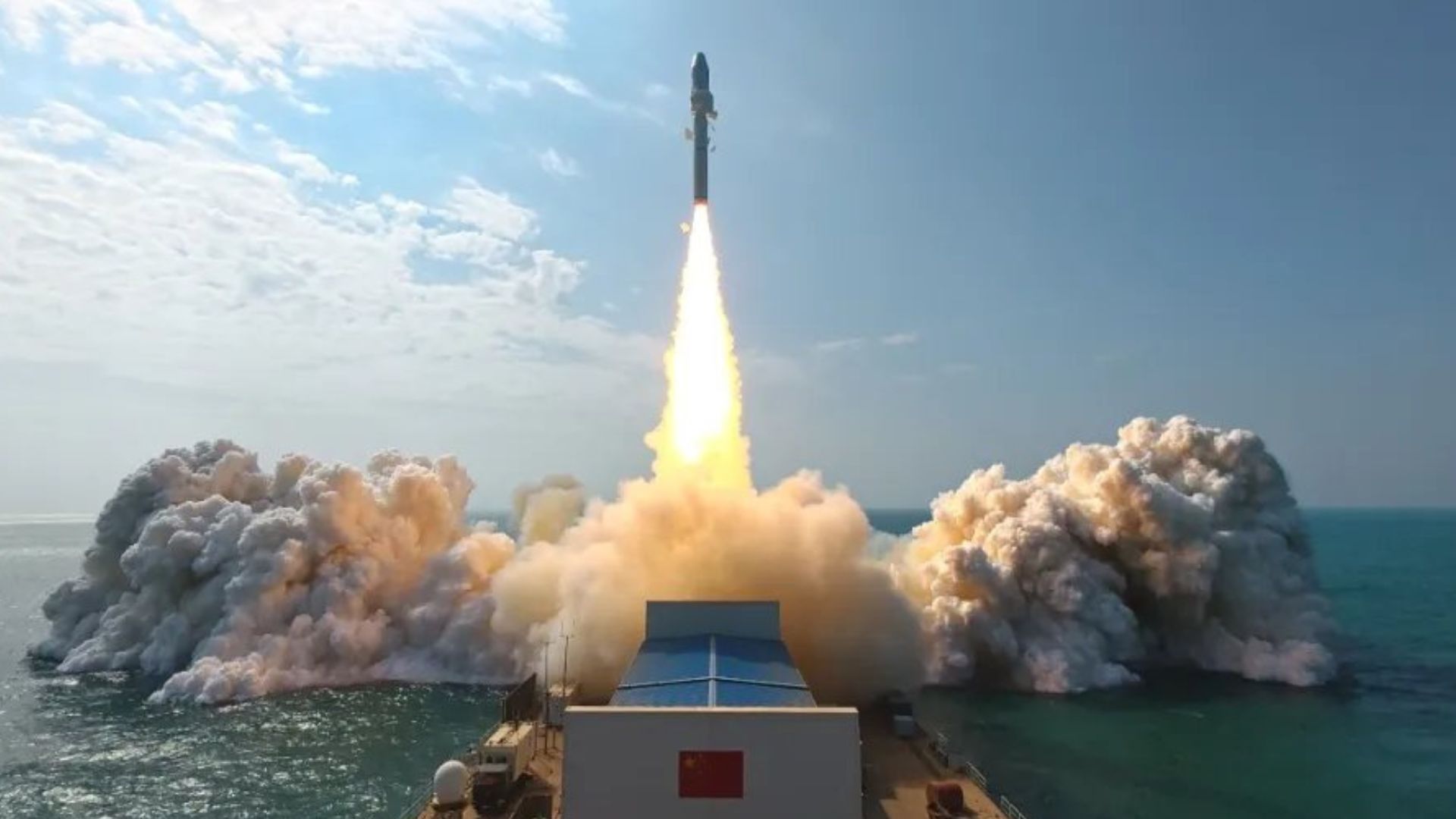
China’s commercial space sector has expanded rapidly in recent years, driven by reusable launch vehicles and increased private-sector participation. Strengthening the aerospace industry is also a priority in Beijing’s latest five-year economic plan. It mentioned advanced manufacturing and emerging technologies as pillars of national growth.
READ ALSO: https://modernmechanics24.com/post/rare-earths-redrawing-global-power-map/
Meanwhile, tensions between China and the US over the future legal and security framework of outer space continue to intensify. China accused SpaceX of creating safety and security risks in orbit, citing near-miss incidents involving satellites and raising concerns about compliance with international norms.
The researchers also pointed to widening technological disparities between Western space powers and developing nations. They wrote, “Against the backdrop of great-power competition increasingly extending into outer space, striving for equality or even a position of advantage in space has become an important direction of national strategic planning.”
As commercial innovation accelerates and geopolitical competition deepens, China’s push to merge civilian and military space capabilities signals a broader shift.
Outer space is no longer viewed solely as a domain of exploration or deterrence but increasingly as a critical frontier in national security and global power rivalry.