

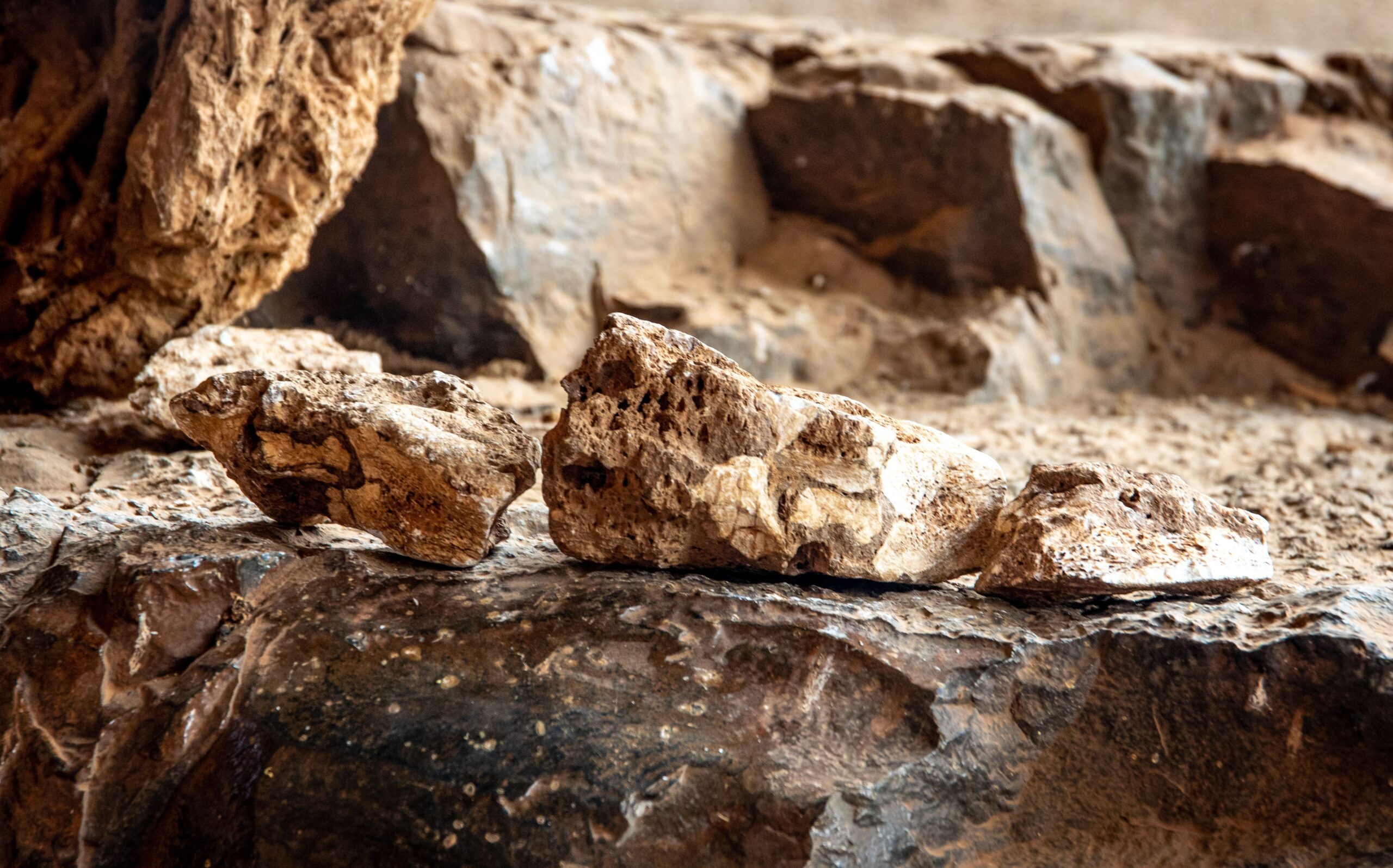
Chinese scientists have found that a bright orange-yellow lichen may help locate rocks linked to rare earth deposits. The research could give geologists a faster way to identify promising areas before carrying out detailed mineral surveys.
The team found the lichen, Xanthoria elegans, growing mainly on rare-earth-rich carbonates at China’s Bayan Obo mining area. The discovery could also support large-area searches using drones and hyperspectral imaging.
Researchers from Peking University and the Chinese Academy of Sciences studied whether lichen growth could point to rare earth mineralisation. Their findings were published in the peer-reviewed journal Economic Geology on July 27.
READ ALSO: https://modernmechanics24.com/post/utah-deployable-nuclear-microreactor/
The team found Xanthoria elegans on 57 of 67 carbonatite rocks mapped at Bayan Obo in northern China. Bayan Obo is the world’s largest known rare earth deposit.
The lichen was strongly linked to carbonatite rocks, which can contain rare earth minerals. Researchers found it only rarely on granite, sandstone, quartzite and other rock types.
When it did appear on these rocks, the chance was generally below 1 per cent. This makes the lichen useful as an early visual clue for field researchers.
The orange-brown colour comes from the lichen itself, not from rare earth elements or iron. This makes it easy to spot on exposed rocks from a distance.
Chemical tests found that the lichen contained between 3,500 and 17,000 parts per million of total rare earth elements. Its rare earth content also increased when the underlying rock contained more of these elements.
The finding could help geologists decide where to collect rock samples instead of searching large areas randomly. Researchers could also combine lichen mapping with drones and hyperspectral remote sensing to screen wider regions.
The study found tiny rare-earth- and barium-rich phases inside the lichen’s organic material. This suggests that material from the underlying rock may enter the lichen through weathering and its interaction with the rock.
The researchers do not believe the lichen is actively searching for rare earth elements. The biological and chemical processes that cause it to take up these elements are still unclear.
The strong link has so far been observed mainly around Bayan Obo. Researchers need more field studies to confirm whether the same pattern works in different geological regions.
WATCH ALSO: https://modernmechanics24.com/post/china-trains-hq17-type-625-air-defense/
If the link holds up in other areas, Xanthoria elegans could become a low-cost field indicator for rare earth exploration. That could help researchers narrow down large search areas before using more expensive geological surveys.
Professor Li Yang of Peking University and the Chinese Academy of Sciences said the discovery is only the second similar biological indicator identified by Chinese scientists for mineral exploration. The first was copper grass, discovered as an indicator of copper deposits in the 1950s.















2 Responses