

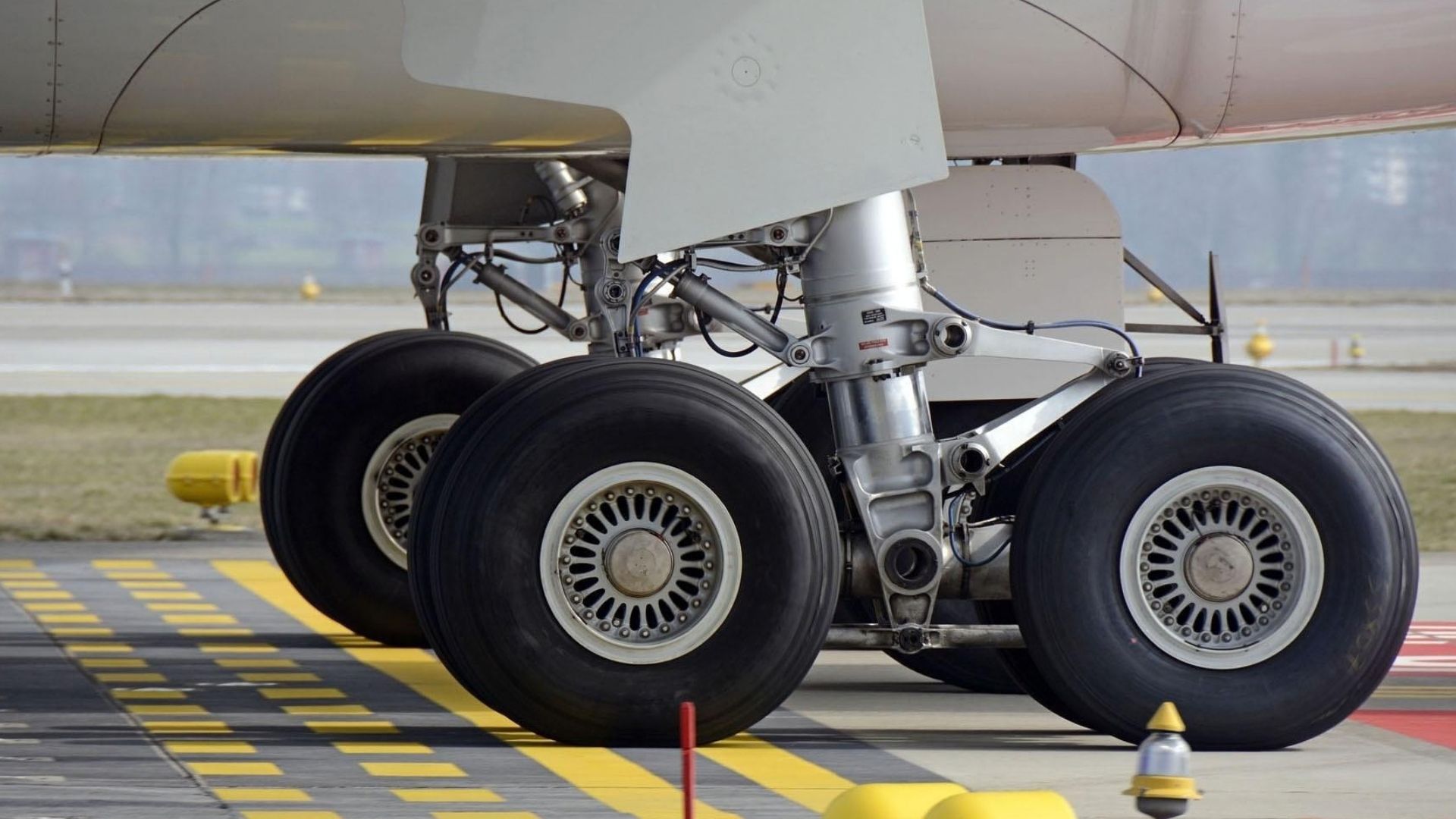
China’s aviation industry has developed a domestic braking technology chain that now covers aircraft, electric vehicles and high-speed rail, reducing reliance on overseas suppliers.
The Aviation Industry Corporation of China Xi’an Aviation Brake Technology Co., Ltd. (AVIC Brake) has moved from developing brake materials to producing complete systems for demanding aviation applications. Its work also shows how technologies developed for aircraft are moving into other transport sectors.
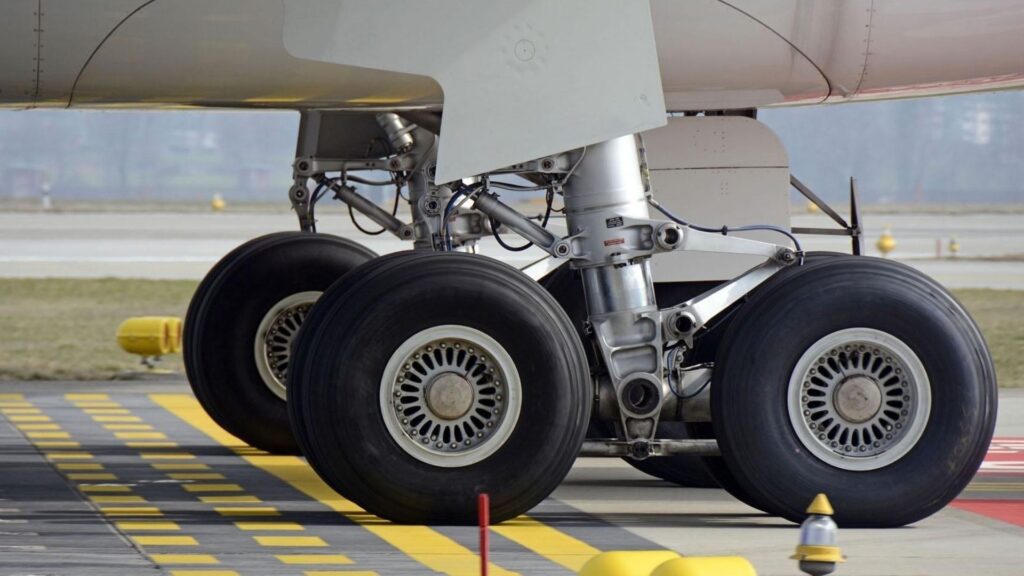
Aircraft brakes face demands that are very different from those of ordinary cars. During landing, a braking system must absorb and control a huge amount of kinetic energy in a short period while handling high temperatures, heavy loads, and repeated use.
Engineers at AVIC Brake told the Global Times that braking is mainly required during takeoff and landing. These periods account for less than 10 minutes of a typical flight, but they place unusually high demands on reliability and control.
Aviation braking systems are subject to Level A safety requirements. Under industry standards cited by AVIC Brake, this means the system must meet a reliability level in which a fatal failure occurs no more than once in a million flight hours.
The high safety requirement has shaped the development of China’s aviation brake industry. AVIC Brake now provides braking products across a wide range of domestic military aircraft and has expanded its civil aviation business to trunk airliners, regional aircraft and special-purpose platforms.
The materials used in the brake discs are central to this progress. Brake discs must remain stable at temperatures above 1,000 degrees Celsius while handling friction, impact and repeated heating and cooling cycles.
Carbon Materials Change Costs
AVIC Brake’s material development has moved through several stages. These include resin-based materials, semi-metal materials, powder metallurgy and carbon-based systems.
The company now uses carbon-fiber materials combined with a ceramic matrix for advanced carbon-ceramic brake discs. The material is designed to withstand temperatures above 1,000 degrees Celsius while maintaining its mechanical and friction performance under demanding braking conditions.
Weight is another advantage. According to the company, carbon-ceramic brake discs weigh about one-quarter as much as traditional materials and can reduce the overall brake system weight by 30 to 40 percent.
The material also has a longer service life and is designed to maintain performance under extreme operating conditions. AVIC Brake says it has now installed its carbon-ceramic brake discs on more than 10 types of advanced Chinese aircraft.
The development also changed the economics of the civil aviation brake market. A carbon brake disc for an Airbus A320, roughly one meter in diameter, was once expensive enough to cost as much as a luxury car despite being light enough for one person to lift.
READ ALSO: https://modernmechanics24.com/post/argonne-passive-cooling-reactors-safe/
For years, the global civil aviation carbon brake market was dominated by several companies based in the United States, Britain and France. Chinese airlines faced high prices, delivery periods of up to six months and maintenance arrangements that often combined overhaul and coating services with the original supply contract.
According to AVIC Brake, a complete imported brake-disc set could cost hundreds of thousands of yuan, while annual maintenance expenses could exceed 1 million yuan. After domestic carbon brake discs entered the market, the company said prices for imported products fell by more than 70 percent and delivery periods declined from months to weeks.
Aviation Technology Moves Beyond
The development has extended beyond aircraft. Since 2016, AVIC Brake has applied its high-temperature carbon-based composite materials to automotive and rail transport.
The company has worked with Chinese electric vehicle manufacturers including Xpeng and Geely on carbon-ceramic brake discs. Such systems are relevant to electric vehicles because reducing component weight can support efficiency while maintaining braking performance.
Technology transfer is also moving in the opposite direction. AVIC Brake executive Liu Jinsong said the company is studying electric-vehicle braking technologies, including all-electric braking, redundant safety systems, and intelligent health-management functions.
These technologies replace or reduce dependence on conventional hydraulic mechanisms and use electronic controls and electric actuators to manage braking. They also require multiple layers of protection so that a failure in one part does not immediately remove braking capability.
Rail transport has become another application. In 2025, AVIC Brake applied its carbon-based technology for the first time to a 600 km/h high-temperature superconducting maglev train, according to the company.
The technology transfer illustrates the wider role of advanced materials. A material first developed to manage extreme temperatures and loads in aircraft can also serve applications where weight, heat resistance and repeated braking are important.
Electric Braking And AI
AVIC Brake has also developed its own braking control technologies. Its adaptive braking control system adjusts braking to operating conditions and improves control during aircraft ground operations.
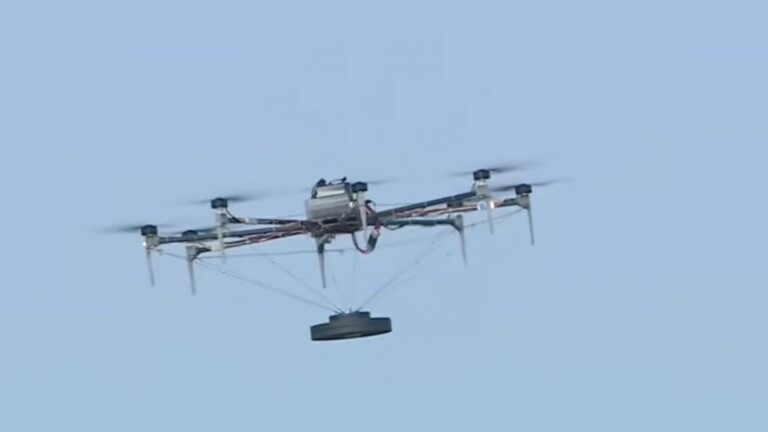
The company introduced an all-electric braking system in 2013. It has since been used on several drone platforms.
All-electric braking remains relatively uncommon in aviation. Liu said similar technology has been used on advanced aircraft such as the Boeing 787 and the X-37B.
The engineering challenge is considerable. Aviation systems must operate reliably under high loads and high temperatures while maintaining accurate control of braking force.
AVIC Brake says its work has addressed areas such as high-temperature, high-load electric motors, redundant system design and accurate force estimation. These are important requirements for aircraft, where a braking fault can have serious consequences during landing.
The next stage involves greater use of automation and artificial intelligence. AVIC Brake is working on integrated ground motion control, autonomous takeoff and landing, intelligent braking and energy recovery.
These systems are part of a broader move toward electronically controlled aircraft. Braking is increasingly being treated as an integrated energy and motion-management function rather than as a stand-alone mechanical system.
China’s aviation brake industry is therefore developing beyond replacing imported components. Domestic production now covers materials, brake discs, control systems and electric braking technologies, while the same research is being adapted for EVs, drones and high-speed rail.
In aviation, the focus remains on safety, reliability, and consistent performance under extreme conditions. For other transport industries, the same technology is opening applications in lighter, more electronically controlled braking systems.





One Response