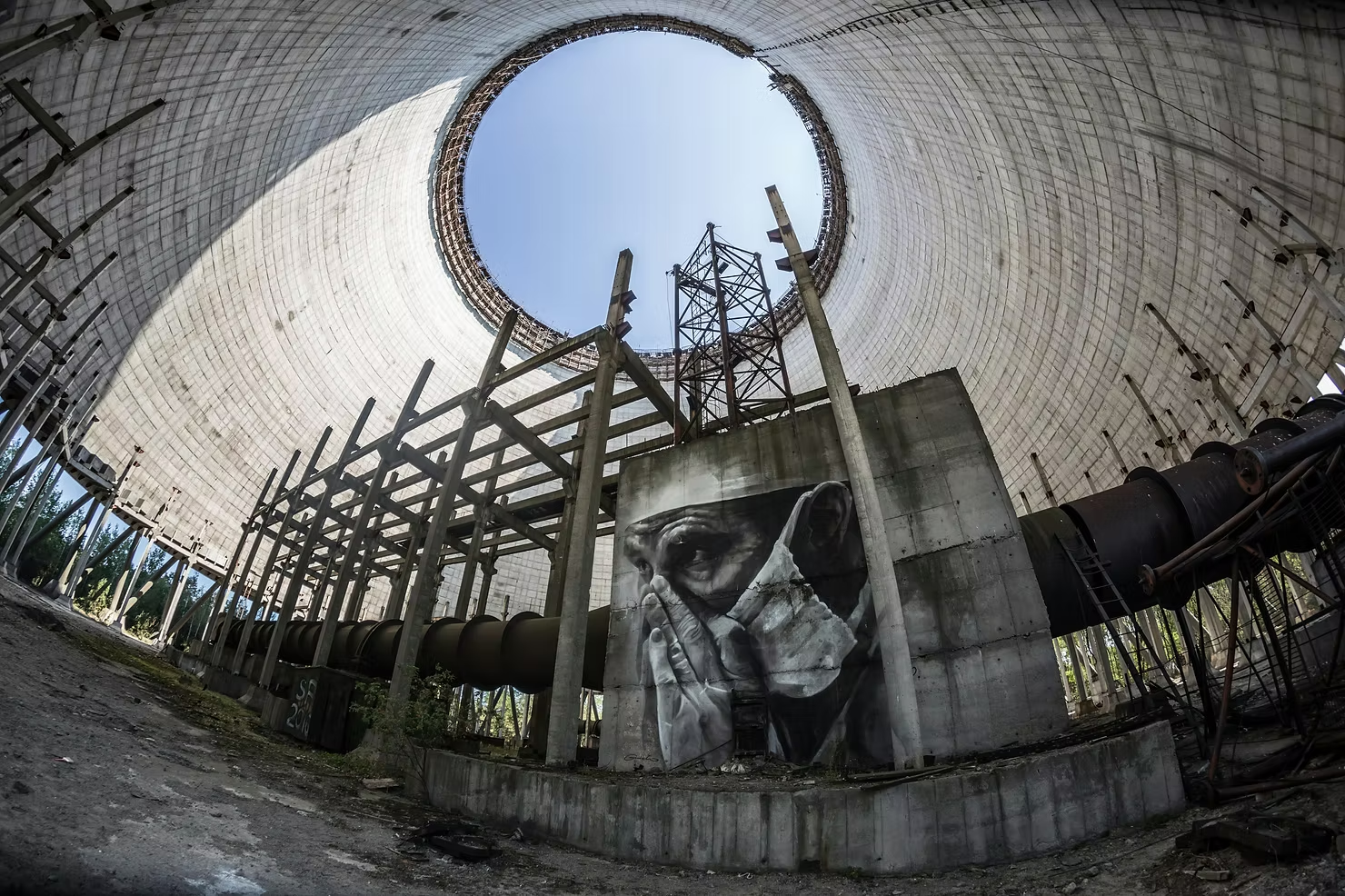
The New Safe Confinement (NSC) shelter at the Chernobyl nuclear disaster site in Ukraine has “lost its primary safety functions” following a drone strike last February, warns the International Atomic Energy Agency (IAEA). The agency states the €2.1 billion protective shield can no longer reliably contain radioactive waste, urging a major renovation of the colossal structure.
In a sobering Friday statement, the UN’s nuclear watchdog confirmed that the immense steel arch built to secure the ruins of Reactor No. 4 was “severely damaged” in the February 14 attack. The strike, which Ukraine attributes to Russia, ignited a fire and compromised the protective cladding, critically undermining the structure’s confinement capability.
“Limited temporary repairs have been carried out on the roof, but timely and comprehensive restoration remains essential,” said IAEA Director General Rafael Mariano Grossi, according to the agency’s report.
This development thrusts the ghostly site of the world’s worst nuclear accident back into a state of urgent peril. The NSC is no ordinary building; it’s the world’s largest movable land structure, a 100-year engineering solution funded by over 45 donor countries. Completed in 2019, it was designed to enable the safe cleanup of the reactor that exploded in 1986, spreading radioactivity across Europe. Now, its core function is compromised.
READ ALSO: https://www.modernmechanics24.com/post/china-discovers-rice-heat-resistance-genes
“The protective shield built around the Chernobyl nuclear disaster site… can no longer do its job to confine radioactive waste as a result of a drone strike earlier this year, according to the International Atomic Energy Agency (IAEA),” the initial report outlined. While Grossi noted there was no permanent damage to the load-bearing structures or monitoring systems, the loss of confinement is a serious regression in safety. The IAEA, which maintains a permanent presence at the site, has pledged to support full restoration efforts.
The February incident is not Chernobyl’s first entanglement in the ongoing war. Russian forces seized the plant in the opening days of the 2022 full-scale invasion, holding staff hostage for over a month before withdrawing. The recent drone strike, however, represents a direct physical attack on the site’s most critical safety infrastructure, introducing a new dimension of risk.
WATCH ALSO: https://www.modernmechanics24.com/post/swiss-robot-brain-autonomy
The original 1986 catastrophe killed more than 30 people immediately in the nearby city of Pripyat and led to elevated cancer rates and birth defects for decades. The NSC was the cornerstone of global efforts to finally contain that legacy. Its damage reopens questions about long-term safety and the vulnerability of nuclear sites in conflict zones.
The recommended renovation will be a colossal and costly undertaking, requiring renewed international cooperation. The structure was a testament to unprecedented global collaboration in nuclear safety. Its repair now tests whether that spirit can be reignited amidst ongoing war, to reseal a wound that the world once worked so hard to close.
READ ALSO: https://www.modernmechanics24.com/post/bae-systems-uk-satellite-cluster-launched