Airbus has introduced the U760 Ravenstorm, a new combat drone designed to operate alongside crewed fighter aircraft in modern air combat missions.
The aircraft forms part of a newly reorganized uncrewed systems portfolio unveiled ahead of the ILA Berlin Air Show. The launch highlights Airbus’s growing focus on combat drones at a time when Europe is reassessing its future air power strategy.
The announcement arrives as the Future Combat Air System program faces major challenges. The project originally centered on a next-generation fighter aircraft developed by France, Germany, and Spain.
Recent setbacks surrounding that fighter program have increased attention on alternative solutions, including advanced combat drones.
Airbus presented Ravenstorm as a key element of its long-term roadmap for uncrewed combat aircraft. The company says the drone is designed to work closely with fighter jets during combat operations. Its mission set includes air-to-air combat, precision strikes, electronic warfare, and support for suppression of enemy air defenses.
The company also unveiled a broader family of uncrewed systems. Airbus has introduced a new naming structure that uses the letter ‘U’ for all uncrewed aircraft. This follows its existing approach of using ‘A’ for fixed-wing aircraft and ‘H’ for helicopters.
According to Airbus Defence and Space CEO Mike Schoellhorn, the company now offers uncrewed systems across multiple mission categories. These range from tactical drones and drone interceptors to autonomous helicopters and combat aircraft. Airbus says all of its systems are designed with open architectures that can integrate with European and international defense networks.
U760 Ravenstorm Advanced Combat Missions
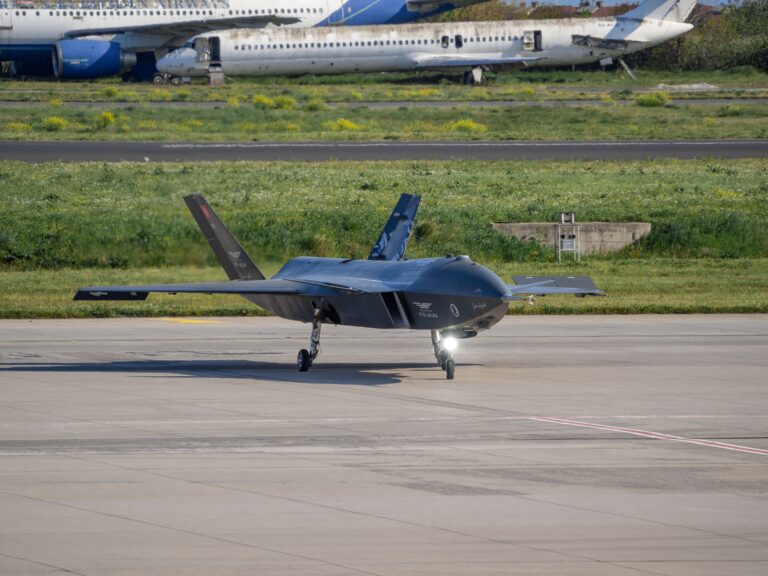
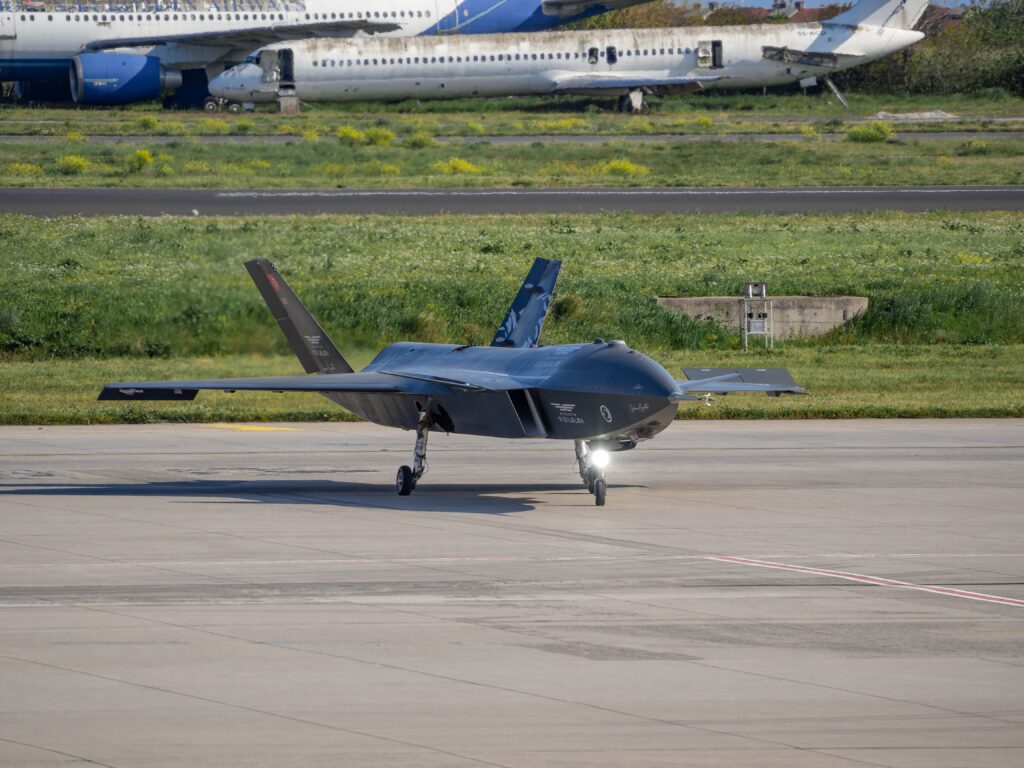
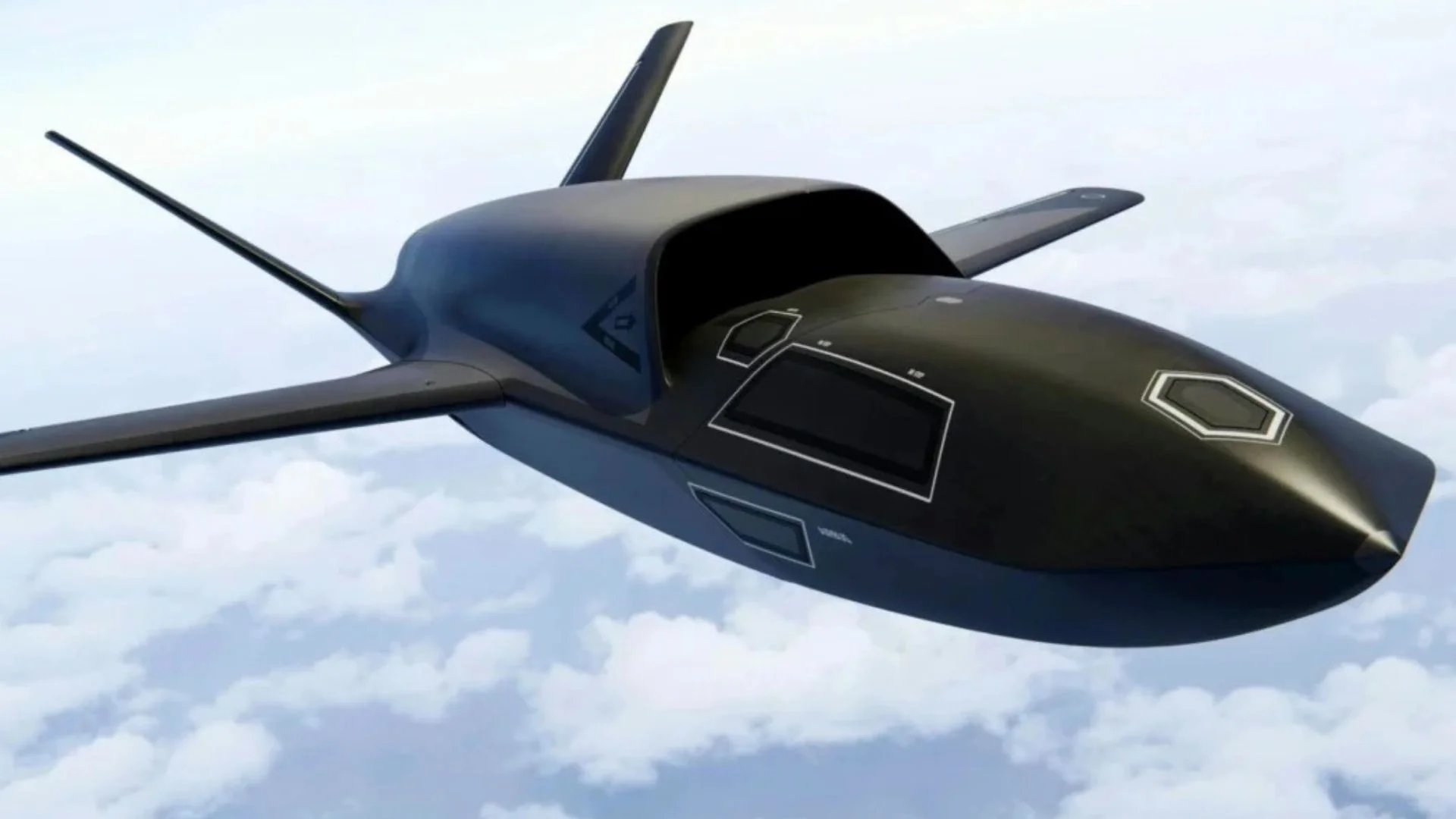
The U760 Ravenstorm is the most significant addition to Airbus’s new portfolio. A full-scale model of the aircraft is being displayed at the ILA Berlin Air Show. The drone measures approximately 43 feet in length and has a wingspan of about 33 feet.
The aircraft features a design optimized for reduced radar visibility. It uses a swept-wing layout and a twin-tail configuration, both commonly seen in modern stealth-focused aircraft. A large dorsal air intake is positioned on top of the fuselage, helping maintain a cleaner radar signature from below.
Its overall appearance resembles some of the latest combat drone programs being developed elsewhere. In particular, it shares several visual characteristics with the US Air Force’s Collaborative Combat Aircraft designs. These similarities reflect common requirements for speed, survivability, and low observability rather than direct design copying.
Airbus says Ravenstorm represents the next stage in its vision for uncrewed collaborative combat aircraft. These aircraft are intended to fly alongside crewed fighters during dangerous or demanding missions. The concept allows air forces to increase combat capability without placing additional pilots at risk.
The drone will carry precision-guided weapons for ground attack missions. It is also expected to carry medium-range and long-range air-to-air missiles for aerial combat. Electronic warfare equipment will enable the aircraft to jam enemy radars and disrupt air defense systems.
READ ALSO: Tracing 8,000 Years of History in Great Salt Lake Sediments
These capabilities make Ravenstorm more than a traditional surveillance drone. Instead, it is designed to operate as an active combat platform within a larger network of aircraft. Airbus expects the system to enter service during the early 2030s.
Airbus Offers Two Combat Drone Options
Alongside Ravenstorm, Airbus is also promoting the U740 Valkyrie. This aircraft is based on the XQ-58A Valkyrie originally developed by US-based Kratos. Airbus has integrated its own mission systems and software into the platform to adapt it for European requirements.
The company states that the U740 will use Airbus’s Multiplatform Autonomous Reconfigurable and Secure mission system, known as MARS. This software suite serves as the aircraft’s digital brain. It uses artificial intelligence and autonomous functions to manage missions and support operations.
Airbus expects the U740 to enter service in 2029. The company specifically identified the German Air Force as the first planned operator. The aircraft is expected to participate in operational testing alongside Germany’s Eurofighter fleet.
The U740 and U760 occupy similar categories but appear to serve different purposes. The Valkyrie was designed as a lower-cost platform that can operate with minimal infrastructure. Ravenstorm appears focused on higher-end combat missions requiring greater capability and survivability.
This two-aircraft strategy gives Airbus flexibility in addressing different military requirements. Some customers may prioritize affordability and rapid deployment. Others may seek advanced performance and enhanced stealth characteristics.
The MARS mission system connects both aircraft under a common technology framework. Airbus plans to use the same software across multiple uncrewed platforms. This approach simplifies integration and allows different systems to work together more effectively.
READ ALSO: UMaine team discovers innovative way to enhance 3D-printed materials
Drone Portfolio Changing Defense Priorities
Airbus also highlighted progress on the U950 Eurodrone program. The aircraft is a medium-altitude, long-endurance platform designed for intelligence, surveillance, reconnaissance, and target acquisition missions. The drone is also expected to support early warning and anti-submarine warfare operations.
The twin-engine Eurodrone remains under development. Airbus plans for its first flight in 2029. The company views the aircraft as a key component of Europe’s future intelligence and surveillance network.
The latest announcements build on more than two decades of Airbus work in uncrewed aviation. The company previously developed the Barracuda demonstrator, which first flew in the mid-2000s. Multiple test campaigns provided valuable data for future drone projects.
Airbus also gained experience through its Low Observable UAV Testbed program. Known as LOUT, the project focused on stealth technologies and remained secret for many years before being publicly revealed. Lessons from that effort continue to influence the company’s current designs.
Questions remain about the future of Airbus’s earlier Wingman concept. The company revealed the aircraft at the 2024 ILA Berlin Air Show as a combat drone partner for fighter jets. Airbus has not provided detailed information on how the Wingman concept fits into the newly announced Ravenstorm program.
Despite those questions, the broader direction is clear. European defense planners are placing greater emphasis on uncrewed aircraft capable of operating alongside existing fighters. These systems can expand fleet size, increase mission flexibility, and reduce risks during high-threat operations.
WATCH ALSO: International Space Station crew wishes New Year 2026
The shift also reflects changing realities across Europe’s defense sector. Many air forces face growing operational demands while working within limited budgets and manpower constraints. Combat drones offer a way to strengthen air power without relying entirely on expensive new fighter programs.
Airbus’s latest portfolio demonstrates how rapidly uncrewed aircraft are moving from experimental concepts to central military assets. With Ravenstorm, Valkyrie, and Eurodrone advancing simultaneously, the company is positioning itself as a major player in Europe’s next generation of air combat capabilities.
The coming years will determine how quickly these systems move from development to operational service. As combat drones become increasingly important in military planning, Airbus’s new aircraft are set to play a major role in shaping the future of European air power.
The launch of Ravenstorm signals a broader shift in military aviation, where uncrewed aircraft are becoming essential partners for fighter jets. As European nations seek stronger and more flexible air forces, Airbus is placing combat drones at the center of its future defense strategy.