A team of scientists has developed an artificial intelligence framework that helps discover new catalysts for green hydrogen production by combining knowledge from different material families.
The research was led by Director Hyeon Taeghwan and scientists at the Center for Nanoparticle Research within the Institute for Basic Science (IBS). Their findings were published in the journal Nature Materials.
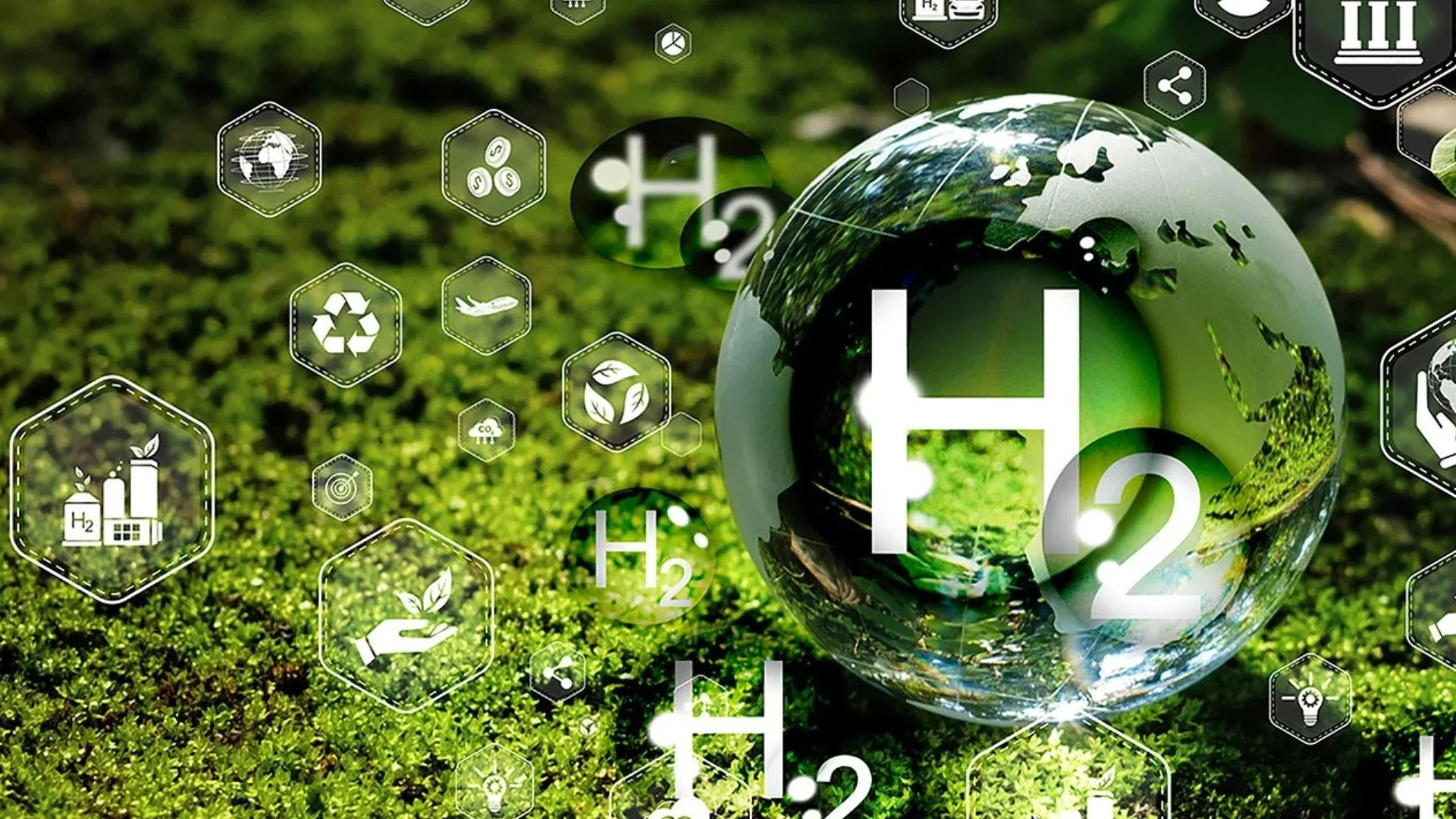
The study focuses on one of the biggest challenges in green hydrogen production. Hydrogen generated by water electrolysis does not directly emit carbon, making it an attractive clean energy option. However, the oxygen evolution reaction (OER) remains a major obstacle because it requires significant energy and slows the overall process.
Catalysts help speed up chemical reactions without being consumed in the process. Better catalysts can lower energy requirements and improve hydrogen production efficiency. For years, researchers have sought improved catalysts by studying individual material families separately, such as metal oxides, metal catalysts, and single-atom catalysts.
This traditional approach has produced valuable results, but it also creates limitations. Scientists often focus on finding the best material within a specific category. As a result, opportunities to combine strengths from different catalyst systems can be overlooked.
The IBS research team wanted to address this challenge. Instead of treating catalyst families as separate fields, they developed an AI model that learns from multiple catalyst groups simultaneously. Their goal was to determine whether artificial intelligence could uncover useful connections between chemically different materials.
To achieve this, the researchers created a deep learning system called the Crossbreeding Neural Network(CBNN). The model was trained using data from two distinct catalyst families. One group consisted of single-atom catalysts supported on carbon materials, while the other involved perovskite oxide catalysts.
READ ALSO: Hidden Cavities Found in 2D Devices Could Alter Their Electronic Behavior
Each catalyst family provides different types of information. Single-atom catalysts help researchers understand how individual metal atoms behave on a catalyst surface. Perovskite oxides, on the other hand, reveal how crystal structures influence catalytic activity.
By combining insights from both systems, the AI learned patterns that were not visible when studying either family alone. The model then predicted the performance of a completely new class of catalysts that had not been included in its training data. These hybrid catalysts place individual metal atoms on the surface of perovskite oxide materials.
The team also improved the model’s accuracy by developing an automated method for selecting the most useful chemical descriptors. The process combined statistical analysis with natural language processing techniques. This allowed the AI to identify chemical characteristics that strongly influence catalytic performance.
Among the most important factors were oxidation state, ionic radius, valence d-electron count, electronegativity, and coordination number. These properties describe how atoms interact with their surroundings and influence chemical reactions. The AI used these features to evaluate potential catalyst designs.
Researchers then synthesized and tested the catalysts predicted by the model. Experimental results showed that the AI accurately ranked the performance of 12 catalysts from the new material family. This demonstrated that the system was not simply repeating patterns from existing data but was making meaningful predictions in an unfamiliar area.
The team expanded the research further by exploring multimetallic catalyst systems. These materials contain several different metal atoms working together on the same support structure. Such designs can create interactions that improve catalytic activity beyond what a single metal can achieve.
Using its predictive capabilities, the AI screened 8,008 possible catalyst candidates. It identified a leading design that combined tungsten, molybdenum, ruthenium, and rhodium atoms on a calcium-praseodymium-cobalt-iron-oxide perovskite support known as CPCF.
READ ALSO: Kobe University Researchers Create Quantum Jam Session for Web Browsers
Laboratory testing confirmed the model’s predictions. The newly identified catalyst delivered stronger oxygen evolution performance than previously studied perovskite oxide catalysts, carbon-supported single-atom catalysts, and all monometallic catalysts examined during the project.
Another important aspect of the study involved explainable AI. Many AI systems generate predictions without explaining how they arrived at their conclusions. In this case, researchers used explainable AI techniques to reveal how specific atomic arrangements contributed to catalyst performance.
The analysis showed how neighboring metal atoms interact and create beneficial effects that enhance oxygen evolution activity. These insights provide scientists with practical design rules for future catalyst development. This makes the technology more useful than systems that only produce numerical rankings.
The implications extend well beyond hydrogen production. Modern materials research often relies on large amounts of experimental data collected from different sources and material systems. Integrating this information remains a major challenge across many scientific fields.
Researchers believe the same AI framework can support the discovery of advanced battery materials, energy storage systems, and pharmaceutical compounds. By learning a common language across different material families, AI can identify opportunities that human researchers might miss when working within separate categories.
WATCH ALSO: Falcon 9 rocket of SpaceX recently launched 24 Starlink internet satellites
As demand for clean energy technologies and more efficient industrial processes grows, tools that accelerate materials discovery are important. This new AI-driven approach demonstrates how combining knowledge across scientific boundaries can reveal entirely new directions for innovation and help speed the development of next-generation energy solutions.