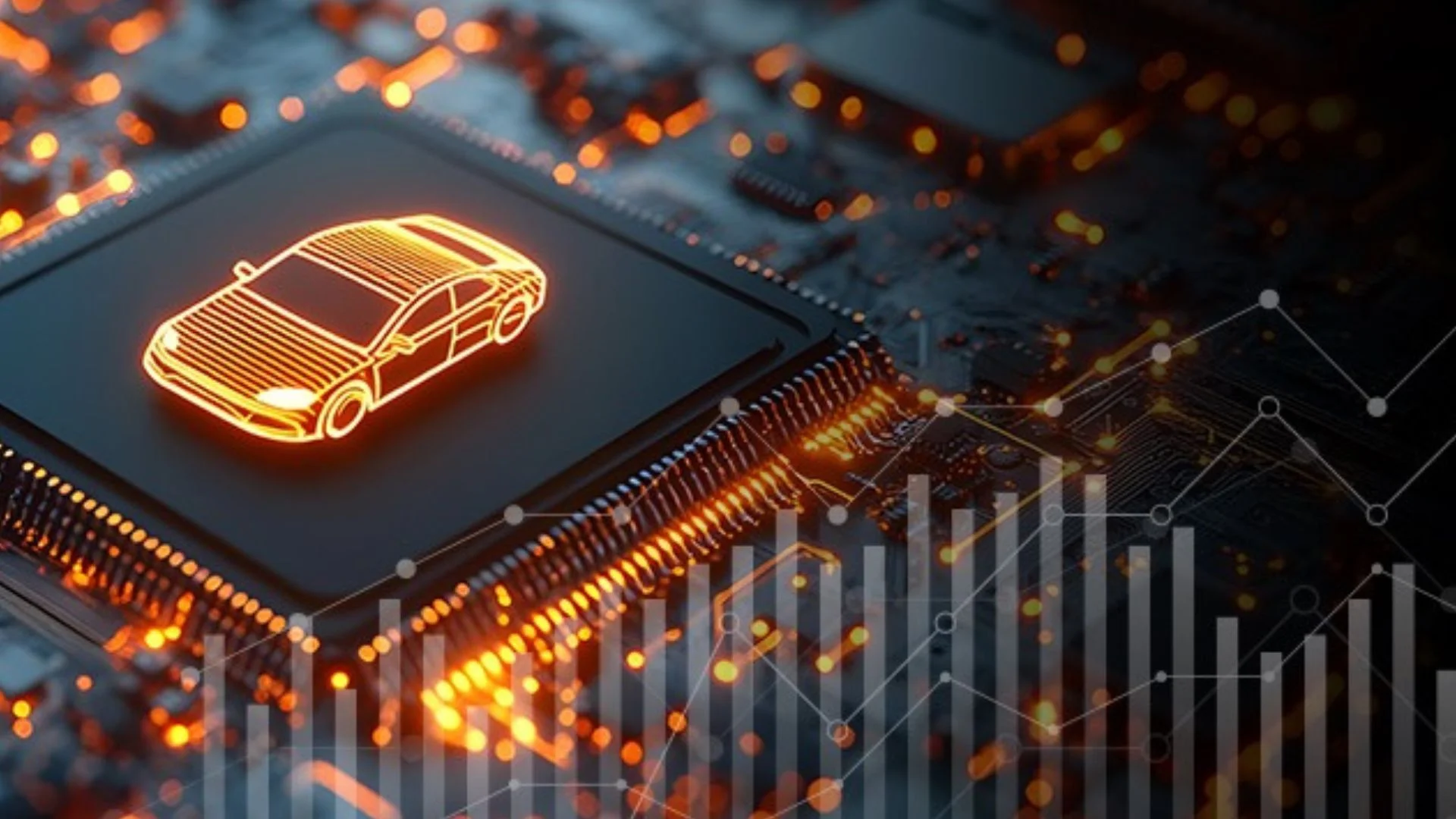
China’s electric vehicle makers are expanding their competition beyond vehicle design and battery technology. A growing number of manufacturers are now developing their own AI driving chips.
These processors serve as the computing brains behind advanced driver-assistance and autonomous-driving systems.
The latest development came from Li Auto, which unveiled its new Mach M100 chip. The company designed the processor specifically for intelligent driving applications in its upcoming L9 Livis SUV.
Li Auto said the 5-nanometre chip delivers 1,280 trillion operations per second, commonly known as TOPS.
TOPS measures how much data a chip can process per second. Higher processing power allows a vehicle to analyze information from cameras, radar, lidar, and other sensors more quickly. Faster processing helps vehicles make driving decisions in real time.
Li Auto also reported that the Mach M100 achieves an 82 percent utilization rate. This means the chip can efficiently use a large portion of its computing capacity. Better efficiency can improve performance while reducing energy consumption.
The announcement follows similar moves by several Chinese electric vehicle manufacturers. Earlier, BYD introduced its Xuanji A3 smart-driving chip. The company said the processor has already entered mass production.
BYD’s Xuanji A3 is built using a more advanced 4-nanometre manufacturing process. The chip is designed to support Level 3 and Level 4 autonomous-driving functions. These levels allow vehicles to handle increasing amounts of driving tasks with less human involvement under specific conditions.
READ ALSO: ABS Approves MIT Nuclear Cargo Ship Design, Opening New Era for Clean Maritime Transport
According to BYD, three Xuanji A3 chips working together can provide more than 2,100 TOPS of computing power. Such performance is important for vehicles operating advanced navigation and automated driving features. These systems must process large volumes of data from multiple sensors simultaneously.
AI Driving Chips Multiply
Other Chinese automakers are pursuing similar strategies. Nio has developed its own 5-nanometre NX9031 chip for intelligent driving systems. Xpeng is also working on its proprietary Turing chip, which is expected to support future generations of smart vehicles.
The push toward in-house chip development reflects a broader shift across China’s automotive industry. Carmakers want greater control over the key technologies that power their vehicles. Developing chips internally allows companies to tailor hardware specifically for their software and driving platforms.
Reducing reliance on outside suppliers is another major goal. NVIDIA remains a dominant global provider of automotive AI chips. Horizon Robotics, a Chinese automotive chip company, has also become an important supplier for many domestic manufacturers.
Building proprietary chips offers several potential advantages. Automakers can lower long-term component costs by reducing purchases from third-party vendors. They can also gain greater flexibility in planning future vehicle features and software updates.
The timing of this trend is closely linked to the rapid growth of intelligent-driving technology in China. Features once found mainly in premium vehicles are now becoming common in affordable models. This has increased pressure on manufacturers to provide advanced capabilities at lower prices.
READ ALSO: Lightweight X-Ray Telescope Designed to Map the Moon’s Chemical Composition From Orbit
According to Horizon Robotics, 67.6 percent of passenger vehicles sold in China during 2025 included intelligent driver-assistance functions. Adoption of more advanced systems also accelerated significantly. The share of new vehicles equipped with mid- to high-level driving assistance systems rose to 42.6 percent in 2025, compared with 21.6 percent a year earlier.
Growth has been particularly strong in lower-priced vehicles. Cars priced below 200,000 yuan account for about 65 percent of China’s passenger vehicle market. In this segment, the adoption rate of advanced driver-assistance systems climbed from 5 percent at the start of 2025 to more than 50 percent by the end of the year.
As intelligent-driving technology spreads into mass-market vehicles, cost reduction has become increasingly important. Analysts at Goldman Sachs noted that BYD’s God’s Eye B system, which includes urban Navigate on Autopilot functions, is available across all of the company’s models for 12,000 yuan. This lowers the entry price for a BYD vehicle equipped with urban autonomous navigation to 78,800 yuan.
Goldman Sachs also reported strong consumer interest in the system. The firm estimated adoption rates above 60 percent for models such as the Seagull. High demand is encouraging manufacturers to further invest in smart-driving technology while keeping costs under control.
Industry analysts believe in-house chips can play a major role in achieving that goal. Goldman Sachs noted that suppliers such as Nvidia and Horizon Robotics reported gross margins of roughly 75 percent and 65 percent, respectively, in 2025. Automakers that design their own chips can potentially retain a larger share of that value.
WATCH ALSO: SpaceX is gearing up to conduct 11th flight test of Starship on October 13
Analysts at Huatai Securities said BYD’s Xuanji A3 chip can improve both vehicle performance and cost efficiency. They pointed to Nio’s experience, where proprietary chips reportedly reduced per-vehicle costs by around 10,000 yuan. Such savings can become significant when applied across hundreds of thousands of vehicles.
The growing focus on custom semiconductor development highlights how competition in China’s EV market is evolving. Carmakers are no longer competing only on battery range, vehicle design, or pricing. Increasingly, success will depend on who controls the technology stack powering the next generation of intelligent vehicles.
As smart-driving features become standard across more vehicle segments, in-house chip development is set to become a key battleground. The companies that successfully combine advanced computing power with lower production costs will be better positioned in China’s fast-changing electric vehicle market.