

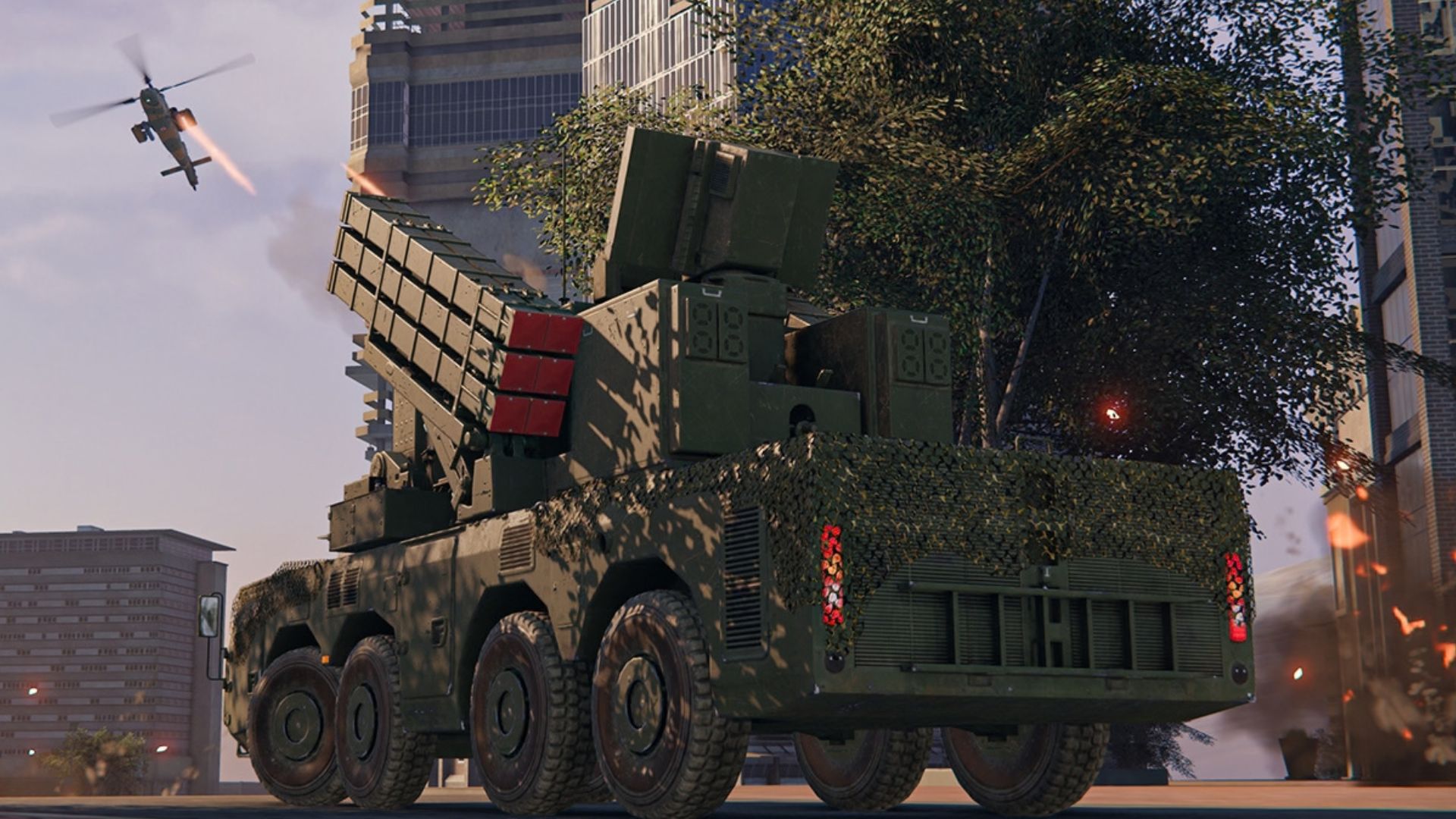
Turkmenistan has publicly displayed China’s FK-2000 missile-gun air defense system for the first time during its Independence Day military parade in Ashgabat.
Media reports said eight FK-2000 vehicles were seen among the military equipment presented at the September 27, 2026, parade. The appearance provides a fresh indication of the growing role of Chinese-made systems in Turkmenistan’s air defense network.
China News Service reported the details, citing Turkmenistan’s national television coverage of the parade.
China Aerospace Science and Industry Corporation (CASIC) developed the FK-2000, and it was first presented internationally at Airshow China 2021 in Zhuhai, Guangdong Province. Its arrival in Turkmenistan makes the system one of the country’s newer short-range air defense assets.
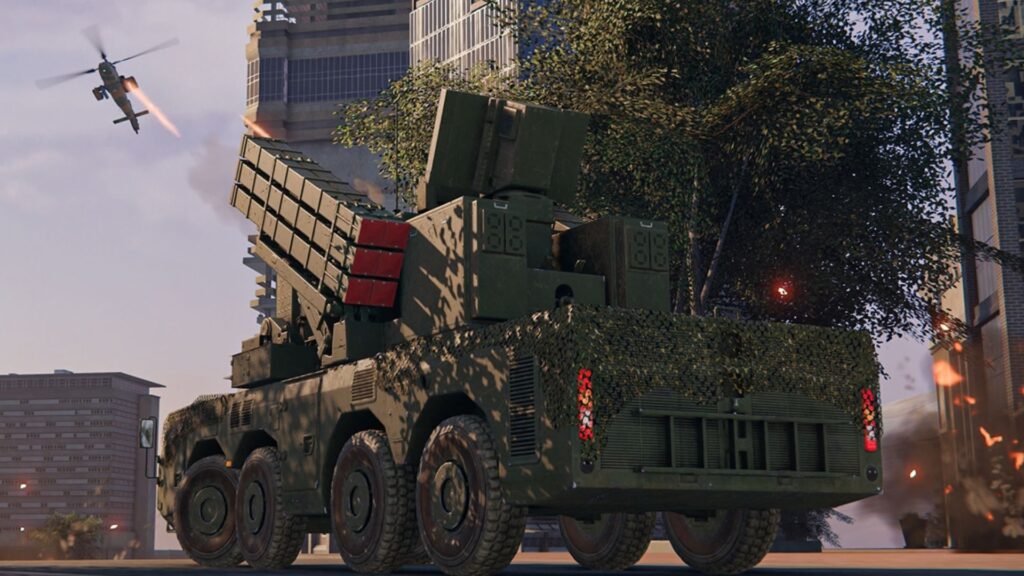
The FK-2000 uses a combined missile-and-gun design for short-range and terminal air defense missions. It combines radar, electro-optical sensors, missiles, and automatic cannons on a single mobile platform.
According to CASIC, the system is designed to engage several types of airborne threats, including missiles, helicopters, fixed-wing aircraft and multirotor drones.
The system is intended for use in different weather conditions and at short distances from defended areas. Its design lets it detect, track, and engage targets without relying on several separate specialist vehicles. This gives the FK-2000 a different operating model from air defense units that split radar, command, weapons, and power functions across multiple platforms.
Missiles And Guns
According to official specifications cited by China News Service, each FK-2000 carries two six-barrel 30mm Gatling-type rapid-fire cannons. The vehicle also carries between 12 and 16 ready-to-launch air defense missiles. Together, the two weapon types provide separate engagement options against targets at different distances.
The cannons can produce a combined firing rate of up to 8,000 rounds per minute. Their stated effective engagement range is between 200 and 1,500 meters, where the high volume of fire is designed to create a dense defensive zone. The missiles provide a longer-range interception option when targets are outside the guns’ effective range.
Janes Defence has reported that the FK-2000 can engage aircraft at distances of up to 25 kilometers. The system includes a search radar, a fire-control radar and an optoelectronic infrared sight for detecting and tracking targets. China News Service also reported that the onboard radar can support the launch of eight missiles while the system engages four long-range targets at the same time.
The missile-and-gun combination lets the system respond differently as a target approaches. Missiles are used for longer-range interception, while the rapid-fire cannons are intended for closer threats. This arrangement gives the platform two layers of engagement within its short-range air defense role.
Mobile Air Defense
The FK-2000 is mounted on an 8×8 wheeled chassis, according to Janes Defence. Its design combines detection, tracking, and interception functions on a single platform. The configuration is intended to support rapid movement and deployment with ground forces or around protected locations.
China News Service reported that the system can complete combat preparation within five minutes. Its response time from detecting a target to engaging it can be reduced to about four seconds. These characteristics are important for a short-range system that is designed to respond to rapidly developing aerial threats.
Traditional air defense formations often rely on several vehicles performing different tasks. A typical arrangement may include separate launchers, radar vehicles, command vehicles and power units. By combining several of these functions, the FK-2000 reduces the number of platforms needed for an individual firing unit and allows it to operate independently.
READ ALSO: https://modernmechanics24.com/post/northrop-grumman-f-35-avionics-ai/
Turkmenistan Expands Coverage
Turkmenistan has expanded its air defense capabilities in recent years by introducing early-warning radars and additional air defense weapons. Military observer Shi Zhongjian told China News Service that the country is building a multi-layered air defense network. He described the FK-2000 as an important component of that wider system.
Shi also pointed to the system’s high level of integration, ammunition capacity and mobility. He said its ability to operate independently makes it suitable for countries seeking an all-weather short-range air defense capability. The system’s combination of radar, sensors, missiles and guns allows one vehicle to perform several tasks during an engagement.
The reported presence of eight vehicles at the Ashgabat parade gives the clearest public indication of the FK-2000’s place within Turkmenistan’s military equipment inventory. The display also highlights the country’s efforts to combine early warning with shorter-range weapons. Such a layered structure is intended to provide different forms of protection against aerial threats approaching at varying distances and altitudes.
The FK-2000’s appearance also reflects the expanding use of integrated air defense platforms in modern military systems. Drones and other relatively small aerial targets have increased the demand for weapons that can detect and respond to threats at short ranges. A system that combines missiles and rapid-fire guns gives operators multiple ways to deal with such targets.
For Turkmenistan, the parade display places a Chinese-made short-range air defense system alongside its broader effort to strengthen radar coverage and layered defenses.
For China’s defense industry, the appearance provides a public example of the FK-2000 operating in a foreign military inventory. Its future role in Turkmenistan’s air defense network will depend on how the country integrates the system with its existing radars, command structures and other air defense weapons.










One Response