

Northrop Grumman is using collaborative robotics and artificial intelligence to change how it builds and inspects key F-35 avionics modules.
A new robot has reduced one bolt-installation task from hours to a few minutes on the Communications, Navigation and Identification (CNI) production line. The company is also expanding AI-based quality checks that examine completed modules for potential defects before they leave the factory.
The collaborative robot, known as a co-bot, works alongside technicians on the CNI production line. Its main task is to help install bolts precisely on the front housing area of the CNI module. Northrop Grumman said the automated process has reduced a job that previously took hours to one that takes only a few minutes.
Lavell Catlin, manufacturing manager for the CNI production line, said the system assists technicians during a precise assembly step. The robot does not replace the complete assembly process or operate independently. Instead, it handles a repetitive task while workers remain involved in the production process.
The change has also allowed Northrop Grumman to move several employees to other production activities. The company said this has helped improve the speed and performance of the wider manufacturing operation. It also gives technicians more flexibility as production teams handle different tasks on the line.
The CNI modules form part of the F-35’s integrated avionics system. These systems combine communications, navigation and identification functions to give pilots a connected view of information needed during flight operations. Their integration is a key part of the aircraft’s avionics architecture.
AI Adds Another Quality Check
Northrop Grumman is pairing the assembly automation with AI-based quality control systems. These tools examine completed modules in detail and flag potential problems before the equipment ships. The company is extending the technology to additional sections of the CNI production line.
Catlin said the AI-based quality systems help production teams detect even small issues in completed modules. The technology provides an additional inspection step before the equipment reaches customers. Northrop Grumman said the approach is intended to support consistent quality and reliability across production.
AI inspection is different from the physical work performed by the co-bot. The robot assists with a specific assembly operation, while the AI systems examine finished work for possible defects. Together, the technologies address two separate parts of manufacturing: completing tasks efficiently and checking the results.
The company describes the CNI system as an advanced integrated avionics system designed to give F-35 pilots a unified view of the battlespace.
READ ALSO: https://modernmechanics24.com/post/pentagon-breach-exposes-military-record/
Northrop Grumman is introducing faster production and additional inspection tools as it continues to manufacture equipment for the aircraft program. The systems are intended for F-35 aircraft operated by the United States and allied countries.
Automation Expands At Palmdale
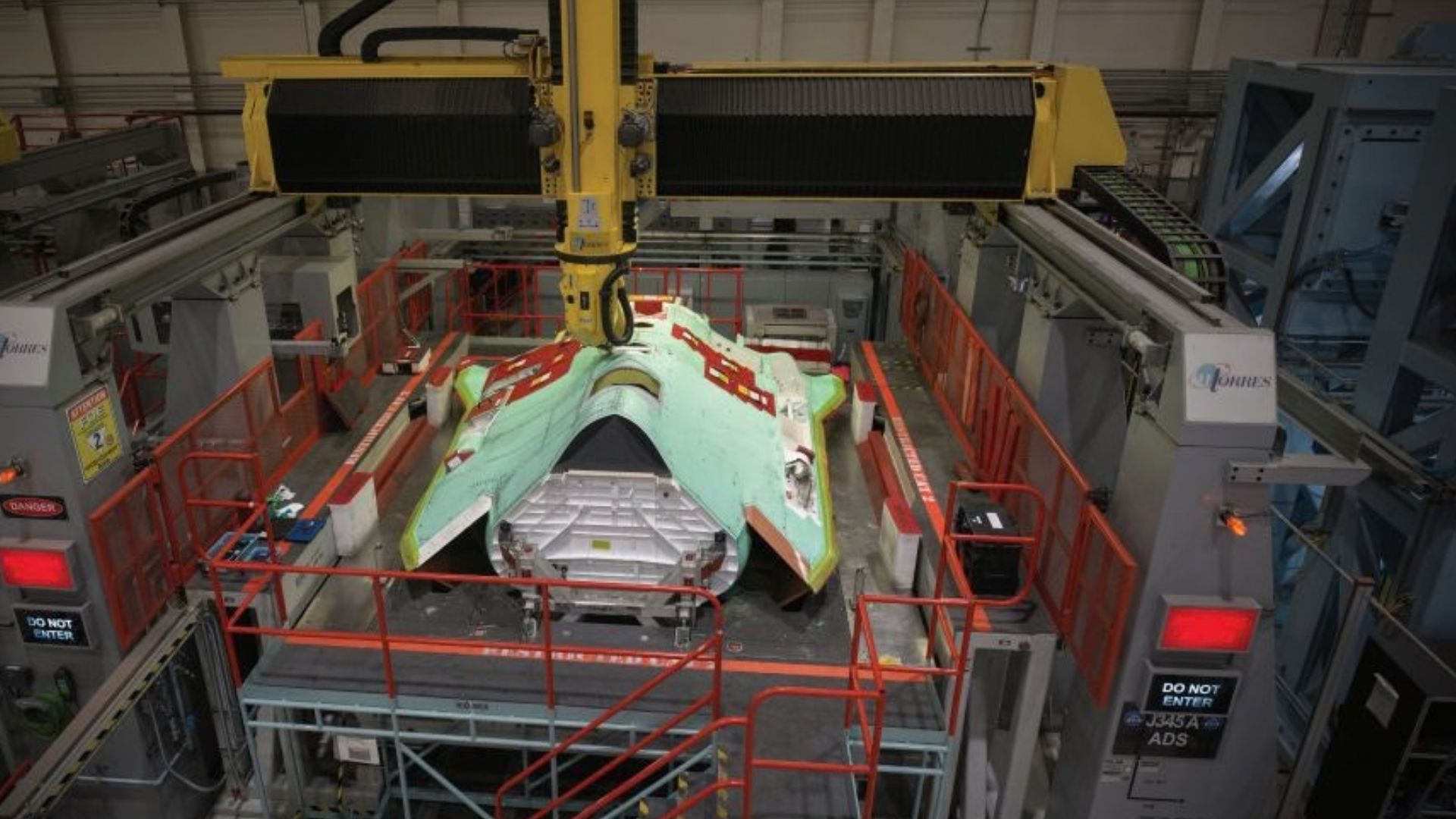
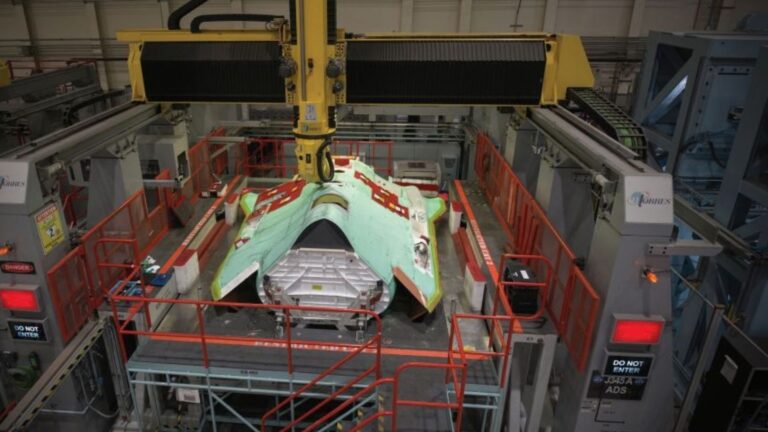
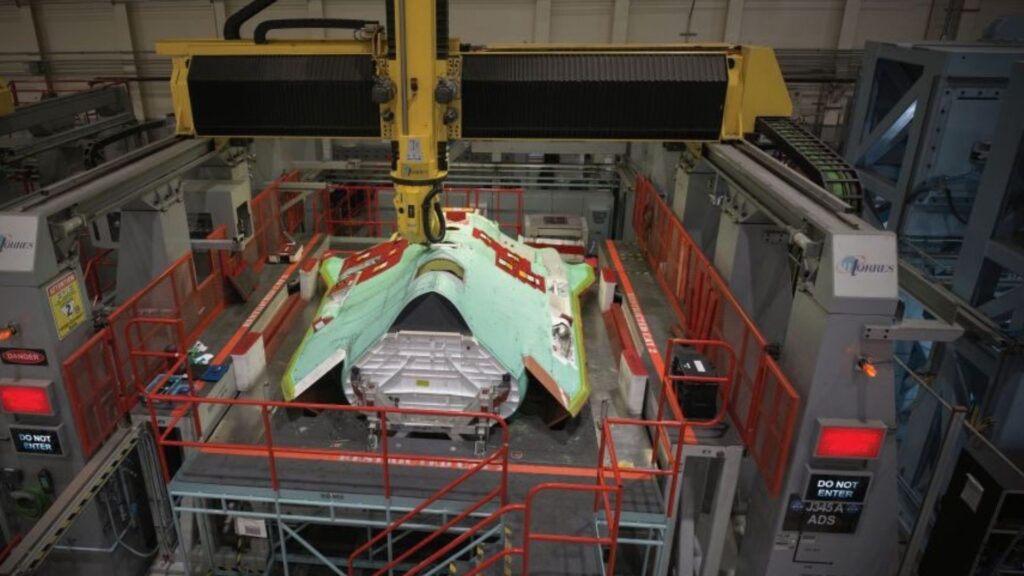
The CNI improvements are part of broader automation across Northrop Grumman’s F-35 manufacturing operations. At its Integrated Assembly Line in Palmdale, California, the company uses robotics, automation and mixed-reality tools to manufacture the aircraft’s center fuselage. Northrop Grumman says the facility produces one center fuselage every 30 hours.
The center fuselage is the F-35’s largest stealth-critical structural assembly. It forms a major section of the aircraft’s structure and connects with other major components during final aircraft assembly. The production line is therefore designed to maintain a steady manufacturing rate while meeting required quality standards.
Northrop Grumman also uses automated composite manufacturing equipment for components such as wing skins and nacelles. These parts are produced for all three F-35 variants. The company says its automated manufacturing methods support production at the scale the program requires.
Mixed-reality tools add another layer to the manufacturing process. Such systems can provide digital information to workers while they perform physical tasks. Combined with robotics and automated machinery, they form part of Northrop Grumman’s broader effort to reduce manual production time.
Wider F-35 Industrial Role
Northrop Grumman is a major industry partner in the Lockheed Martin-led F-35 program. Its responsibilities cover several areas, including the center fuselage, radar, communications systems and low-observable technology. The company also provides operational support and sustainment for F-35 fleets operated by the United States and partner nations.
The F-35 program includes three variants designed for different operating requirements. Northrop Grumman supplies components and systems across the production program. Its manufacturing activities therefore extend beyond a single assembly line or aircraft configuration.
The company’s work on low-observable technology is another major part of its F-35 role. This technology helps reduce the aircraft’s detectability by enemy sensors. Northrop Grumman also supports the aircraft’s radar and communications capabilities, which help it collect and exchange information during missions.
The latest manufacturing changes come as the F-35 program maintains a high production rate. Automating repetitive work can reduce the time required for individual manufacturing steps, while AI inspection can give production teams another way to find problems. Northrop Grumman’s expansion of these tools shows how digital systems are being incorporated into both assembly and quality control.
For the F-35 supply chain, the combination of robotics and AI is focused on maintaining production speed without removing human oversight from key manufacturing operations.
The approach also lets the company move workers to other tasks while automated systems handle selected repetitive operations. Northrop Grumman is now applying these technologies across more of the CNI production line as it continues supporting the global F-35 fleet.






One Response