

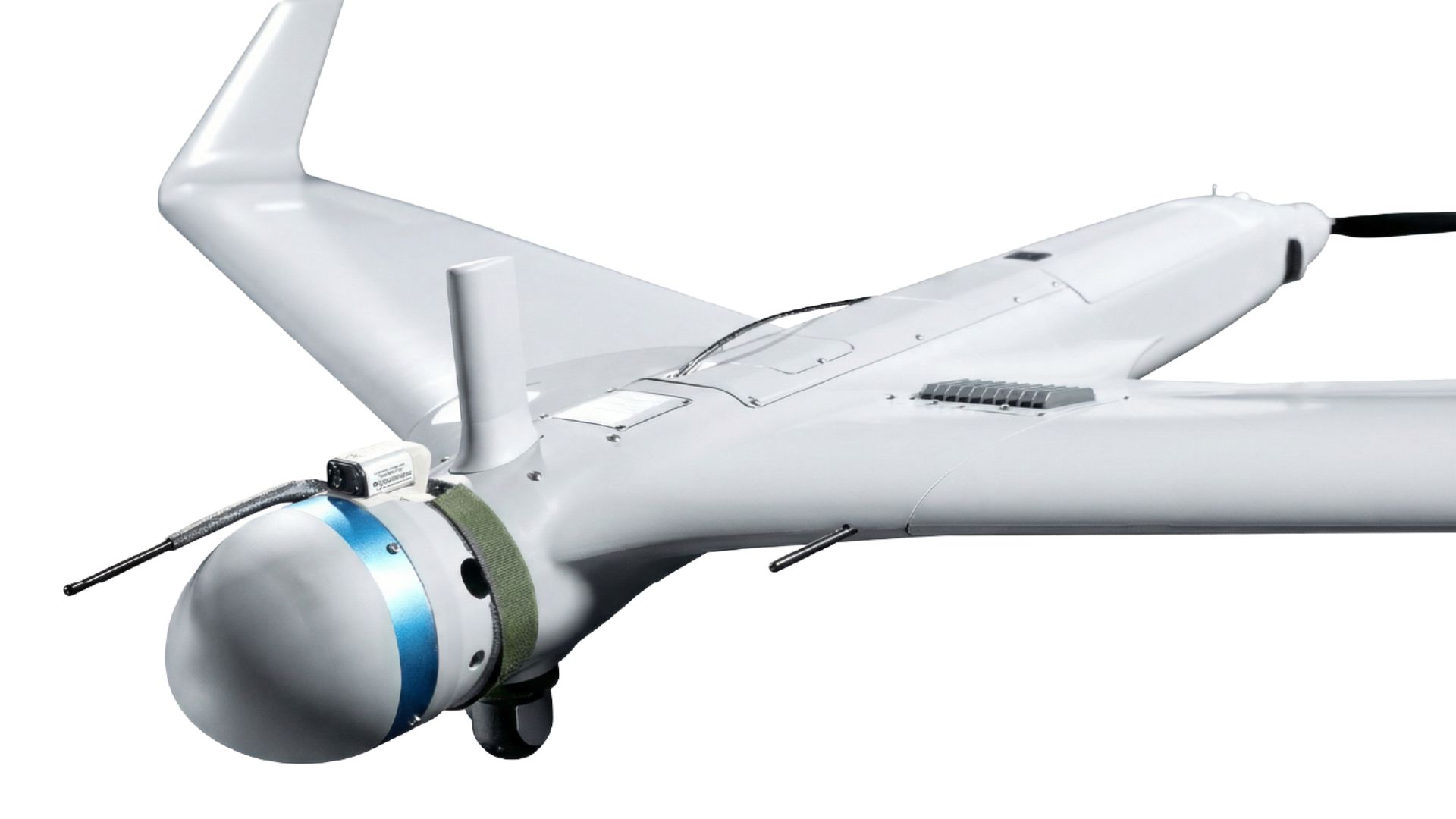
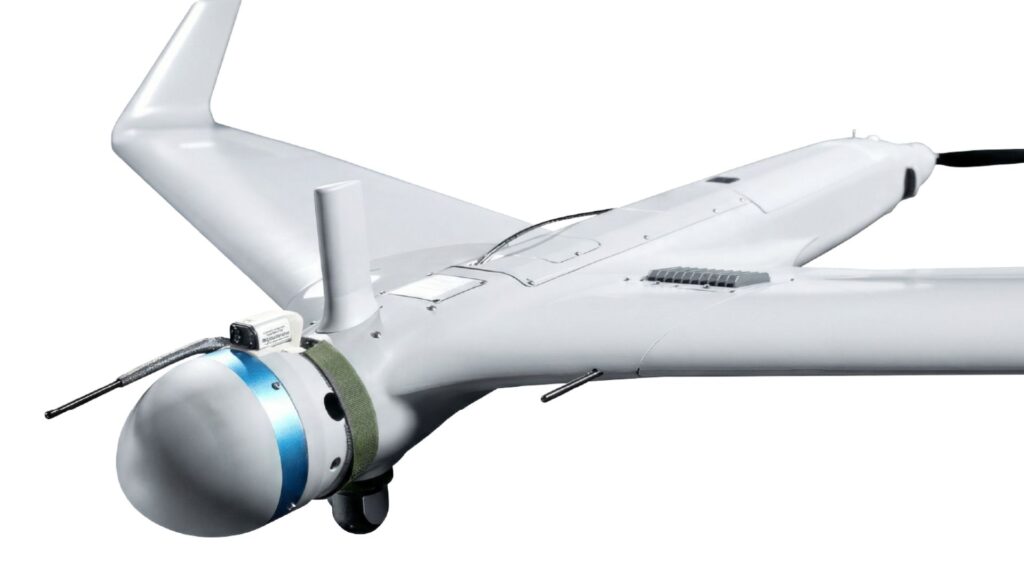
Azerbaijani defence company Azersilah has unveiled its ORBITER 1KM tactical unmanned aerial vehicle at ADEX 2026 in Baku.
The electrically powered aircraft is designed for reconnaissance and surveillance missions and has a stated radio-channel range of up to 100 km. With a 13 kg airframe, 2.5-hour endurance and pneumatic catapult launch, the UAV is configured for mobile operations without a conventional runway.
The ORBITER 1KM was displayed at the Baku Expo Center during the sixth Azerbaijan International Defence Exhibition.
ADEX 2026 is being held from September 30 to October 2 and brings together defence manufacturers, military delegations and technology companies from Azerbaijan and overseas. The exhibition provides a platform to showcase unmanned aircraft, weapons, vehicles, and other military technologies.
Compact Airframe, Mobile Launch
The ORBITER 1KM features a composite airframe with a 2.9-meter wingspan. Its total weight is 13 kg, allowing the aircraft to be transported and deployed as a tactical unmanned system. Azersilah has designed the platform around a pneumatic catapult launch system rather than a conventional runway.
The catapult accelerates the aircraft into flight from a prepared launch position. This lets the UAV operate from locations without fixed aviation infrastructure. Recovery and deployment requirements therefore form an important part of the aircraft’s field configuration.
The aircraft uses electric propulsion, which Azersilah says gives it a low acoustic signature in flight. The propulsion arrangement is suited to a surveillance platform where reduced engine noise is an important operating characteristic. The company has combined the electric system with a composite structure to keep the aircraft relatively light.
READ ALSO: https://modernmechanics24.com/post/first-embodied-ai-theme-park-robots/
100 Km Communications Range
Azersilah lists a maximum radio-channel range of 100 km for the ORBITER 1KM. The stated range defines the manufacturer’s communications envelope for the aircraft and its control system. It gives the UAV a substantially wider operating area than systems intended only for close-range tactical observation.
The aircraft has a stated endurance of 2.5 hours. Its cruising speed is 130 km/h, while the maximum speed is listed at 319 km/h. Azersilah also gives a maximum flight altitude of 3,500 meters.
These figures give the ORBITER 1KM a combination of endurance, speed and altitude intended for extended surveillance missions. The 100 km communications range lets operators position the aircraft far from the launch point. Actual mission range, however, depends on terrain, communications conditions, payload, and operating restrictions.
Designed For Harsh Conditions
The manufacturer specifies an operating temperature range of -20°C to +50°C. According to Azersilah’s technical data, the aircraft is also designed to take off and land in wind speeds up to 12.8 m/s. The stated maximum permissible wind speed at the end of the flight is 20.5 m/s.
These specifications define the environmental conditions under which the company expects the platform to operate. They also indicate the emphasis placed on field deployment rather than operation from established air bases. The combination of pneumatic launch and electric propulsion reduces the infrastructure required to put the aircraft into the air.
The ORBITER 1KM is configured primarily as a tactical surveillance platform. Its specifications point to missions where operators require an uncrewed aircraft that can remain airborne for several hours while maintaining a long-distance communications link. The low acoustic signature is another stated feature intended to support its surveillance role.
ORBITER 1KM At ADEX 2026
The presentation of the ORBITER 1KM comes as tactical uncrewed aircraft continue to play a prominent role in defense programs and exhibitions. These systems give military units an airborne view of terrain and activity without putting a crewed aircraft at risk. Their usefulness depends on factors such as endurance, communications, sensors, payload capacity and ease of deployment.
Azersilah’s configuration emphasizes mobility and operating range. At 13 kg, the aircraft remains considerably smaller than larger tactical UAVs, while its 2.9-meter wingspan and catapult launch system suit field deployment. The 2.5-hour endurance and 100 km radio range extend its surveillance capability beyond the immediate launch area.
The information released for ADEX 2026 does not specify the ORBITER 1KM’s sensor package, payload capacity or detailed mission equipment.
Those systems will determine how the aircraft is configured for specific reconnaissance and surveillance tasks. For now, the published specifications establish the platform as a lightweight electric UAV built around long-range communications, sustained flight and runway-independent deployment.
Its debut in Baku gives international defence audiences a first look at Azersilah‘s latest tactical UAV configuration. The combination of a compact airframe, pneumatic launch, electric propulsion, 100 km radio range and 2.5-hour endurance provides the basic architecture for a mobile surveillance system.









One Response