

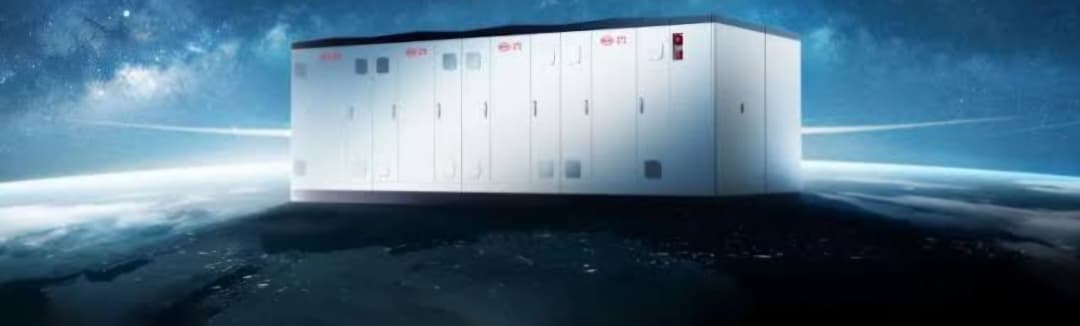
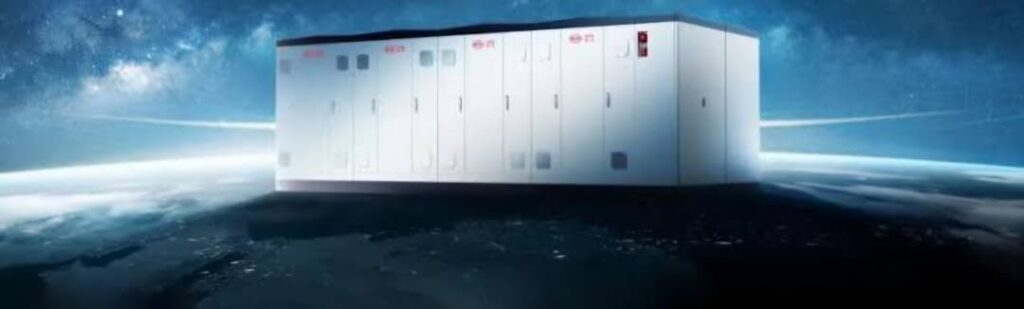
BYD Energy Storage has launched GC Block, a standardized battery storage unit with up to 62 MWh of capacity.
The product is designed for gigawatt-scale energy storage plants and supports applications lasting between two and six hours. The company unveiled the system at the 2026 Energy Green Development Conference and International Digital Energy Expo in Shenzhen, China.
GC Block forms part of BYD’s second-generation gigawatt-scale grid-forming energy storage solution. The platform also includes the GC Flux PCS 2.0 power conversion system and GC Master EMS 2.0 energy management system.
The new storage unit is available in three configurations. The options allow project developers to select a system based on the required power output and storage duration.
The smallest configuration provides 7.5 MW of power and 15.5 MWh of energy capacity. It is designed for projects requiring approximately two hours of storage.
READ ALSO: https://modernmechanics24.com/post/redback-ifv-40mm-counter-drone-system/
The second configuration offers 7.5 MW and 31 MWh. It targets applications with a storage duration of around four hours.
The largest version delivers 10 MW and 62 MWh. BYD says a 1 GWh project would require approximately 17 units of this configuration.
Three Storage Options Available
The three configurations address different requirements in utility-scale energy storage. Power capacity indicates the amount of electricity a system can deliver at a given moment, while energy capacity describes the total electricity it can store.
The 62 MWh figure refers to the complete station-level GC Block. It does not represent the capacity of a single 20-foot battery container.
BYD has not disclosed the exact number of battery containers included in the largest configuration. The company has also not released detailed information about its dimensions or internal physical layout.
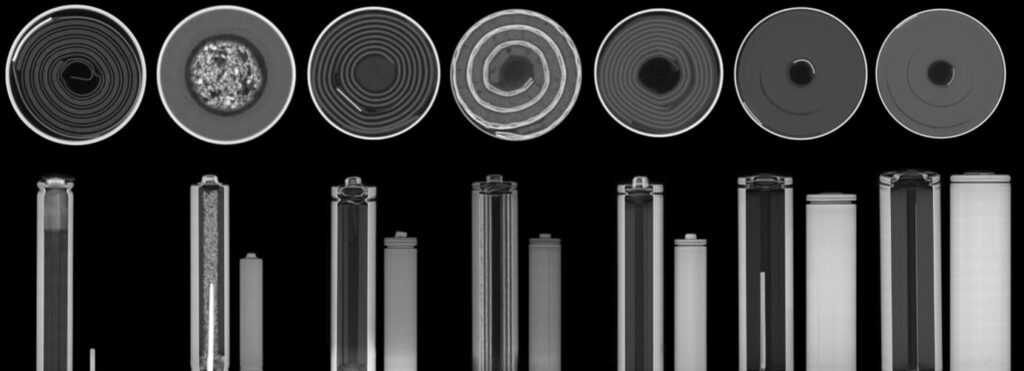
GC Block uses BYD’s 1,980 Ah energy storage Blade Battery cells. The cells are manufactured through a stacking process, which forms part of the system’s battery integration design.
According to BYD, the architecture reduces the number of cells needed in large-scale projects. It also simplifies cabling, foundations, battery management and maintenance requirements.
The company claims that its design can reduce battery management complexity by 69.4% in gigawatt-scale plants. It also reports a maintenance workload reduction of more than 60% and a decrease of more than 18% in installation and commissioning work.
These figures represent BYD’s reported claims. The company has not provided independent verification or a detailed methodology for the reductions in the information released with the launch.
WATCH ALSO: https://modernmechanics24.com/post/spacex-starship-powerful-ever-built/
New PCS Supports Grid Projects
BYD also introduced GC Flux PCS 2.0 as part of the new storage platform. The power conversion system manages the exchange of electricity between batteries and the power grid.
The system supports power ratings from 1.25 MW to 15.6 MW. BYD says a standard 20-foot PCS container can accommodate up to 10 MW.
GC Flux PCS 2.0 has a maximum conversion efficiency of 99.5%. It also supports three-times overload capability for 10 seconds.
The system is compatible with centralized and string-based storage architectures. Centralized designs group power conversion equipment in a common location, while string-based systems use smaller conversion units connected to individual battery groups.
The accompanying GC Master EMS 2.0 is designed to manage large storage fleets. It coordinates storage resources and supports automated energy dispatch across gigawatt-scale facilities.
BYD says the system uses artificial intelligence for energy forecasting. The company reports prediction accuracy of 98.5% and says the platform can calculate and dispatch storage resources without continuous manual supervision.
Storage Targets Global Applications
BYD is positioning GC Block for several energy applications. These include standalone utility-scale storage, renewable energy projects paired with batteries, data center power systems and zero-carbon industrial parks.
The system is also intended to support high-power electric vehicle charging infrastructure. Such applications require reliable electricity and flexible power management.
Standardized storage units can help reduce the amount of custom engineering required for large projects. They can also make it easier to repeat system designs across different sites.
Grid-forming energy storage provides another important function. Unlike systems that depend entirely on an existing grid signal, grid-forming equipment can help establish and support electrical conditions such as voltage and frequency.
This capability is relevant as power systems integrate more variable renewable energy. Battery storage can hold electricity when generation is high and release it when demand increases.
The GC Block launch reflects the growing focus on larger and more integrated storage systems. Suppliers are increasingly combining batteries, power conversion equipment and energy management software into coordinated platforms.
READ ALSO: https://modernmechanics24.com/post/uss-arizona-virginia-payload-module/
BYD has not yet disclosed all commercial deployment details for the new product. Its station-level design and reported integration benefits will be relevant to developers evaluating storage solutions for large electricity projects.
As demand for renewable energy integration and flexible power capacity grows, standardized storage modules are expected to remain an important part of the utility-scale battery market. BYD’s new platform adds another option for developers planning large energy storage facilities.







One Response