

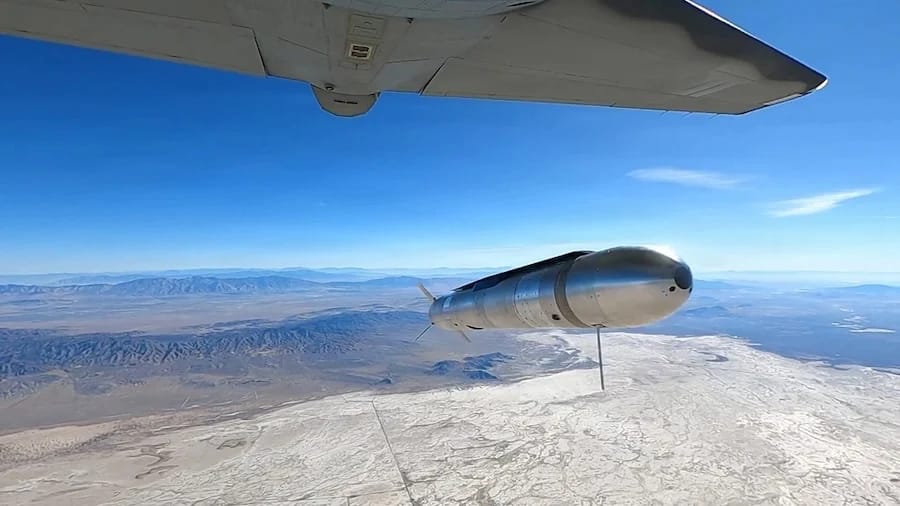
The US Air Force has cleared the AGM-190A Havoc Spear for wider operational use after the small cruise missile met its requirements during a combat evaluation in Africa.
The assessment was conducted by Air Force Special Operations Command (AFSOC) with US Africa Command in spring 2026. The result gives US forces another standoff weapon designed to strike targets while keeping aircraft and personnel farther from immediate threats.
Combat Evaluation In Africa
AFSOC said Havoc Spear was launched from an AFSOC aircraft operating in a test configuration during the evaluation.
The missile demonstrated accurate and effective performance against its intended requirements, according to the command. The assessment took place inside the US Africa Command area of responsibility, linking weapons testing directly to an operational theater.
READ ALSO: https://modernmechanics24.com/post/us-air-force-500-combat-drones-2032/
The evaluation marked an important step in the missile’s development. Instead of relying only on controlled test environments, US forces assessed the weapon under combat conditions. AFSOC said the experience helped establish the missile’s suitability before expanding its availability to other users.
Lt. Gen. Mike Conley, commander of AFSOC, said the weapon’s range and capabilities provide commanders with additional standoff options.
He said those options can help neutralize threats without placing aircraft or personnel in immediate danger. Conley also highlighted the value of evaluating a new weapon in combat early in its development.
Modular Design Supports Flexibility
The AGM-190A Havoc Spear is designed around a modular architecture. In simple terms, its components can be adapted for different missions without requiring the entire weapon to be redesigned. This approach is intended to make the missile more flexible as operational requirements change.
AFSOC also describes Havoc Spear as a weapon that can be produced rapidly at a relatively low cost. Those characteristics are important for a force seeking more affordable standoff weapons alongside larger and more expensive missile systems. A modular design can also make future upgrades easier as new requirements emerge.
The missile is intended to give commanders another way to engage targets from a distance. Standoff weapons allow an aircraft to launch a missile without flying directly over or close to the target area. This can reduce the exposure of both the aircraft and its crew, particularly in areas where air defenses or other threats remain present.
Faster Acquisition Approach
The program also reflects a different approach to military weapons development. US Special Operations Command led the acquisition effort on behalf of AFSOC, working with industry partners through a cooperative research and development agreement. The arrangement was designed to move the weapon through development and evaluation faster than traditional acquisition programs.
AFSOC said the agreement allowed military personnel and industry teams to make changes during the development process. That created a more iterative cycle in which operational feedback could be incorporated before the system moved into broader use. The approach is intended to shorten the distance between an identified military requirement and an operational capability.
Col. Robert Johnston, AFSOC’s director of strategic plans, programs and requirements, said the command does not want to depend solely on traditional acquisition pipelines.
He said AFSOC is examining more agile approaches that can strengthen relationships with industry, accept calculated risks and deliver capabilities to personnel faster.
Wider Use Across US Forces
The successful evaluation now places Havoc Spear on a path toward broader employment. AFSOC said the weapon will be available for wider operational use across special operations and conventional aircraft. The command also intends to support the joint force and wider Department of the Air Force missions.
The development is particularly relevant to US operations in Africa. Gen. Dagvin Anderson, commander of US Africa Command, said the command continues to target networks that contribute to terrorism across the continent.
He said successful operational assessments demonstrate the US military’s intent to use specialized capabilities while working with regional partners.
The evaluation also shows how operational demands are influencing the development of new weapons.
WATCH ALSO: https://modernmechanics24.com/post/china-five-destroyers-firepower-drill/
AFRICOM provided an environment in which a developing system could be assessed against real-world requirements, while AFSOC gained information that would not be available through laboratory or training-range testing alone. This model can help reduce the time between developing a weapon and determining how it performs in an actual operational setting.
For the US military, Havoc Spear adds another standoff option to the aircraft weapons inventory. Its modular construction, rapid-production approach and combat evaluation are now central to the case for expanding its use.
However, the missile is positioned to become part of a broader effort to field adaptable and more readily available weapons across US air operations.











One Response