

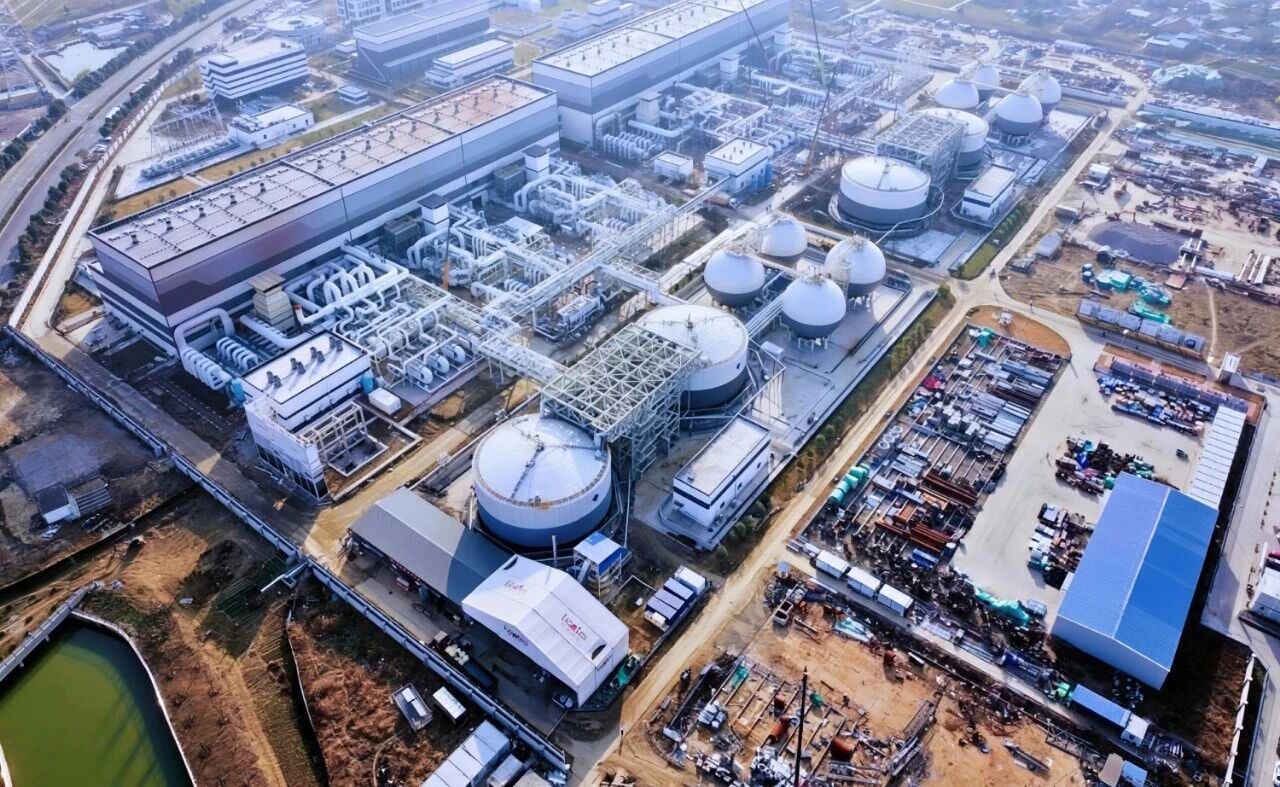
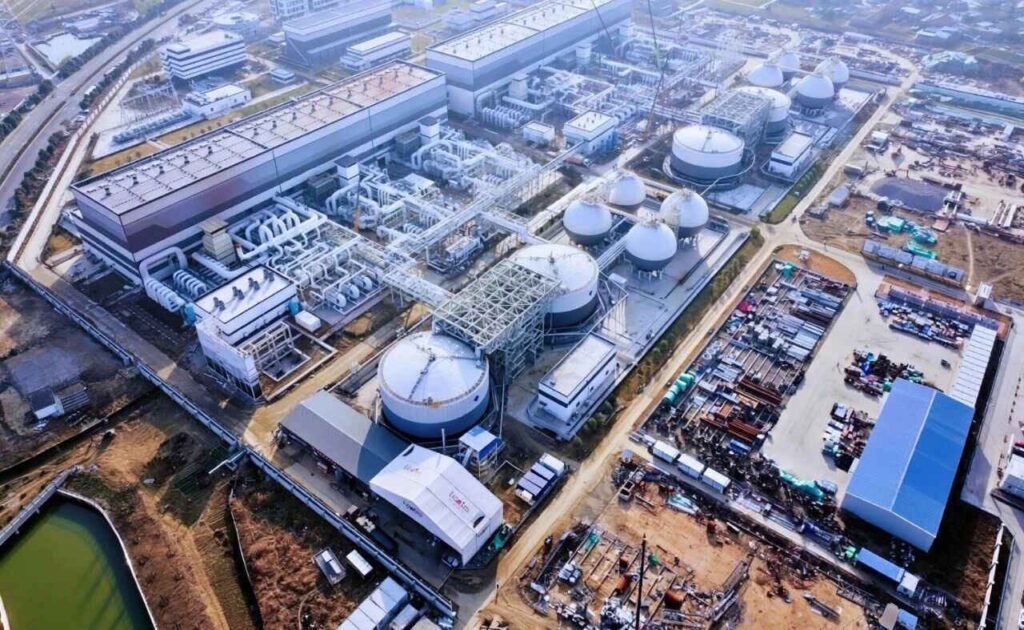
China has started full operations of two units at the Jintan salt cavern compressed air energy storage project in Jiangsu Province.
Each unit has a capacity of 350 megawatts (MW), giving the facility the world’s largest total installed capacity of its type. The project is designed to store surplus electricity and supply power when demand on the grid increases.
The Jintan facility is located in Changzhou in eastern China’s Jiangsu Province. It is part of the Huaneng Jintan salt cavern compressed air energy storage Phase II project and has been described as a ‘super power bank’ for the electricity grid. CCTV News reported the full startup of the two units on Saturday.
How The Storage System Works
Compressed air energy storage uses electricity to store energy in the form of high-pressure air. During periods of low demand, surplus electricity powers compressors that force air into underground salt caverns at pressures of more than 130 atmospheres. When electricity demand rises, the stored air is released and used to drive turbines that generate electricity.
READ ALSO: https://modernmechanics24.com/post/china-ai-systems-mineral-exploration/
The system uses deep underground salt formations as storage spaces. Salt rock is dense and has very low permeability, which helps keep the compressed air contained. The Jintan project stores its compressed air in caverns located about 1,000 metres underground.
This process gives power operators another way to manage changes in electricity demand. It can also help grids absorb more electricity from renewable sources, whose output can change with weather and time of day. Unlike conventional fossil-fuel power plants used for peak demand, the compressed air system does not generate electricity through fuel combustion.
Large Scale And Higher Efficiency
The two units each have a rated capacity of 350 MW. Once the project is fully completed and put into operation, its energy conversion efficiency is expected to exceed 70 percent. The scale of the facility places it among the largest compressed air energy storage projects currently operating.
The project also includes a large thermal storage system. According to CCTV News, it has Asia’s largest single-set thermal storage water tank matrix in the compressed air energy storage sector. The matrix contains 16 spherical water tanks, with each tank holding 3,500 cubic metres of water.
Together, the tanks can store 56,000 cubic metres of water. CCTV News said this is roughly equal to the volume of 22 standard swimming pools. The tanks capture heat produced when air is compressed and store it for later use.
That stored heat is returned to the process when the compressed air is released. It helps warm the air before it reaches the turbines. Reusing the compression heat improves the overall efficiency of the storage system and reduces energy losses.
WATCH ALSO: https://modernmechanics24.com/post/anduril-altius-700m-loitering-munition/
Engineering Beneath The Surface
The project also has what has been described as China’s largest single intake and injection gas well in the compressed air energy storage sector. Engineers said the well can handle up to 2.16 million cubic metres of air per hour. Anti-corrosion and sealing measures have been added to support long-term operation and limit possible air leakage.
The underground storage caverns are a key part of the facility. Their depth and geological structure allow large quantities of compressed air to be held without requiring conventional above-ground storage tanks. The use of salt caverns also provides a way to build energy storage capacity at a scale suited to large power systems.
Operators can monitor the facility from a central control centre. Real-time information from surface equipment and the underground caverns is collected and managed through a digital control system. This allows operators to track operating conditions and respond to changes in the electricity grid.
Wider Role In Energy Storage
Large storage facilities can help manage periods when electricity production and consumption do not match. They can store excess power when demand is low and return it to the grid during periods of higher demand.
China has been developing several salt cavern energy storage projects as electricity demand rises and renewable power capacity expands.
The Jintan project adds another large-scale option alongside battery storage and other forms of grid energy storage. Its use of underground caverns gives the system a different operating model from electrochemical batteries.
READ ALSO: https://modernmechanics24.com/post/figure-nscale-nvidia-gpus-humanoid-ai/
The project also shows how large storage facilities are combining underground infrastructure, thermal management and digital monitoring in a single system.
The full startup of the two 350 MW units therefore marks an important stage for China’s compressed air energy storage sector.
With more renewable electricity entering power networks, systems that can store large amounts of energy for later use are becoming relevant to grid management. The Jintan facility is expected to contribute to that role as its remaining systems are completed and its operating capacity expands.








One Response