

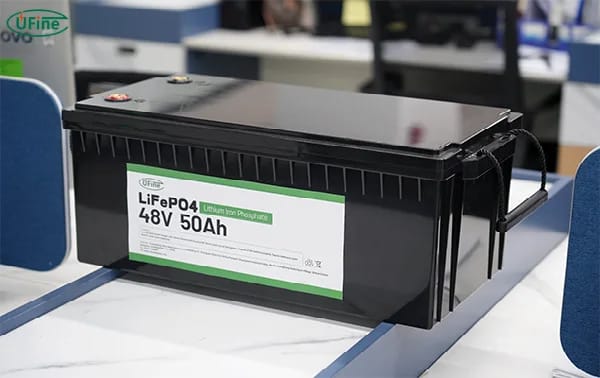
China has reported a fourth-generation lithium iron phosphate (LFP) battery cell with an energy density above 200 Wh/kg.
The figure was disclosed by Tsinghua University academician Ouyang Minggao at the 2026 World Power Battery Conference in Yibin, Sichuan.
The conference also presented battery manufacturing equipment capable of winding 7.5 prismatic cells per minute, showing progress in both cell performance and production speed.
LFP Pushes Beyond Old Limits
LFP batteries have become the leading power-battery chemistry in China’s electric vehicle market.
China installed 335.6 GWh of power batteries during the first half of 2026, with LFP batteries accounting for 272.0 GWh, or about 81% of the total. The figures from the China EV DataTracker show how widely the chemistry is already used across the country’s EV industry.
READ ALSO: https://modernmechanics24.com/post/china-hualong-one-nuclear-plan/
LFP has gained ground partly through improvements in battery-pack design. Automakers have reduced unused space by placing cells more efficiently inside packs. Technologies such as CATL’s cell-to-pack (CTP), system and BYD’s second-generation Blade Battery have helped raise the amount of usable battery material within a given pack.
These improvements have increased pack-level efficiency without requiring major changes to the underlying cell chemistry.
However, packaging gains become harder to achieve once much of the unused space has already been removed. Further improvements in driving range and battery weight therefore depend more heavily on the energy density of the cells themselves.
The new fourth-generation LFP figure is significant in that context. Energy density measures how much energy a battery can store for a given weight, so a higher figure can help reduce battery mass or provide more range within a similar weight limit. The reported result shows that LFP developers are still finding ways to raise cell performance without moving directly to nickel-rich cathode materials.
High Compaction Changes Cell Design
The reported LFP technology uses a high-compaction approach. This means more active battery material is packed into the available space, raising the amount of energy stored within the cell. Material-development figures cited with the technology place compacted LFP powder density at around 2.65 to 2.80 grams per cubic centimetre, with volumetric energy density above 430 Wh/L.
These figures describe material and cell performance. They do not represent the energy density of a complete battery pack. A finished pack also contains cooling systems, structural parts, electrical connections, control hardware and other components that add weight and occupy space.
Higher compaction also introduces technical challenges. When electrode material becomes denser, there is less open space for the electrolyte to move through the electrode. This can make it harder for lithium ions to travel efficiently, especially when the battery is charging or discharging at high rates.
Battery developers, therefore, need to balance several factors during electrode design. Particle size, conductive networks, electrode formulation and manufacturing accuracy all become more important as compaction increases. The aim is to raise energy density without causing unacceptable losses in charging performance, power delivery or battery life.
The reported LFP result also needs to be viewed against existing products. BYD’s Blade 2.0 batteries use different cell formats, with the Short Blade version rated at about 160 Wh/kg and the Long Blade version reaching as much as 210 Wh/kg at the cell level. The higher figure is mainly associated with longer-range applications, so cell-level energy density near 200 Wh/kg is still not common across the wider LFP market.
WATCH ALSO: https://modernmechanics24.com/post/xpeng-iron-robot-more-human-like/
Production Lines Pick Up Speed
Battery manufacturing is advancing alongside cell technology. At the same conference, automated winding equipment was reported to reach a speed of 7.5 prismatic cells per minute. That compares with a cited production-line benchmark of 4.4 cells per minute.
The difference represents an increase of roughly 70.5% in winding speed. Winding is a key step in manufacturing prismatic battery cells because it combines electrode and separator materials into the cell structure. Faster winding can reduce the time required for each cell, although it does not mean the entire factory produces finished batteries at the same rate.
Other parts of the production process can limit overall output. Formation, ageing, inspection and final assembly can take longer than individual winding operations. Higher production speeds also require close control of defects and yield, since a small quality problem can affect large volumes of cells on an automated line.
The two conference figures therefore describe separate developments. One focuses on how much energy an LFP cell can store, while the other concerns how quickly a manufacturing process can make cells. Together, they show that battery companies are working on both sides of the production equation.
LFP Faces New Competition
LFP still has an energy-density gap compared with high-nickel ternary battery cells. CATL’s Qilin battery, for example, has been reported with a high-nickel cell energy density of around 285 Wh/kg. The comparison shows that passing 200 Wh/kg does not remove the advantage of higher-energy nickel-based chemistries.
LFP has other factors supporting its continued use. China has a large and established LFP supply chain, while the chemistry is already widely deployed in electric vehicles. Its continued improvement gives manufacturers another way to increase battery performance without automatically shifting to nickel-rich cathodes.
Ouyang has previously argued that mature liquid-electrolyte battery technologies will remain important while all-solid-state batteries continue through a longer development process.
The latest LFP figures fit into that broader direction, as manufacturers continue improving existing lithium-ion systems while newer battery designs move toward commercial use. At the same conference, the industry also presented all-climate thermal-management technology aimed at improving cold-weather charging and heat control.
Battery development is also taking place under tighter safety requirements. China’s revised GB 38031-2025 traction-battery safety standard came into force on July 1, 2026, replacing GB 38031-2020. The mandatory national standard introduces updated safety requirements for electric-vehicle traction batteries.
The new standard does not give LFP a specific regulatory advantage over other battery chemistries. It does, however, add to the need for manufacturers to balance energy density with safety, durability and consistent production. Higher cell performance must therefore be delivered within the limits set by vehicle safety and manufacturing reliability.
READ ALSO: https://modernmechanics24.com/post/siemens-energy-uk-smr-turbine-parts/
The latest figures suggest that LFP development in China is entering a phase where cell-level improvements matter more than before. A production-grade cell above 200 Wh/kg would expand the performance range available from a chemistry already used at large scale.
If manufacturers can combine that density with reliable high-volume production, LFP will remain a strong option as automakers seek lighter, more efficient and cost-conscious electric vehicle batteries.










One Response