

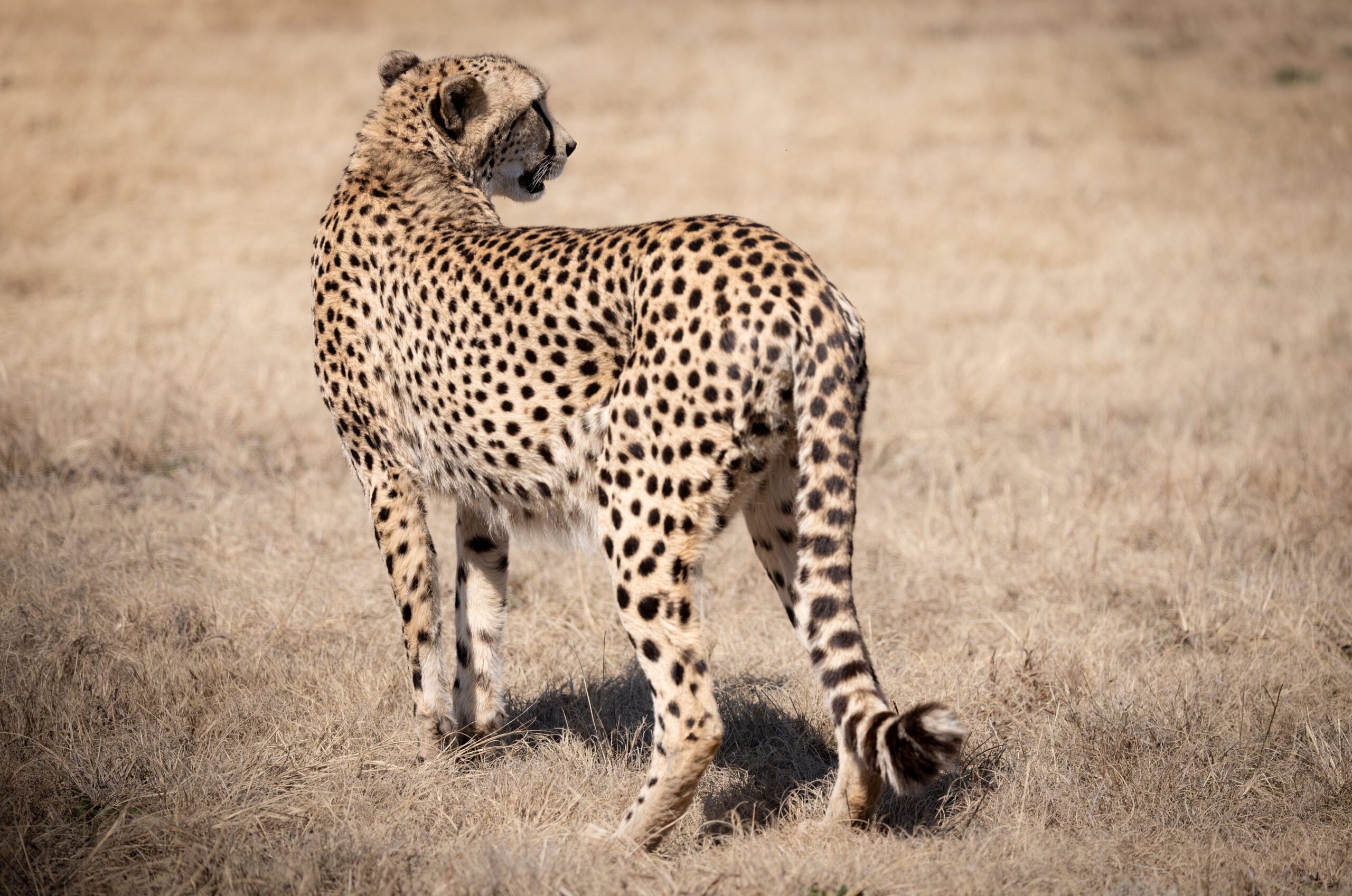
Scientists have discovered that the extinct Miracinonyx trumani, often called the “American cheetah,” was not a true cheetah relative. A new study found that the ancient cat was more closely related to modern pumas and may have had very different hunting habits.
The research, published in Current Biology, also found that some M. trumani populations living near the Arctic ate almost entirely fish. This challenges the long-held idea that the animal mainly chased fast prey such as pronghorns.
Miracinonyx trumani lived across North America during the Pleistocene, roughly 2.5 million to 16,000 years ago. Its slim body, long front legs and large nasal passages made it look similar to modern cheetahs.
READ ALSO: https://modernmechanics24.com/post/china-lfp-battery-200wh-kg-energy/
Fossils of the animal were also found near pronghorn remains. Because pronghorns are extremely fast, researchers assumed M. trumani may have hunted them in a similar way to African cheetahs.
Researchers led by Molly Cassatt-Johnstone from the University of California, Santa Cruz, studied ancient DNA from four M. trumani fossils. One came from Wyoming, while three were found in Canada’s Yukon Territory.
The Yukon fossils were previously believed to belong to another species. The DNA analysis confirmed they were M. trumani, expanding the known range of the animal more than 1,400 miles farther north.
The team compared M. trumani’s DNA with nine other cat species. The results showed that it shared a common ancestor with modern cheetahs around 4.7 million years ago.
However, it was much more closely related to pumas. Researchers estimate that M. trumani and modern pumas split from a common ancestor around 2.6 million years ago.
The researchers also wanted to understand what the northern populations ate. Pronghorns did not live as far north as the Yukon, so the team analyzed carbon and nitrogen signals preserved in the fossils.
The results were surprising. The Yukon M. trumani specimens showed strong signs of a fish-based diet. Their nitrogen patterns were similar to those found in fish-eating orcas and sea wolves along the British Columbia coast.
The Wyoming fossils told a different story. Their chemical signatures pointed to a land-based predator that mainly ate herbivores, much like modern lions.
This suggests that M. trumani was not locked into one type of diet. Instead, it could adjust its food choices depending on where it lived and what prey was available.
WATCH ALSO: https://modernmechanics24.com/post/spacex-starship-powerful-ever-built/
The findings give scientists a more detailed picture of the extinct animal. Its cheetah-like body may have made it easy to compare with modern cheetahs, but its DNA and diet show a much more complex evolutionary story.
According to Cassatt-Johnstone, this flexibility may have helped M. trumani survive across a huge range of environments, from warmer regions to the Arctic. The study also shows why scientists need to look beyond physical appearance when trying to understand extinct animals.












One Response