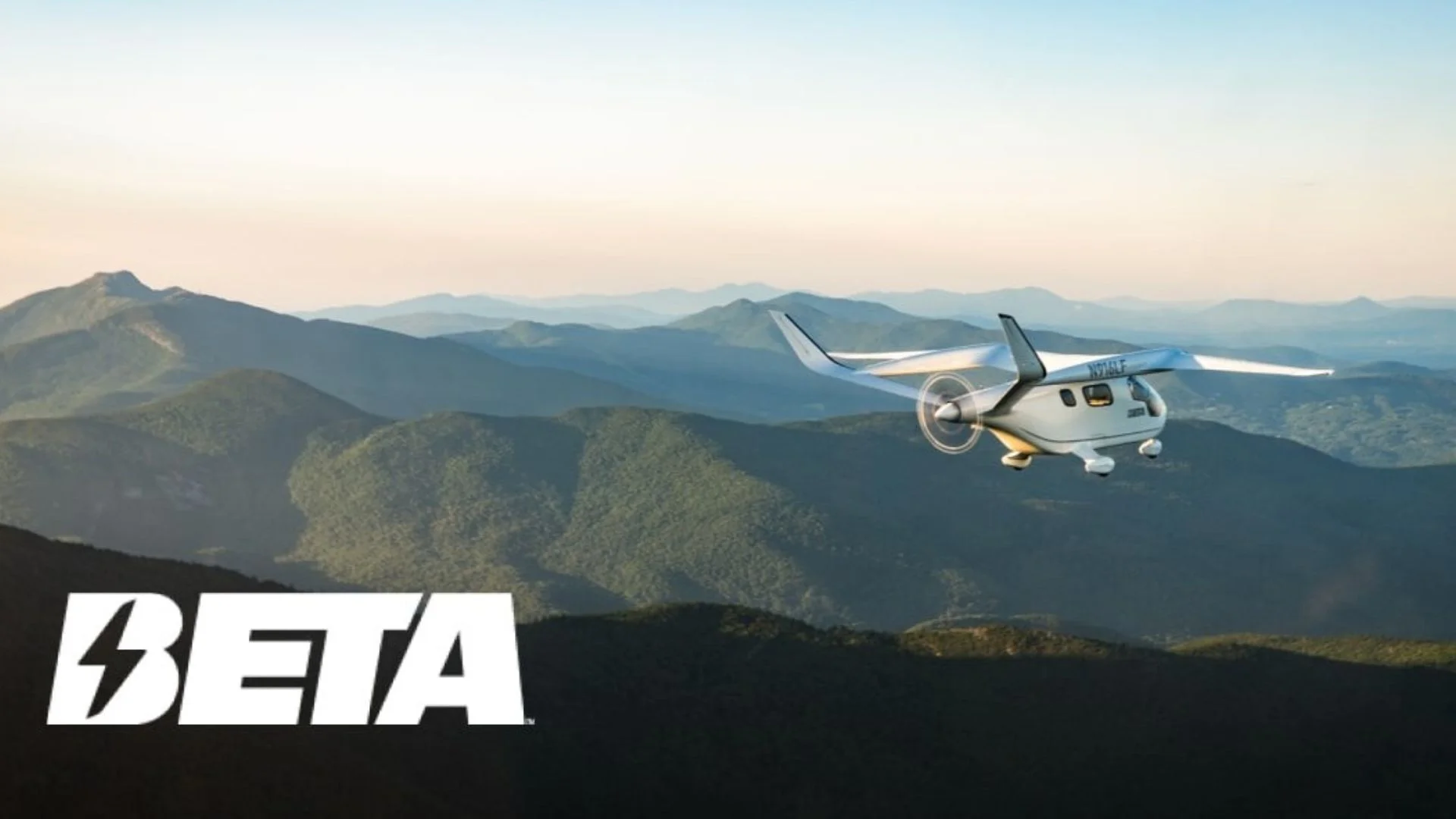
BETA Technologies has launched the MV250, a new autonomous hybrid-electric vertical takeoff and landing (VTOL) aircraft aimed at modernising military logistics operations.
The aircraft was unveiled at the Farnborough International Airshow as part of the company’s expanding defence portfolio. Designed for both airport and off-airport operations, the MV250 focuses on carrying supplies faster, farther and at a lower operating cost.
The new aircraft is built to improve the movement of military cargo across dispersed and contested environments. It combines electric propulsion with a hybrid power system to extend its operational range while reducing maintenance needs. BETA says the platform offers commanders greater flexibility for logistics missions without relying on traditional aircraft designs.
According to the company, the MV250 has a reposition range of 1,300 nautical miles. It can transport a payload of up to 2,000 pounds across a tactical range of 250 nautical miles. These capabilities are intended to support the transport of equipment, ammunition, medical supplies and other mission-critical cargo.
MV250: Hybrid Design Benefits
Unlike conventional helicopters or tiltrotor aircraft, the MV250 uses a simplified hybrid-electric aircraft architecture. The company says this design improves efficiency while reducing the number of complex mechanical components that require regular maintenance. Fewer moving parts also help lower long-term sustainment and operating costs.
Kyle Clark, Founder and CEO of BETA Technologies, said the company designed the aircraft to provide military operators with reliable equipment that supports future operational demands.
He said the MV250 combines technologies already proven on BETA’s aircraft with advanced systems supplied by GE Aerospace and Sikorsky. Clark added that the platform delivers higher availability, lower procurement costs and a reduced logistics burden while remaining adaptable for future mission needs.
The aircraft builds on BETA’s existing ALIA VTOL platform rather than starting from an entirely new military design. This approach allows the company to use flight-tested propulsion systems, batteries, flight controls, software and manufacturing processes that are already in operation. Reusing proven technologies also helps reduce development time while supporting faster production.
READ ALSO: Quantum Zeno Effect Could Be the Hidden Roadblock to Scaling Quantum Computers
Advanced Technology Integration
One of the key features of the MV250 is its hybrid-electric propulsion system developed with GE Aerospace. The companies created a series hybrid-electric turbogenerator through their Joint Technology Development Agreement. This system generates electrical power during flight, extending the aircraft’s operating range while also supplying power for equipment on the ground.
The turbogenerator combines a CT7/T700-based turbine with advanced electrical systems. Engineers closely integrated the turbine, electromagnetics and power electronics into a single system to improve efficiency and durability. The design also reduces weight while lowering overall system costs.
Amy Gowder, CEO of Defense & Systems at GE Aerospace and a BETA board member, said the partnership combines expertise in electrical power and advanced propulsion technologies.
She said the collaboration is focused on delivering the operational advantages military customers require for demanding logistics missions. Gowder added that hybrid-electric systems offer new opportunities to strengthen future defence logistics capabilities.
The aircraft also supports multiple autonomy systems through its open flight control architecture. This means operators are not restricted to a single autonomous software platform. Instead, different mission systems can be integrated depending on operational requirements.
Expanding Autonomous Operations
BETA has already flown its all-electric aircraft using both its own autonomous technology and Sikorsky’s MATRIX autonomy system. The MV250 continues this approach by supporting autonomous flight through a modular and flexible design. The aircraft also follows a Modular Open Systems Approach (MOSA), allowing future technologies to be added more easily.
Rich Benton, Vice President and General Manager of Sikorsky, a Lockheed Martin company, said every new platform connected to the MATRIX autonomy family expands the range of uncrewed systems available to military commanders.
He said the hybrid-electric MV250 complements Sikorsky’s existing unmanned aircraft portfolio by providing another logistics option. Benton added that close collaboration between the two companies is intended to meet the needs of defence customers in the US and other countries.
The aircraft’s uncrewed fuselage and open architecture allow future upgrades without requiring an entirely new aircraft design. This flexibility supports changing operational requirements as military technologies continue to evolve. It also allows defence organisations to adopt new software and mission equipment more efficiently.
Supporting Future Missions
The MV250 also benefits from BETA’s existing manufacturing infrastructure. Many of its major components are already produced on the company’s current production lines using common tools and production methods. This approach shortens manufacturing timelines while helping reduce production costs.
READ ALSO: Pentagon’s $7 Billion Oracle Deal Aims to Cut Costs and Modernize Military Software
The aircraft follows years of investment by BETA in electric propulsion, energy storage, autonomous software, flight controls and advanced manufacturing. Rather than developing separate technologies for each aircraft, the company has created a common architecture that supports multiple aircraft types and mission profiles. The MV250 extends that technology into military applications while continuing to support future commercial and defence developments.
Earlier this year, BETA deployed its all-electric ALIA CTOL aircraft during NATO Exercise Aurora 26 in Sweden at the invitation of the US Army. The aircraft participated in logistics operations alongside conventional military assets during one of Europe’s largest multinational military exercises. Operational experience gained during the deployment has contributed to the continued development of the MV250 and its mission capabilities.
BETA expects the MV250 to participate in additional large-scale military exercises in the future as testing and evaluation continue. The company believes these deployments will provide further operational data while demonstrating the aircraft’s logistics capabilities under realistic conditions.
As defence organisations seek faster, more flexible and cost-efficient transport solutions, hybrid-electric autonomous aircraft such as the MV250 are expected to play an important role in the future of military logistics.