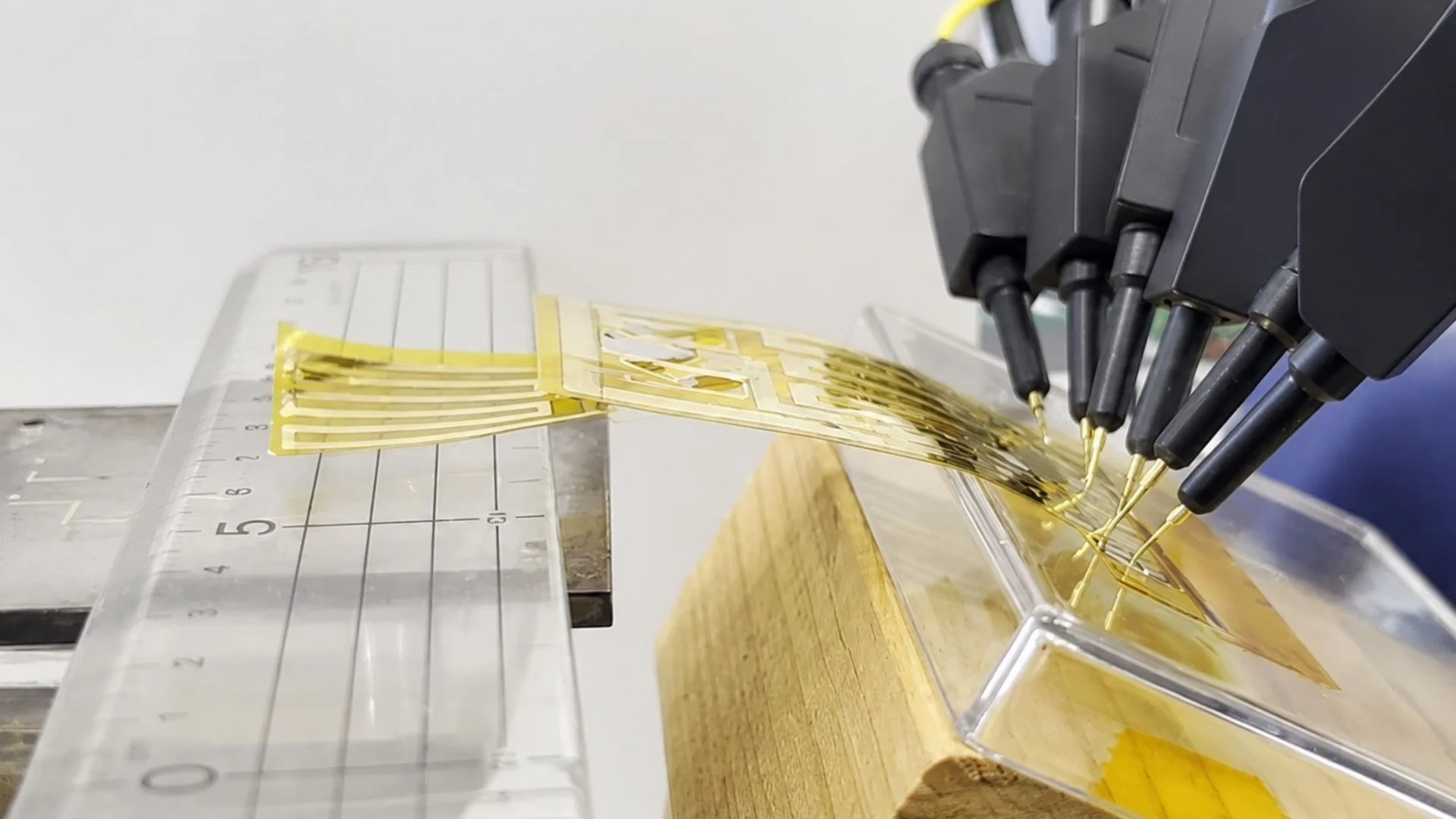
Researchers at Kyushu University have created prototype thin-film electronics module that can automatically dock and undock with one another.
The new system combines electronic circuits with built-in movement, allowing separate modules to connect when needed. The research was published in the journal npj Flexible Electronics.
Flexible Electronics Advance
Flexible electronics are lightweight, bendable devices designed for applications such as wearable sensors, soft robots, and medical equipment. Most existing systems are built as fixed, single-piece devices that cannot change their structure after manufacturing. The new prototype moves beyond that approach by allowing individual modules to join and separate on demand.
Associate Professor Fumihiro Sassa from Kyushu University’s Faculty of Information Science and Electrical Engineering led the research team. He said the group has been developing kinetic electronics, where thin films include both electronic circuits and actuators that enable movement. He added that the latest study focused on creating an electromechanical docking system that allows these modules to connect and disconnect automatically.
READ ALSO: US Navy Diverts Five Ships Near Strait of Hormuz as Iran Maritime Operation Intensifies
How It Works
The prototype combines the actuator and electronic circuit into the same thin film. Its actuator layer uses polypropylene and polyimide, two materials that expand at different rates when heated. A tiny gold microheater warms the film, causing it to bend and perform the docking action.
The researchers designed several docking methods for different functions. One design uses a loop-and-hook mechanism to connect with another module. Another features a claw-like lock that remains attached even after the power supply is switched off.
Self-Organizing Modules
These docking systems allow electronic modules to reorganize themselves into larger functional structures. Instead of relying on fixed layouts, devices can connect in different combinations depending on the task. This modular approach makes the technology more adaptable than conventional flexible electronic systems.
READ ALSO: Inside StormFighter: Britain’s New Combat Drone Built to Fly With RAF Fighter Jets
The concept also brings electronics and robotics closer together by combining movement with electrical functionality. Such systems may eventually support wearable devices that adjust to different uses or medical technologies that change configuration during operation. Similar ideas could also benefit soft robots that need lightweight, flexible components.
Future Development Plans
The researchers say the technology is still at an early stage and requires further development before practical use. Sassa said he hopes future versions will behave more like living organisms by assembling, adapting, and repairing themselves when needed. However, the technology may support the next generation of flexible electronics with greater versatility and longer operational life.