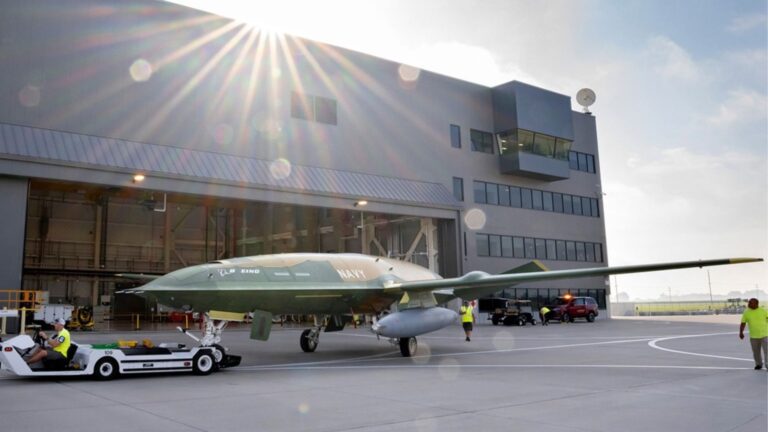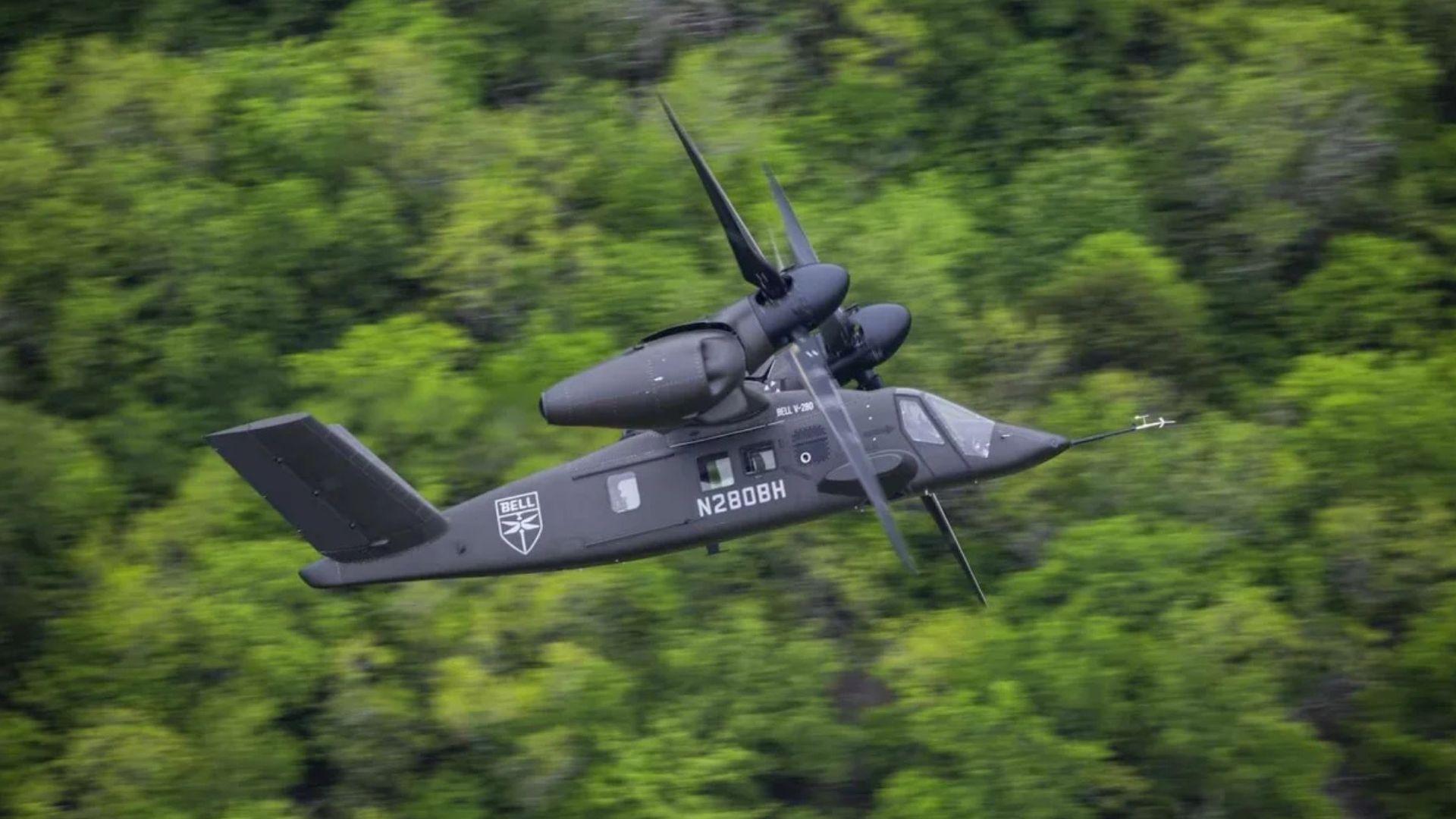
The US Army’s next-generation MV-75 Cheyenne tiltrotor aircraft has taken another step toward operational service with RTX’s Collins Aerospace selected to supply several critical onboard systems.
These technologies are designed to improve flight safety, reliability, and mission performance while supporting the Army’s plan to replace parts of its aging Black Hawk helicopter fleet.
The development is part of the Future Long-Range Assault Aircraft (FLRAA) program, which aims to give soldiers the ability to travel farther and faster during combat and emergency missions.
Flight Systems Added
Collins Aerospace will provide generators, drive shafts, flexible couplings, air-data sensors, armored cockpit seats, and ice-protection equipment for the MV-75.
These systems help the aircraft continue flying if one engine fails, improve navigation accuracy, and protect crews during difficult weather and combat operations. They also support essential electrical systems that power communications, flight controls, and defensive equipment.
The MV-75 uses a tiltrotor design that combines the vertical takeoff ability of a helicopter with the speed of a fixed-wing aircraft. During takeoff and landing, its large rotating propellers lift the aircraft like helicopter blades. Once airborne, the propellers rotate forward to generate thrust, while the wings carry most of the aircraft’s weight, enabling much higher cruising speeds.
This design helps overcome the speed limits of traditional helicopters. The Army expects the MV-75 to cruise between 240 and 280 knots, while the UH-60M Black Hawk typically flies at about 151 knots. On a 500-nautical-mile mission, the new aircraft can complete the journey in roughly two hours instead of more than three hours, reducing travel time significantly.
Mission Range Benefits
The higher speed changes how the Army can plan long-distance operations. Aircraft will be able to launch from bases farther away from frontline fighting while still reaching objectives quickly. That reduces the need for temporary refueling sites, which can be vulnerable to enemy surveillance and attack.
The Army also expects fewer support aircraft and logistics activities during long-range missions. Less time in the air means escort aircraft may not need to remain on station as long, while mission planners can better coordinate electronic warfare and supporting fire. Faster troop movement also gives commanders more time before an opposing force can reinforce a target area.
The 101st Airborne Division is already developing air assault concepts for missions spanning distances of up to 500 nautical miles. Such operations demand aircraft capable of maintaining speed across long routes while carrying troops and equipment. The MV-75 is designed to meet those operational requirements more effectively than existing utility helicopters.
READ ALSO: MIT’s SceneSmith Uses AI Agents to Build 3D Robot Training Worlds Faster Than Ever Before
Defense And Safety
Although the aircraft introduces new flight capabilities, its weapons remain relatively simple. Current public information indicates that the MV-75 is intended mainly for transport and assault missions rather than serving as an attack aircraft. Its most likely standard armament consists of cabin-mounted M240H machine guns similar to those already used on Black Hawk and Chinook helicopters.
The M240H fires 7.62×51 mm ammunition and provides defensive fire during troop landings and departures. The weapon has a maximum effective range of about 1,200 meters against area targets and can deliver sustained suppressive fire when needed. However, it is not designed to replace the heavy weapons carried by AH-64 Apache attack helicopters.
Because of that role, the aircraft’s survival depends largely on defensive systems and mission planning. Higher cruising speed reduces exposure while traveling to the objective, but the aircraft must still slow down near landing zones, where threats increase. Missile warning systems, radar alerts, infrared protection, countermeasures, and careful route planning remain essential for safe operations.
The aircraft’s wide wings and large rotating propellers also require larger landing areas than conventional helicopters. Collins Aerospace is supplying armored cockpit seats to improve crew protection during combat operations. Rolls-Royce has also stated that the engines include infrared-signature reduction and advanced thermal management, although detailed performance figures have not been released.
Collins Powers MV-75 Forward
Each MV-75 uses two Rolls-Royce AE 1107 engines derived from the powerplant used on the V-22 Osprey. The engine family has accumulated more than 90 million operating hours across multiple aircraft, while the V-22 version alone has logged around 1.4 million flight hours. Using an established engine design reduces technical risk and enhances reliability.
The MV-75 version delivers the highest power rating among the AE 1107 variants, although Rolls-Royce has not disclosed exact figures. The engines include a digital control system, health-monitoring technology, and features that improve performance in hot climates and high-altitude environments. Engineers have completed demanding tests covering maximum power, extreme temperatures, rapid throttle changes, and simulated single-engine operation.
One of RTX’s most important contributions is the aircraft’s interconnect drive system. This system transfers power from one engine to both propellers if the other engine stops working, allowing the aircraft to continue flying safely. Collins Aerospace has extensive experience building similar systems for the V-22 Osprey and dozens of other aircraft programs.
The SmartProbe air-data sensors supplied by Collins combine sensing and onboard data processing into one compact unit. They provide pilots and flight computers with accurate information about airspeed, altitude, and atmospheric pressure. Ice-detection and protection systems also improve operational availability by allowing the aircraft to fly safely in conditions that might otherwise prevent missions.
Program Moves Forward
The FLRAA program began with the Joint Multi-Role Technology Demonstrator initiative in 2013. Bell’s V-280 Valor demonstrator first flew in December 2017 and completed more than 200 flight hours, 159 flights, and multiple Army pilot evaluations before the Army selected Bell for the program in December 2022. Milestone B approval in 2024 officially moved the aircraft into engineering and manufacturing development.
The Army has also introduced virtual prototypes to help crews prepare before production aircraft become available. These digital models allow soldiers to practice cockpit procedures, maintenance tasks, and operational planning. The current schedule targets first operational units in fiscal year 2030, while low-rate initial production is expected to begin during fiscal year 2028.
The Government Accountability Office has estimated that development and procurement of the FLRAA program will cost about $100 billion. The agency has also noted that some parts of the testing strategy did not fully follow an iterative approach, while early purchases of production materials may increase costs if design changes become necessary later. Even so, the Army continues to move the program forward as it prepares for future long-range operations.
The addition of RTX’s systems marks another important stage in preparing the MV-75 Cheyenne for service. As testing continues and production approaches, the aircraft will play a central role in shaping how the US Army conducts long-range air assault, medical evacuation, and rapid troop transport missions in the coming decade.