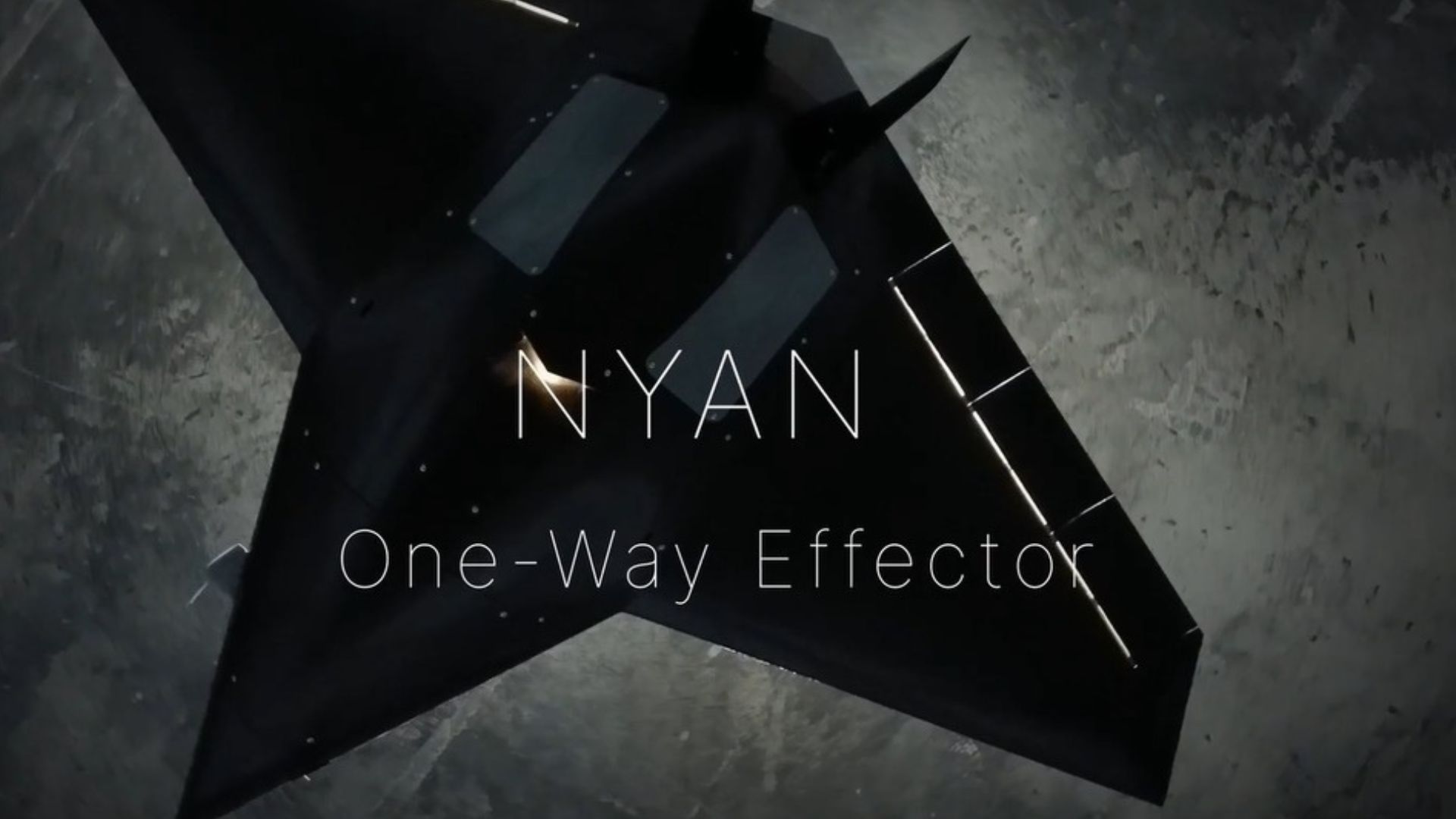
The UK Armed Forces have successfully tested a British-built strike drone in both land and maritime environments, marking an important step in expanding the country’s use of uncrewed military systems.
The trials involved the Royal Navy and British Army working together to assess how the drone performs from a moving ship and during land operations. The testing supports the UK’s wider effort to integrate advanced drone technology into future military missions.
The Royal Navy and the British Army have completed extensive trials of the Nyan One-Way Effector (OWE) Uncrewed Air System, a domestically developed strike drone built by BAE Systems’ Callen-Lenz. The effort reflects the UK’s focus on strengthening multi-domain defence capabilities through uncrewed systems.
Maritime Strike Drone Testing
The latest sea-based trial took place earlier this month during Exercise Neptune Reach off England’s south coast. The drone was launched from the Royal Navy’s experimental vessel, XV Patrick Blackett, under Project Vantage, a programme designed to speed up the testing and evaluation of maritime attack drones. The exercise brought together personnel from the Royal Navy, British Army, and Royal Air Force to assess operational performance.
The Nyan drone features a wingspan of 2.9 metres and is designed to deliver precision strikes against selected targets. As a One-Way Effector system, it carries out its mission by flying directly toward its intended objective instead of returning to its launch point. This approach provides a lower-cost option for certain military missions while reducing risks to personnel.
Engineers installed a launcher on the ship’s deck that can accelerate the drone to speeds of up to 55 metres per second during launch. Testing from a moving vessel allowed military teams to study how the system performs under realistic naval conditions. The collected data will help refine future operational procedures and technical improvements.
Land Operations Experience
Before the maritime trial, the British Army tested the same drone during Exercise Spring Storm in Estonia in May. The exercise formed part of the UK’s deep-fire capability, which focuses on striking targets at long range while supporting NATO operations. Conducting the trial in Estonia also demonstrated cooperation with allied forces operating in Europe’s eastern region.
The Nyan system already has significant operational experience on land, with more than 1,000 units produced to date. According to Callen-Lenz Chief Executive Officer Matt Foster, the drone has proven its value during land operations and has now shown it can also operate effectively in a maritime setting.
READ ALSO: NASA’s PROMISE Rover: From Mars Spare to Nuclear-Powered Moon Explorer
He said the trials demonstrate how close cooperation between the armed services and industry is helping deliver new capabilities more quickly.
Hybrid Navy Vision
UK Minister for Defence Readiness and Industry Luke Pollard said drones will play an important role in the Royal Navy’s transition toward a Hybrid Navy.
He said combining expertise from the Army and Navy to operate strike drones from ships is helping the armed forces develop capabilities needed to stay ahead of evolving threats. The initiative supports the government’s broader defence modernisation strategy.
Lieutenant Commander David Burton, the Royal Navy’s Maritime One Way Effectors Capability Sponsor, said the trial represents meaningful progress in introducing maritime strike drones into naval operations.
He explained that Project Vantage aims to combine crewed ships with uncrewed systems to extend operational reach, improve mission speed, and strengthen combat effectiveness. He added that collaboration between the Navy and Army is helping turn experimental concepts into deployable capabilities.
Following the successful launch trials, the Royal Navy’s capability team and the Air and Space Warfare Centre are analysing the results. Officials are also considering additional testing aboard the aircraft carrier HMS Queen Elizabeth to further evaluate the system in more demanding operational conditions. These future trials will help determine how the technology fits into frontline naval operations.
Expanding Defence Portfolio
The Nyan drone is part of BAE Systems’ growing portfolio of uncrewed aircraft developed through its FalconWorks advanced research and technology hub. The company has spent more than 25 years developing autonomous and uncrewed technologies for military applications. Its product range is designed to operate alongside existing and future military platforms while providing affordable combat capability.
The growing use of uncrewed systems reflects changing military requirements seen across many modern armed forces. Countries are investing in drones that can support surveillance, logistics, and precision strike missions across multiple environments. The UK’s latest trials show how domestically developed technology is becoming an important part of future defence planning and multinational military cooperation.