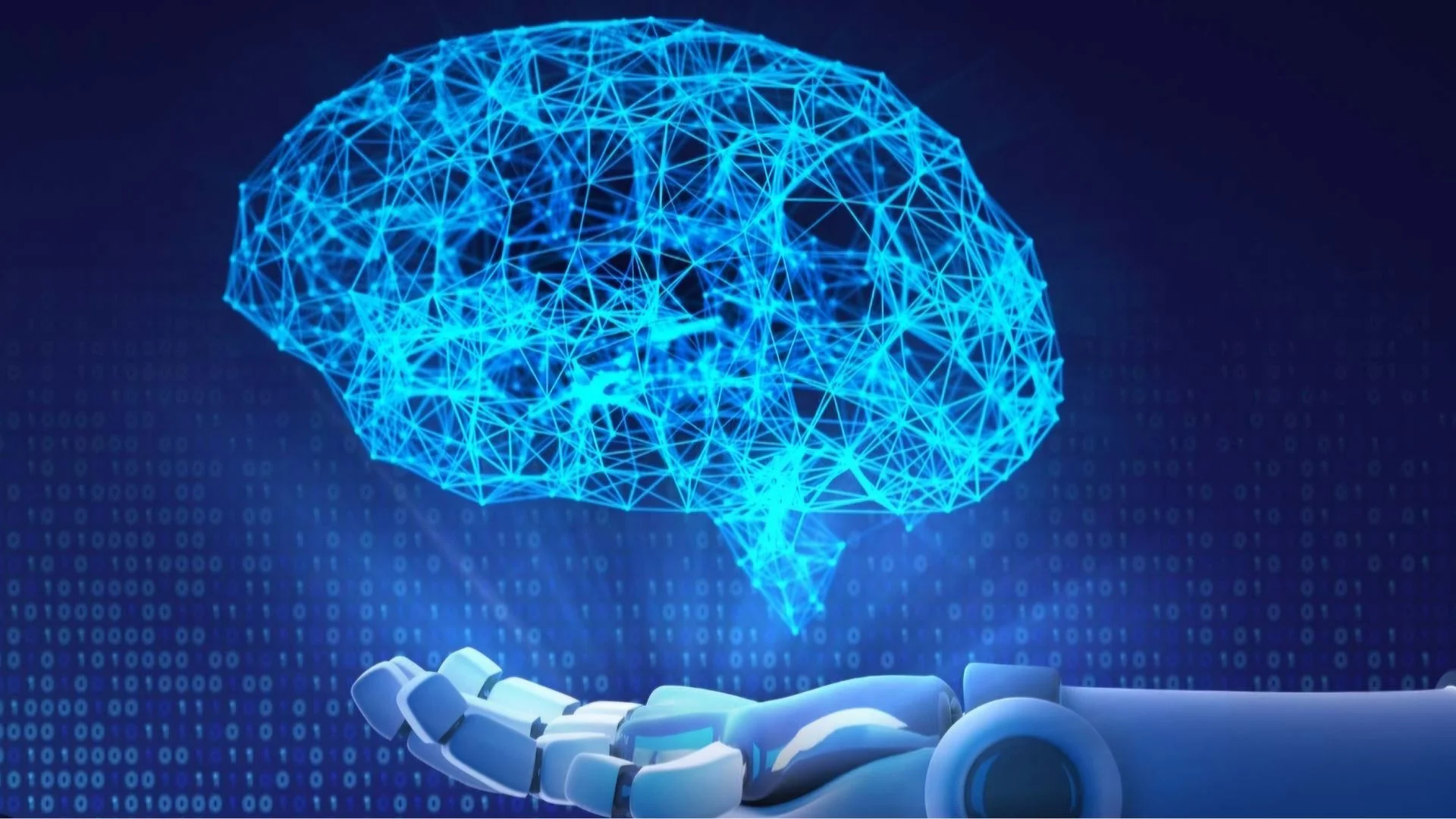
South Korea’s Korea Advanced Institute of Science and Technology (KAIST) has started developing a new Brain-to-Robot system, a brain-controlled robotic platform that aims to transform the future of rehabilitation.
The project allows people to control a wearable robot solely with their thoughts, while receiving tactile and force feedback through the same system. Researchers say this is the first project designed to create a complete two-way connection between the human brain and a robotic exoskeleton.
The research is being led by Professor Kyoungchul Kong and Professor Jung Kim from KAIST’s Department of Mechanical Engineering. Angel Robotics Co., Ltd., a South Korean company specializing in wearable robots, is also a key partner in the project. The work has been selected as a flagship program under the Korea Medical Device Development Fund (KMDF).
The project officially began in April 2026 and will continue until December 2032. During this period, researchers plan to build, test, and validate a complete Brain-to-Robot platform for medical use. The long development timeline reflects the complexity of combining neuroscience, artificial intelligence, robotics, and medical engineering into a single system.
Brain-computer interfaces have attracted global attention in recent years. These technologies enable computers or machines to understand commands directly from brain activity rather than from physical movements. Scientists believe they can improve the lives of people who have lost movement because of spinal cord injuries, neurological diseases, or other serious medical conditions.
Several companies and research institutions have already demonstrated brain-controlled devices. Some systems allow users to move a computer cursor, send text messages, or operate digital devices without touching them. Companies including Neuralink and Synchron are also testing advanced brain-computer interfaces in human clinical studies.
Despite these advances, current systems still face important limitations. Most existing technologies mainly focus on converting brain signals into machine commands. Very few provide natural sensory feedback that allows users to feel what the robotic device experiences during movement.
That missing sensation creates a major challenge. Humans naturally depend on touch, pressure, and body awareness to perform simple activities such as walking, holding objects, and maintaining balance. Without sensory feedback, even advanced robotic systems cannot fully reproduce normal human movement.
KAIST’s new project focuses on solving this problem through two-way communication. Instead of only reading signals from the brain, the system also returns information from the robot back to the user. Researchers believe this approach can create more natural movement and improve rehabilitation outcomes.
READ ALSO: China Delivers Two 174,000-Cubic-Meter LNG Carriers as It Expands Global Shipbuilding
Brain-to-Robot Tech
The center of the project is a wearable robotic exoskeleton. An exoskeleton is a mechanical device worn around the body that supports or replaces lost movement. It can help users stand, walk, or perform daily activities by assisting weakened muscles and joints.
The system begins by reading electrical activity from the brain. Artificial intelligence analyzes these neural signals and identifies the user’s intended movement almost instantly. Those commands are then sent directly to the robotic exoskeleton, allowing it to move according to the person’s thoughts.
The process does not stop after movement begins. Sensors built into the robot constantly measure how the body interacts with its surroundings. This information becomes the second half of the communication process.
The exoskeleton measures several types of physical information. These include ground reaction force, which is the pressure created when the foot touches the floor, joint torque, which describes rotational force inside the joints, and tactile information that represents touch and pressure. Together, these measurements help the robot understand what the user is experiencing during movement.
Researchers will convert these measurements into signals that the brain can recognize. A special somatosensory interface will transmit the information to a neural communication chip. This allows the user to receive sensory feedback rather than relying solely on vision while controlling the robot.
The researchers describe this as a closed-loop system. Brain signals control the robot, while the robot continuously sends information back to the brain. This uninterrupted exchange happens in real time and aims to make robotic movement feel smoother and more natural.
Creating this closed communication loop is one of the most difficult engineering challenges in the project. The system must process hundreds of channels of brain activity at extremely high speed. Even small delays between movement and sensation can reduce performance and make the experience feel unnatural.
According to the research team, no previous project has fully combined brain-controlled exoskeleton movement with real-time sensory feedback in a complete system. Most earlier research focused on either movement control or sensory stimulation rather than integrating the two. KAIST hopes its platform will establish a new direction for future brain-machine interfaces.
WATCH ALSO: SpaceX is gearing up to conduct 11th flight test of Starship on October 13
Professor Kyoungchul Kong leads the development of wearable robotic systems and artificial intelligence for interpreting movement intentions. His team is also responsible for designing the somatosensory interface that converts robotic sensor data into signals suitable for brain communication. This component plays a critical role in completing the two-way connection between humans and machines.
Professor Jung Kim’s research team is leading another important part of the project. The group is developing advanced robotic skin that can detect touch and pressure in place of damaged human sensation. Artificial intelligence will analyze this sensory information before sending it back through the Brain-to-Robot system.
The robotic skin is designed for people who have lost normal sensation due to paralysis or nerve damage. It can detect pressure, contact, and other physical interactions that users would otherwise miss. This information helps create a more natural connection between the person and the wearable robot.
Artificial intelligence plays a central role throughout the entire platform. It decodes brain signals into movement commands while also encoding sensory information into signals that the brain can understand. Both processes must occur almost instantly to maintain smooth, stable movement.
Building such a system requires enormous computing power. The platform must process hundreds of neural activity channels simultaneously without noticeable delay. Researchers are working to establish an ultra-low-latency communication loop to keep movement and sensation synchronized.
The commercial development of the project will be led by Angel Robotics. The company was founded by Professor Kyoungchul Kong and has become one of South Korea’s leading developers of wearable robotic systems. It is already known for producing walking-assist exoskeletons for rehabilitation and industrial use.
Professor Kong has earned international recognition for his work in wearable robotics. His teams won consecutive gold medals at the Cybathlon, a competition that tests advanced assistive technologies for people with disabilities. That experience provides valuable knowledge for moving this new technology from the laboratory into practical healthcare.
The company plans to guide the technology through every stage of commercialization. This includes product development, regulatory approval, manufacturing, and real-world deployment. Approval from South Korea’s Ministry of Food and Drug Safety will be an important milestone before the system reaches patients.
Researchers believe the technology has the potential to transform rehabilitation for people with severe paralysis. Professor Kong said the long-term goal is to help people with quadriplegia walk independently, grasp everyday objects, and regain tactile sensation in their fingertips. Such capabilities would allow many patients to perform daily activities with greater independence.
The research team also emphasized that advanced engineering alone will not guarantee success. Clinical studies must demonstrate that the system is safe, effective, and reliable over long-term use. Medical experts, engineers, and regulators will need to work together throughout the project.
Protecting users will remain a major priority during development. Because the platform processes sensitive brain signals, strong data security and privacy protections will be essential. Researchers also plan to build cybersecurity safeguards that protect the system from unauthorized access or digital attacks.
Ethical oversight will play an equally important role. Brain-computer interfaces introduce new questions about privacy, informed consent, and responsible use of neural data. The team said ethical review and risk management will advance alongside the technology itself.
The Brain-to-Robot project also benefits from KAIST’s wider research ecosystem. Multiple laboratories across the university are already working on technologies related to artificial intelligence, robotics, semiconductors, and neuroscience. Their combined expertise strengthens the foundation for the flagship initiative.
Professor Hyung-Soon Park is developing wearable rehabilitation robots that recognize movement intentions directly from brain signals. His research focuses on helping people recover movement after neurological injuries and disorders. These technologies complement the goals of the new Brain-to-Robot platform.
Professor Sungho Cho and his research team are improving artificial intelligence systems that interpret neural activity more accurately. Better signal interpretation allows brain-controlled devices to respond faster and more precisely. This work supports the development of more reliable human-machine communication.
Professor Jihoon Lee is researching next-generation brain-machine interface technologies. His team is building ultra-low-power neural interface circuits, wireless brain-signal measurement systems, and on-device AI for real-time closed-loop neuromodulation. These innovations aim to reduce power consumption while improving performance.
Professor Hyunjoo Lee is developing ultra-miniaturized neural electrodes capable of both recording and stimulating brain activity. Smaller, more precise devices can improve neural communication accuracy while reducing user discomfort. This technology is expected to support future medical brain interfaces.
READ ALSO: TU Berlin’s SpaceBox Battery Project Aims to Transform Satellite Power Storage
Professor Minkyu Je is studying AI-powered semiconductor systems designed specifically for next-generation neural interfaces. Professor Jae-Woong Jeong is advancing technologies for highly accurate brain-signal measurement and neural stimulation. Together, these research efforts contribute essential building blocks for future Brain-to-Robot systems.
KAIST President Kwang-Hyung Lee described the project as one of the university’s most ambitious interdisciplinary research programs. He said KAIST’s strengths in brain science, robotics, artificial intelligence, and semiconductor engineering provide a strong foundation for leading future Brain-to-Robot innovation. The university plans to combine these capabilities to accelerate the development of advanced rehabilitation technologies.
Interest in brain-computer interfaces continues to grow worldwide. Governments, universities, and private companies are investing heavily in technologies that connect the human brain with digital systems and robotic devices. KAIST’s project reflects this global race while focusing on restoring mobility and sensation for people with severe physical disabilities.
The research program is scheduled to continue through the end of 2032, giving scientists several years to refine the technology and complete clinical validation. If the project reaches its goals, it could establish a new standard for wearable rehabilitation systems that combine thought-controlled movement with real-time sensory feedback. The work also highlights how advances in artificial intelligence, robotics, and neuroscience are steadily bringing more natural human-machine interaction closer to everyday medical care.